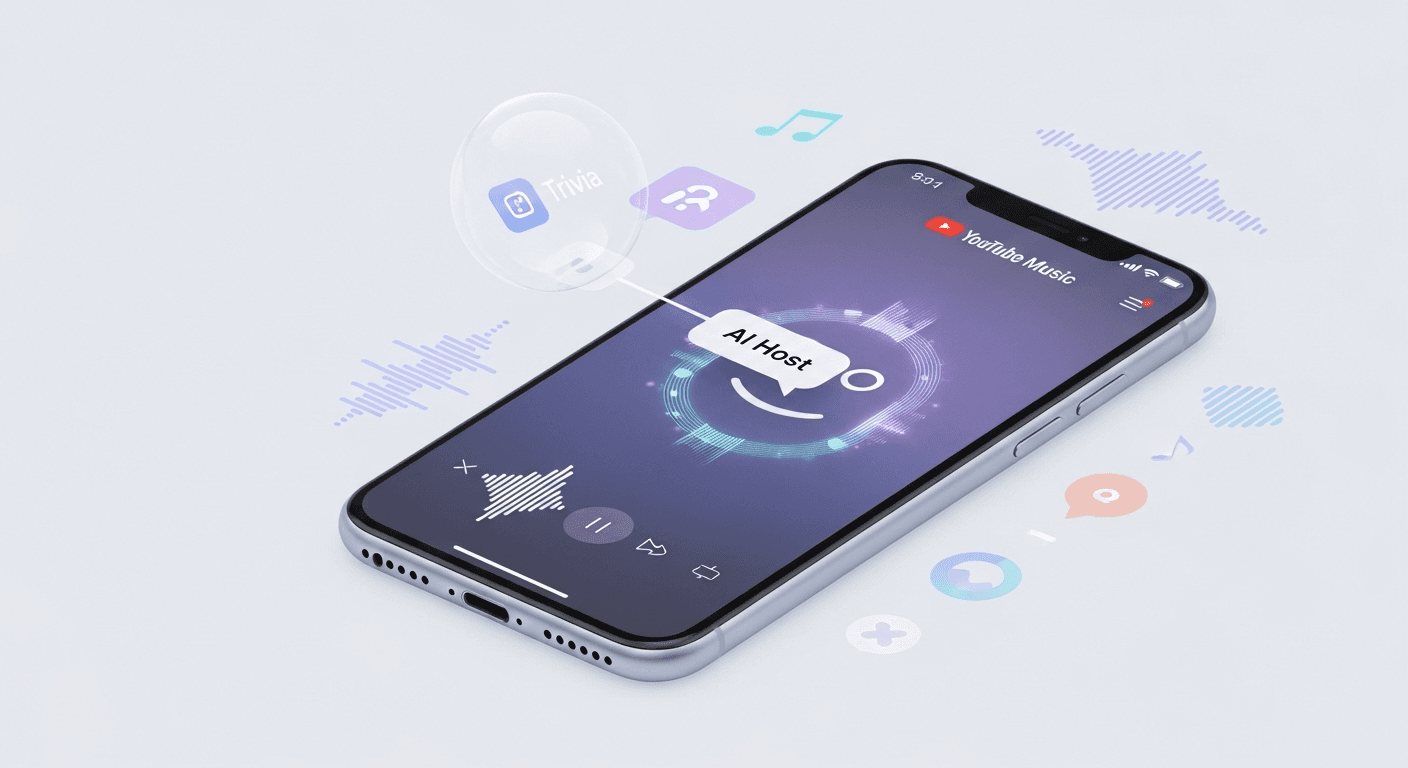
YouTube Music Trials AI Hosts with Interactive Trivia and Commentary
YouTube Music Trials AI Hosts with Interactive Trivia and Commentary
YouTube Music is testing innovative AI-powered hosts that introduce tracks and provide trivia and commentary between songs. If successful, your playlists might transform from simple music queues into engaging, personalized radio shows.
As first reported by TechCrunch (source), these AI voices deliver quick facts about the music, artist context, and song suggestions during playback. The feature is currently in a limited testing phase and not widely accessible.
Why This Matters
Major music streaming services are in a race to enhance user engagement and personalization. Spotify popularized the concept with its AI DJ in 2023, creating a friendly, radio-like experience for listeners (Spotify newsroom; The Verge). Similarly, Amazon introduced DJ Mode, fusing music with voice commentary and artist messages (Amazon Music press).
YouTube Music holds a unique advantage with its diverse offerings including audio, video, live performances, shorts, and user-generated content. By integrating AI hosts, playlists could evolve into moderately curated shows that provide tone, context, and value discovery. If executed well, this could reduce skip rates, enhance session times, and enable deeper connections between listeners and artists.
What YouTube Music is Testing
The initial phase features brief AI commentary interspersed between songs. Imagine a savvy radio host who:
- Introduces tracks with concise background information.
- Shares intriguing trivia, like the album’s release year or chart performance.
- Connects musical themes, highlighting similar artists or song inspirations.
- Offers suggestions for adjacent tracks or changes in mood based on user preferences.
Note: This is an experimental feature and subject to change during testing.
YouTube frequently conducts time-limited tests accessible to select users (YouTube experiments). If the AI host proves effective, it could expand to more users or specific playlists.
How the AI Host Could Operate
YouTube has been developing AI music technologies for several years. In 2023, it announced a Music AI Incubator aimed at exploring responsible AI usage with artists and rights holders (YouTube blog). Additionally, they’ve tested features like Dream Track for Shorts, showcasing generative music and voices in controlled environments.
An AI radio-style host for YouTube Music would likely involve several components:
- Metadata and Knowledge Graphs: Verified information including artist names, discographies, release dates, and chart positions.
- Large Language Models: To create concise, natural-sounding commentary based on reliable metadata and user context.
- Text-to-Speech Technology: To synthesize a consistent voice persona that matches pacing and tone.
- Personalization Signals: Based on listener likes, skips, and saves, enabling tailored recommendations with minimal interruption.
- Safety and Rights Checks: Designed to prevent misinformation and respect artist rights while adhering to brand safety policies.
Google’s AI principles emphasize safety, privacy, and accountability (Google AI principles). Implementing these within music commentary ensures the system favors accurate, attributable statements and is transparent about AI voice usage.
What Listeners Might Experience
- A brief audio introduction before or after a song.
- On-screen cards summarizing the commentary provided by the AI.
- Options to skip, mute, or adjust commentary frequency.
- Suggestions to explore different moods or genres.
YouTube may also experiment with voice personas to match user preferences—some users may prefer a calm voice, while others might enjoy a more energetic host. Moreover, multi-language support and region-specific knowledge could be natural extensions if the feature expands worldwide.
Comparison with Spotify DJ and Others
Spotify DJ has played a significant role in normalizing AI talk breaks in music streaming. Users often appreciate its friendly guidance through familiar and new tracks, with explanations for song selections. Spotify leverages personalization and proprietary voice technology for its narration (Spotify newsroom).
Amazon’s DJ Mode creatively mixed traditional radio with streaming by incorporating DJ-style commentary and artist stories (Amazon Music press). Meanwhile, Pandora has offered curated modes and voice interactions on select devices for years.
YouTube Music’s advantage lies in its video-first approach and vast library of live performances, remixes, and creator content. An AI host could refer to a live performance or link to a studio track’s official music video, turning commentary into a richer experience.
Potential Benefits if Executed Well
- On-Demand Context: Get track info without leaving the app.
- Seamless Discovery: Gentle hints can help you explore new artists or eras without disrupting your flow.
- Improved Accessibility: Spoken context enhances engagement for on-the-go listeners.
- Tailored Personalization: The system learns your preferences based on the commentary types you mute or skip.
- Artist Storytelling: Future enhancements could allow artists to provide facts or anecdotes for AI hosts to share.
Risks and Unanswered Questions
AI-generated commentary in music carries risks. Thoughtful design and policy considerations are necessary. Key questions include:
- Accuracy: What sources are used for trivia, and how are they verified? Generative models can sometimes produce false information, so platforms need reliable data sources.
- Attribution: Will the AI indicate where facts originate, like label metadata or chart records?
- Disclosure: Are users adequately informed when an AI voice is providing commentary? Transparency is essential for building trust.
- Privacy: What data drives the host’s comments, and can users limit its use? Clear settings and documentation are vital.
Consider civil society concerns around voice synthesis and AI privacy (EFF). - Consent from Creators: How is artist content utilized when AI voices reference specific styles? YouTube’s Music AI Incubator collaborates with stakeholders to address these issues (YouTube blog).
- Timing and Interruptions: Commentary must be concise, timely, and skippable. Poor pacing may frustrate listeners.
Potential Implications for Artists and Labels
If YouTube Music scales its AI hosts, artists and rights holders will likely want input on how information is collected and presented. Potential avenues include:
- Artist-Supplied Notes: Allow artists or labels to provide official blurbs and anecdotes that the AI can incorporate.
- Official Discography Data: Encourage verified metadata usage to minimize errors.
- Campaign Tie-Ins: Synchronize commentary with new releases or tour announcements.
- Opt-In Voice Experiences: With clear consent, artists could license an AI-generated voice to introduce tracks or share messages.
YouTube aims to develop AI music features with industry input, emphasizing consent, attribution, and revenue models for new experiences (YouTube blog).
Controls, Transparency, and User Choice
For this feature to thrive, listeners should have straightforward controls:
- Toggle AI commentary on or off for specific playlists or globally.
- Select commentary frequency: minimal, standard, or in-depth.
- Choose voice styles and languages.
- Access explanations for specific comments, with source links as needed.
Even during testing, clear labeling fosters trust—such as a simple notification stating “AI host” when the feature is active.
Design and Engineering Challenges
To create engaging AI commentary, developers must confront:
- Voice Quality and Personality: The host’s voice needs to sound natural at various speeds, volumes, and device types.
- Context Windows: The model must balance user preferences and current context without overfitting.
- Conciseness: Ideal commentary should last around 8-12 seconds.
- Cost and Scaling: Real-time text-to-speech (TTS) and language model processing for millions of sessions can be costly; techniques like caching can help.
- Factual Accuracy: Structured and verified data should be preferred for factual claims.
How to Try It (for Those in the Test)
Since this is an early experiment, access is limited. YouTube often tests new features with select groups before wider rollout (YouTube experiments).
- Update YouTube Music to the latest version on your device.
- Look for labels or prompts mentioning AI hosts or commentary in the Now Playing or playlist views.
- Check your settings for toggles regarding commentary or the AI host feature.
- Give feedback if prompted, as it shapes future developments.
What to Watch Next
- Broader Testing: Expect wider availability, enhanced language support, and genre-specific hosts.
- Artist-Led Commentary: Features allowing artists to contribute notes that the AI can weave into sessions.
- Interactive Prompts: Quick voice or touch interactions, like “teach me about this era” or “skip commentary for the next few songs.”
- Video-Aware Moments: Commentary linking to official videos, live versions, or interviews on YouTube.
Bottom Line
YouTube Music’s testing of AI hosts represents an essential evolution in the streaming landscape. If implemented with accuracy, care, and user control, this feature could provide valuable context to the listening experience without intruding. Ultimately, efficacy will depend on data sourcing, user disclosures, and the ability to opt out.
FAQs
Is the AI host available to everyone?
No, it is currently part of a limited experiment available to select users. YouTube regularly tests features that may remain temporary (YouTube experiments).
Does the AI host replace human DJs?
No, the AI host provides optional context between songs and does not replace traditional radio or human-hosted shows. Many listeners may prefer minimal or no commentary.
Where does the trivia and facts come from?
YouTube has not disclosed comprehensive technical details. Ideally, responsible implementations rely on verified metadata and trusted sources, sidestepping free-form generation for factual claims.
Can I turn off AI commentary?
Typically, platforms provide options to skip or disable new features during such experiments. Look for a toggle or feedback option in the app if you are part of the test.
How does this compare to Spotify DJ?
Spotify DJ utilizes an AI voice to narrate sessions and explain recommendations (Spotify newsroom). YouTube Music’s approach seems similar but will capitalize on its unique video and creator ecosystem.
Sources
- TechCrunch – YouTube Music tests AI hosts that share trivia and commentary
- Spotify – Meet DJ, your personalized AI guide
- The Verge – Spotify unveils AI DJ
- Amazon Music – Introducing DJ Mode
- YouTube Help – Try new YouTube features
- Google – AI Principles
- YouTube Blog – AI and music initiatives
- EFF – Voice cloning privacy and security risks
Thank You for Reading this Blog and See You Soon! 🙏 👋
Let's connect 🚀
Latest Insights
Deep dives into AI, Engineering, and the Future of Tech.
I Tried 5 AI Browsers So You Don’t Have To: Here’s What Actually Works in 2025
I explored 5 AI browsers—Chrome Gemini, Edge Copilot, ChatGPT Atlas, Comet, and Dia—to find out what works. Here are insights, advantages, and safety recommendations.
Read Article


