Token Embeddings: The Heart of Large Language Models
[“
Introduction to Token Embeddings
“,”
Token embeddings are a foundational component of Large Language Models (LLMs) such as GPT-3, BERT, and others, enabling these models to understand and generate human-like text. In this detailed exploration, we will delve into what token embeddings are, how they function, and why they are indispensable in the realm of AI-driven natural language processing (NLP).
“,”
Understanding Token Embeddings
“,”
At its core, a token embedding is a vector representation of a word or piece of text. These embeddings capture semantic and syntactic essence of language, allowing models to process and interpret large amounts of text efficiently. Let’s explore their characteristics, development, and the role they play in machine learning.
“,”
How Token Embeddings are Created
“,”
Token embeddings are generated through models trained on vast amounts of text data. These models use algorithms to learn representations that encapsulate word meanings based on context. Techniques like Word2Vec, GloVe, and more recently, transformer-based methods, are used to create sophisticated embeddings.
“,”
The Role of Context in Token Embeddings
“,”
Unlike earlier models that offered static representations, modern LLMs leverage context to produce dynamic embeddings. This advancement allows for a deeper understanding of language nuances, which is crucial for applications involving ambiguous or context-dependent interpretations.
“,”
Token Embeddings in Action: Real-World Applications
“,”
Today, token embeddings are instrumental in various NLP tasks such as translation, sentiment analysis, content recommendation, and more. Businesses and researchers leverage these embeddings to enhance interaction, automate processes, and derive insights from text data.
“,”
Enhancing Machine Learning Models with Token Embeddings
“,”
Embeddings are not only about understanding language but also about improving the responsiveness and accuracy of AI models. By integrating token embeddings, developers enhance their models’ ability to engage with human language in a meaningful way.
“,”
Challenges and Limitations of Token Embeddings
“,”
Despite their advantages, token embeddings face challenges such as handling polysemy, scalability, and the need for continuous updating as language evolves. Addressing these challenges is crucial for advancing NLP technologies.
“,”
The Future of Token Embeddings
“,”
As we look ahead, the evolution of token embeddings appears promising. Advances in AI research and the increasing computational power are likely to lead to even more sophisticated models that better understand and generate human language.
“,”
Conclusion
“,”
Token embeddings are at the core of the breakthroughs in natural language understanding and generation. As technology advances, their role becomes increasingly central in bridging human-computer communication.
“,”
Further Resources and Reading
“,”
For those interested in diving deeper into the technical aspects of token embeddings and LLMs, numerous resources are available. Academic papers, online courses, and comprehensive texts offer extensive insights into this intriguing field.
“]
Thank You for Reading this Blog and See You Soon! 🙏 👋
Let's connect 🚀
Latest Insights
Deep dives into AI, Engineering, and the Future of Tech.
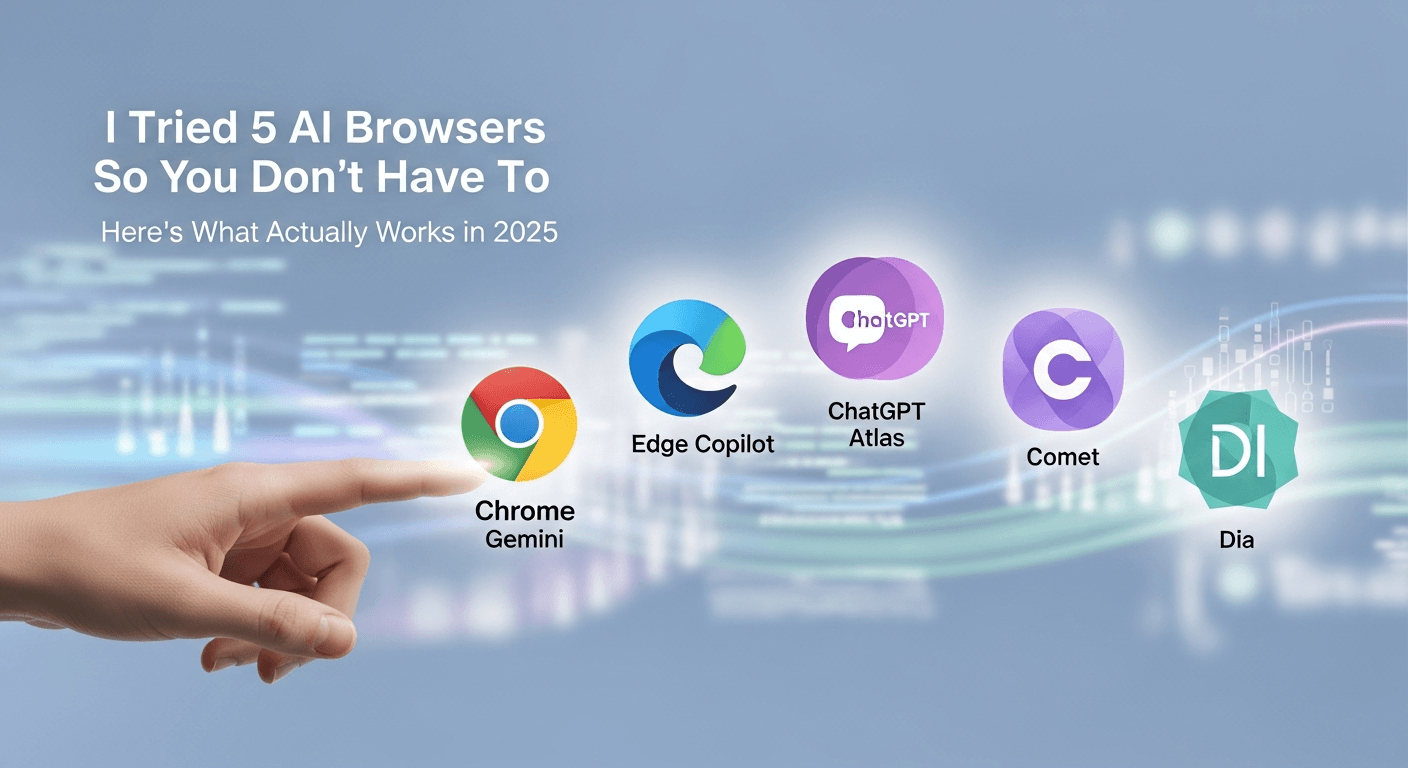
I Tried 5 AI Browsers So You Don’t Have To: Here’s What Actually Works in 2025
I explored 5 AI browsers—Chrome Gemini, Edge Copilot, ChatGPT Atlas, Comet, and Dia—to find out what works. Here are insights, advantages, and safety recommendations.
Read Article


