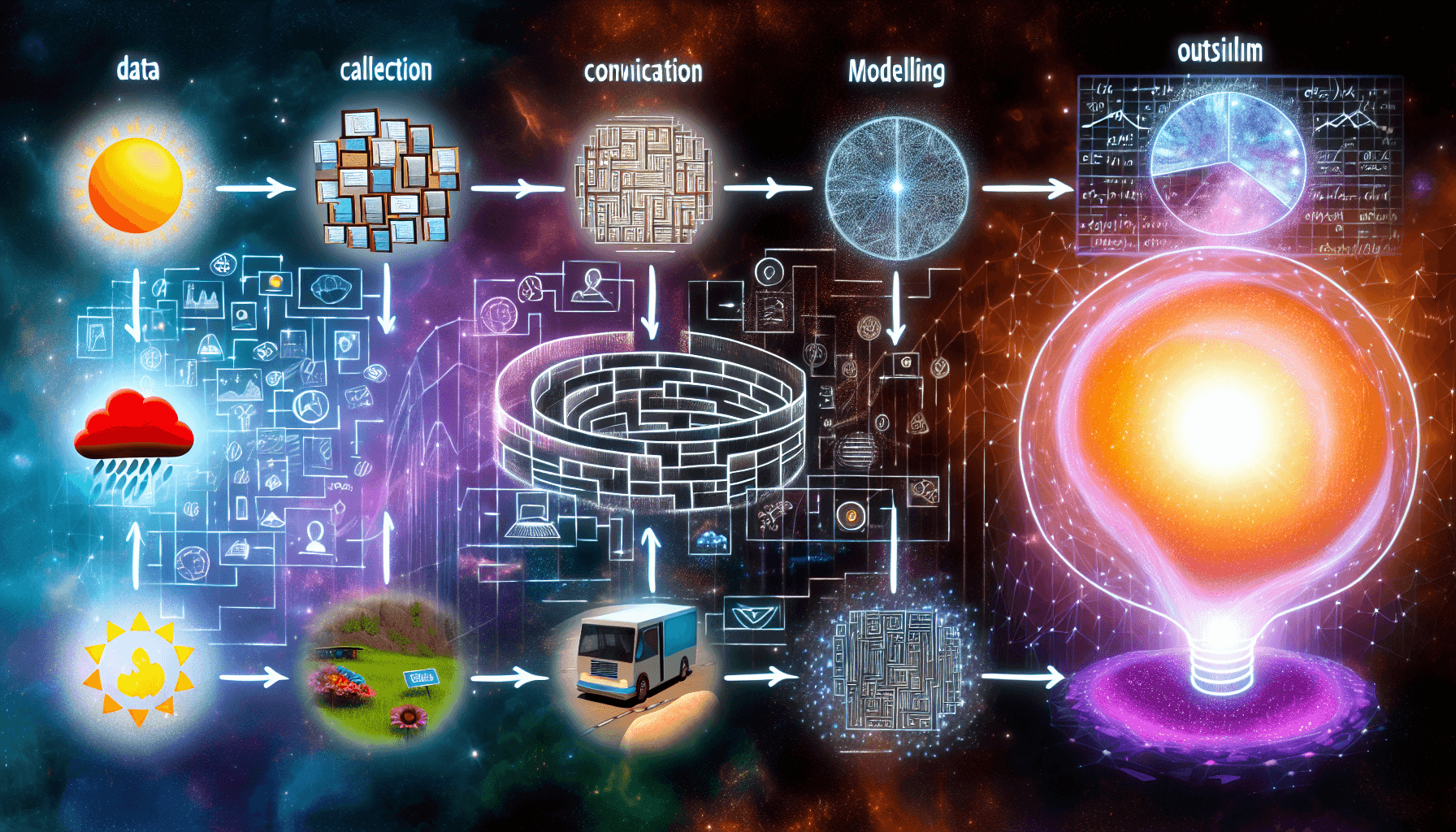
The Journey of AI: From Data to Predictions
The Evolution of Artificial Intelligence
Artificial Intelligence (AI) has transformed from a scientific curiosity into a significant driver of technological innovation and economic productivity. The journey AI undertakes, transitioning from raw data to actionable predictions, is fascinating and complex, impacting various sectors including healthcare, finance, and autonomous driving.
Understanding the Data Foundation
Data is the cornerstone of AI functionality. This vast array of information can originate from numerous sources like social media, sensors, business transactions, and more. The ability to collect and process this data has exponentially grown, thanks to advances in computing power and data storage technology.
Data Collection and Cleaning
The first step in the AI lifecycle is collecting high-quality, relevant data. Data cleaning then follows, which involves removing inaccuracies and preparing the data for analysis. This process is crucial as it directly impacts the accuracy and reliability of AI predictions.
The Role of Big Data
Big data technologies play an essential role in handling vast volumes of data, enabling real-time data processing and aiding in scalable data storage solutions. Tools like Hadoop and Spark have revolutionized how data is stored, processed, and analyzed, paving the way for sophisticated AI applications.
Machine Learning: Teaching AI to Predict
At the heart of AI’s predictive capabilities lies machine learning (ML). ML algorithms learn from data patterns and improve over time, essentially ‘learning’ from previous computations to make intelligent decisions about new datasets.
Types of Machine Learning
Machine learning can be mainly classified into supervised, unsupervised, and reinforcement learning, each serving different purposes but collectively pushing the boundaries of what machines can learn and predict.
Training AI Models
Training involves feeding data into machine learning algorithms to help the model learn and adapt. The quality and quantity of training data are vital for the creation of a robust AI system. Over time, the trained model becomes progressively more accurate in making predictions.
The Revolutionary Impact of Neural Networks
Neural networks have been pivotal in teaching computers to think and understand the world in a way that mimics human brain functionality. These networks use layers of algorithms to process data, recognize patterns, and make decisions.
Deep Learning: A Subset of ML
Deep learning, a subset of machine learning, utilizes multi-layered neural networks. It excels in recognizing patterns from unstructured data sets, such as images and audio, to more structured data, like rows and numbers in databases.
Testing and Validation
Once a model is trained, it must be tested and validated using new sets of data—that is, data that was not used during the training phase. This step is essential to evaluate the model’s effectiveness and ensure it can generalize well to new, unseen scenarios.
Enhancing Model Accuracy
Regular updates to the algorithms and training datasets are necessary to adapt to new patterns or changes in existing ones. This continuous improvement helps in minimizing errors and enhances the model’s accuracy.
AI in Decision Making
AI’s ultimate test is its application in real-world scenarios. From personalized healthcare treatments to real-time fraud detection and automated inventory management, AI’s predictions are benefiting organizations by enhancing operational efficiencies and driving innovative strategies.
Challenges and Considerations
Despite its vast potentials, AI’s journey from data to predictions involves several challenges including data privacy, ethical considerations, and the need for transparency in AI decisions. Addressing these challenges is crucial for harnessing AI’s full potential responsibly and ethically.
Conclusion: A Look into the Future
The journey of AI from data to predictions continues to evolve, bringing with it new technologies and methodologies that promise even more groundbreaking applications. As we look to the future, the integration of AI in daily life and across sectors holds the potential to revolutionize how we interact with the world around us, making it smarter, more efficient, and more connected.
The path AI treads is paved with continual advancements, ensuring that each step forward maximizes both technological possibilities and benefits to humanity. Exploring the wonders of AI is a journey that expands with every data point collected and every prediction made, signaling a future filled with intelligent possibilities.
Thank You for Reading this Blog and See You Soon! 🙏 👋
Let's connect 🚀
Latest Insights
Deep dives into AI, Engineering, and the Future of Tech.
I Tried 5 AI Browsers So You Don’t Have To: Here’s What Actually Works in 2025
I explored 5 AI browsers—Chrome Gemini, Edge Copilot, ChatGPT Atlas, Comet, and Dia—to find out what works. Here are insights, advantages, and safety recommendations.
Read Article


