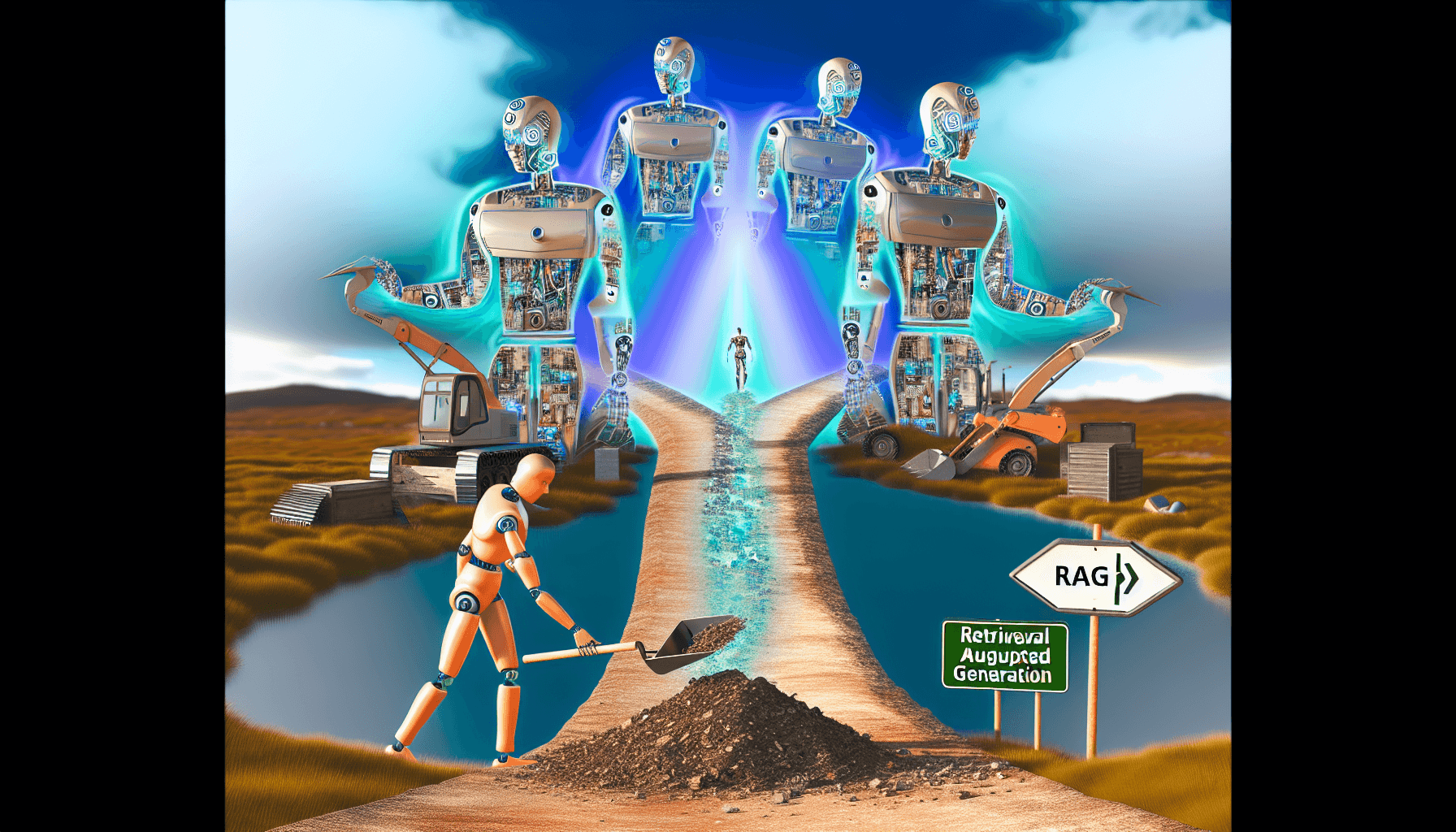
Retrieval-Augmented Generation: The Next Step in AI
Introduction
As artificial intelligence (AI) continues to evolve, new methodologies like Retrieval-Augmented Generation (RAG) are making waves, heralding a significant shift in how AI systems are developed and how they interact with human knowledge. This advancement promises to enhance the capabilities of AI, making it more adaptable, accurate, and contextually aware.
Understanding Retrieval-Augmented Generation
Retrieval-Augmented Generation is a cutting-edge approach that integrates traditional machine learning models with advanced data retrieval techniques to enhance the generation of text or decision making processes. By dynamically pulling relevant information from vast databases, RAG models can provide more precise and contextually rich responses.
The Need for RAG in Modern AI
Traditional AI models, while impressive, often lack the depth and adaptability required to handle complex, real-world scenarios. They typically operate on a fixed dataset, learning patterns and responses during their training phase. RAG addresses this limitation by allowing AI to access and utilize a much broader range of information in real-time, significantly boosting its utility and relevance.
Core Components of RAG
- Retrieval Component: Employs techniques like keyword search and semantic search to find relevant information.
- Augmentation Component: Integrates the retrieved data with the generation process, often using machine learning algorithms like transformers.
- Generation Component: Produces the final output using a blend of retrieved information and pre-learned models.
Applications in Various Industries
From healthcare to customer service, RAG is revolutionizing industries. In healthcare, for example, it assists in creating more accurate diagnostic tools. In customer service, it enables quicker and more relevant responses.
Case Studies and Examples
Various companies and research institutions are already implementing RAG to enhance their services and products. For instance, a leading tech company used RAG to improve the functionality of its digital assistant, resulting in more accurate responses and higher user satisfaction.
The Future of RAG in AI
As technology advances, the scope of RAG in AI is bound to expand. Continued research and application could lead to more sophisticated systems that understand context better and make independent decisions more accurately.
Conclusion
The integration of retrieval-augmented generation into AI is a game-changer, promising to enhance both the depth and breadth of AI applications. As this technology develops, it will undoubtedly unlock new potentials in various domains, pushing the boundaries of what machines can do.
Thank You for Reading this Blog and See You Soon! 🙏 👋
Let's connect 🚀
Latest Insights
Deep dives into AI, Engineering, and the Future of Tech.
I Tried 5 AI Browsers So You Don’t Have To: Here’s What Actually Works in 2025
I explored 5 AI browsers—Chrome Gemini, Edge Copilot, ChatGPT Atlas, Comet, and Dia—to find out what works. Here are insights, advantages, and safety recommendations.
Read Article


