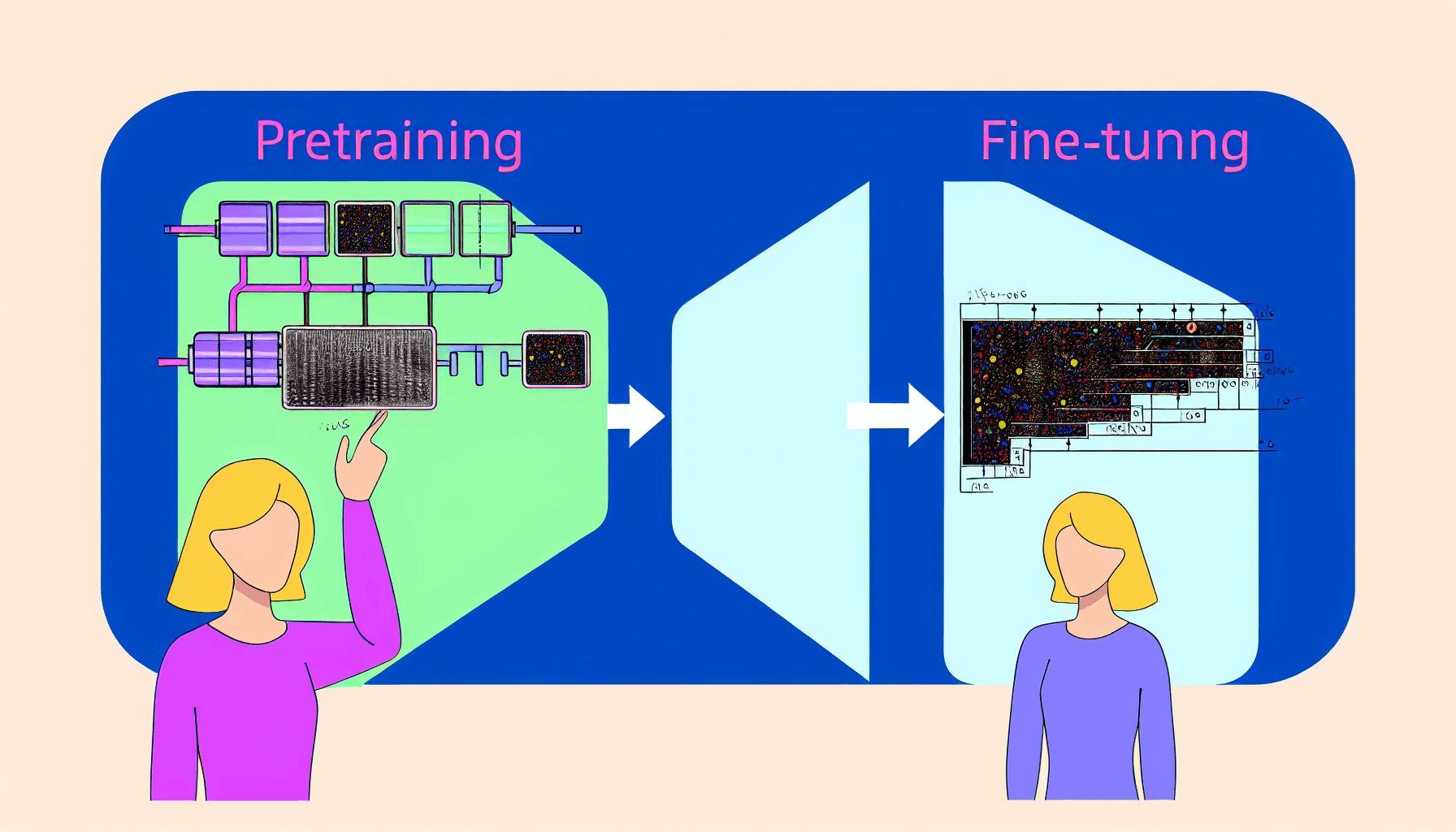
Pretraining vs. Fine-Tuning: Choosing the Right Approach in Machine Learning
Introduction
Machine learning models are becoming increasingly essential for solving complex problems across various sectors. Two critical techniques in developing these models are pretraining and fine-tuning. Understanding the distinctions and applications of each method is crucial for effectively deploying machine learning algorithms.
Understanding Pretraining
Pretraining involves training a machine learning model on a large dataset before it is further trained on a more specific dataset. This technique is especially useful for tasks where labeled data is scarce. By leveraging pretraining, models can learn general features that are later adjusted during fine-tuning.
Benefits of Pretraining
- Improved learning efficiency: Models can converge faster during fine-tuning if they have been pretrained on a relevant dataset.
- Better generalization: Pretrained models often perform better on tasks that are not similar to the training data, owing to their broader learning base.
- Cost-effective: Reduces the need for vast amounts of labeled data, which is often expensive and time-consuming to procure.
Delving into Fine-Tuning
Fine-tuning involves taking a pretrained model and training it further with a smaller, more specific dataset tailored to a particular task. This step is crucial for adapting the generalized knowledge obtained during pretraining to specific use cases.
Advantages of Fine-Tuning
- High adaptability: Allows the model to adapt to the nuances of new data specific to a particular problem or domain.
- Enhanced performance: By adjusting to specific tasks, fine-tuning can lead to better accuracy and predictiveness in targeted applications.
- Resource efficiency: Fine-tuning requires less computational resources compared to training a model from scratch.
Choosing Between Pretraining and Fine-Tuning
Choosing between pretraining and fine-tuning depends largely on the specific requirements and constraints of your project. Consider factors like data availability, computational resources, and the ultimate goal of the model.
When to Use Pretraining
-
If you have access to a large, generic dataset.
-
When dealing with tasks where labeled data is limited.
-
To bootstrap the performance of models in specialised domains.
When to Prefer Fine-Tuning
-
When customized performance on specific tasks is critical.
-
If the task requires adaptation to nuanced features of the dataset.
-
To maximize the efficacy of specialized models in narrow fields.
Best Practices for Effective Pretraining and Fine-Tuning
Effective application of pretraining and fine-tuning requires a strategic approach. Below are some best practices that can help optimize the performance of machine learning models using these techniques:
- Use diverse datasets for pretraining: This ensures that the model learns a wide range of features, which improves its ability to generalize before fine-tuning.
- Incremental learning: Gradually increase the difficulty of tasks during fine-tuning to help the model adapt more efficiently.
- Regular evaluations: Continuously assess the model’s performance throughout the pretraining and fine-tuning processes to ensure it meets the desired goals.
- Utilize modern algorithms and tools: Stay updated with the latest advancements in machine learning technologies to enhance both pretraining and fine-tuning processes.
Conclusion
Both pretraining and fine-tuning are indispensable techniques in the field of machine learning. By choosing the right approach based on the nature of your project, you can significantly enhance the performance of your AI models. With the continuous advancements in AI and machine learning, leveraging these techniques effectively will become increasingly important for developing robust, efficient, and adaptive models.
Further Reading and Resources
For those looking to delve deeper into machine learning strategies, considering resources like online courses, industry papers, and expert blogs can be invaluable. Regularly engaging with the community and ongoing research can also aid in keeping your practices on the cutting edge.
Thank You for Reading this Blog and See You Soon! 🙏 👋
Let's connect 🚀
Latest Insights
Deep dives into AI, Engineering, and the Future of Tech.
I Tried 5 AI Browsers So You Don’t Have To: Here’s What Actually Works in 2025
I explored 5 AI browsers—Chrome Gemini, Edge Copilot, ChatGPT Atlas, Comet, and Dia—to find out what works. Here are insights, advantages, and safety recommendations.
Read Article


