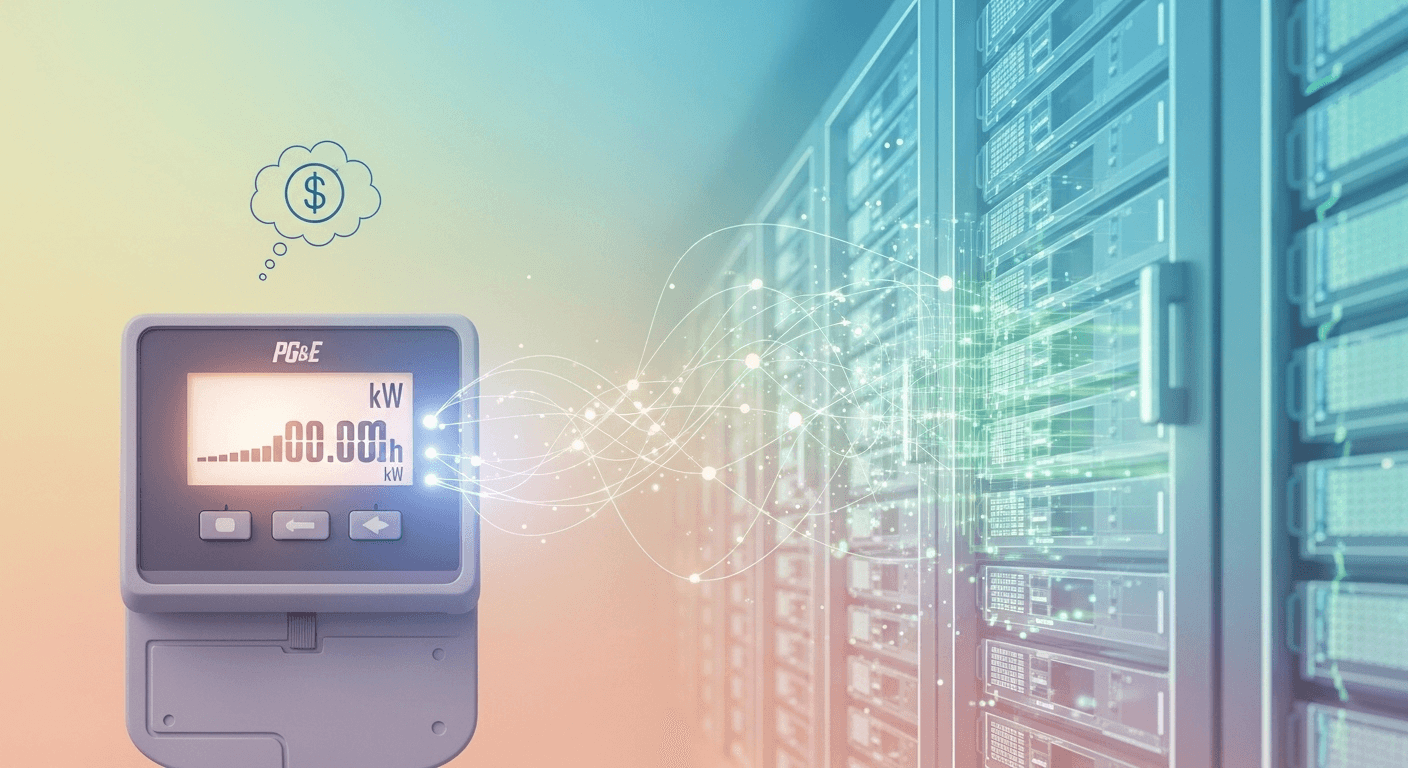
PG&E’s AI Whiplash: From Bankruptcy to Boom — What It Means for Your Energy Bill
PG&E’s AI Whiplash: From Bankruptcy to Boom — What It Means for Your Energy Bill
The surge of artificial intelligence (AI) is driving a rapid increase in data center construction across the United States. In California, this growth is placing additional strain on an already pressured power grid, which is grappling with wildfire safety improvements, electrification, and ambitious clean energy goals. At the heart of this transition is PG&E, the state’s largest utility, which is now receiving numerous requests for massive new electricity loads. The pressing question remains: will this AI boom lead to higher energy bills for consumers?
The Importance of This Moment
AI systems, including large language models and image generators, rely on powerful, energy-hungry chips. Scaling these technologies necessitates data centers that consume as much electricity as a small city—loads that don’t easily fit into a grid designed for an earlier era.
California is undergoing a multi-year initiative to strengthen its grid against wildfires, integrate unprecedented amounts of clean energy, and ensure reliable electricity as more vehicles and buildings become electrified. The addition of gigawatts in data center demand could significantly influence where and how the state constructs new lines, plants, and storage facilities, as well as how costs get distributed among users.
PG&E’s Journey: From Crisis to Growth
PG&E filed for Chapter 11 bankruptcy in 2019 due to wildfire liabilities but emerged in mid-2020 with a court-approved restructuring plan and enhanced oversight from the state. Since then, the company has focused on reducing wildfire risks, undergrounding power lines, and modernizing its grid, all while planning for steady rate base growth over the next decade.
- In July 2020, PG&E emerged from bankruptcy after California regulators approved its reorganization plan and safety commitments. For more details, see CPUC and PG&E disclosures (CPUC, PG&E).
- In November 2023, the CPUC sanctioned PG&E’s multi-year spending plan focusing on wildfire mitigation and undergrounding—significant contributors to recent rate hikes (CPUC 2023 GRC decision).
Now, the surge in AI-driven demand for data centers presents both challenges and opportunities for PG&E’s long-term strategy.
Understanding the AI Data Center Surge
Modern AI models need considerable data and computing power, mainly provided by specialized chips (like GPUs) in energy-intensive data centers. A single large facility can require between 50 to 200 megawatts of power, with clusters of such facilities rapidly adding up to gigawatt-scale demands. Cooling these chips often demands even more electricity.
But how significant could this demand become? Various credible analyses point to a sharp rise in electricity needs from data centers and AI operations throughout this decade.
- The International Energy Agency forecasts that global electricity consumption by data centers, AI, and cryptocurrency could nearly double from 2022 levels by 2026, potentially reaching between 620 and 1,050 TWh per year (IEA Electricity 2024).
- According to Lawrence Berkeley National Laboratory, U.S. data centers used about 1.8% of the nation’s electricity in 2022 and may see that figure more than double by 2030 due to AI acceleration (LBNL, 2023 update).
- Independent forecasts and U.S. government outlooks identify data centers as a leading contributor to new load growth through the late 2020s (EIA STEO).
California is an attractive location for data centers due to the presence of AI labs, cloud providers, and chip design companies. However, many areas in the Bay Area are serviced by other utilities, leading developers to explore PG&E territory further inland, like the Central Valley, where large plots of land and access to renewable energy resources may be more readily available.
Understanding Grid Costs and Payment Structures
Utility bills are comprised of three primary components: costs for fuel and energy purchases, grid infrastructure expenses, and program costs (including efficiency incentives and assistance for low-income customers). When large new customers come online, they typically cover the costs associated with connecting their sites but not always the broader infrastructure upgrades that benefit the larger user base. This complexity raises important questions regarding cost allocation.
Distribution Upgrades
- Site-specific distribution upgrades—like feeders, line extensions, and local transformers—are often financed upfront by the customer according to utility rules and tariffs. Refer to PG&E’s Electric Rules 2 and 15 for details (Rule 2, Rule 15).
- The specifics depend on whether facilities are designated as customer-specific, shared, or part of network enhancements. Refunds or credits may apply over time as additional customers connect.
Transmission Upgrades
- High-voltage network expansions are organized regionally and costs are shared among all customers through a Transmission Access Charge in the CAISO area. Specific rules determine who incurs costs and who benefits (CAISO TAC primer).
- While large new loads can increase the need for transmission, the costs associated with transmission generally benefit multiple customers and support overall reliability. This shared cost structure is a core aspect of the ratepayer fairness conversation.
Power Supply and Resource Adequacy
- Utilities and energy providers must also secure sufficient capacity to meet peak demand according to California’s resource adequacy regulations. Adding large loads can intensify procurement needs, particularly in evening hours when solar energy diminishes.
- Since 2021, California has commissioned gigawatts of new clean resources, long-duration storage, and reliability capacity to keep pace with demand as older resources retire (CPUC procurement).
The Impact of the AI Surge on Your Bill
In the short term, most of the pressures on PG&E bills are stemming from wildfire mitigation efforts, undergrounding projects, and historical underinvestment—not directly from AI. These significant costs have already been factored into approved rates. However, the influence of AI is poised to increase over the next 3 to 8 years as new data centers come online and regional transmission and capacity needs evolve.
Key Considerations
- Location of data centers. If projects cluster in areas with existing capacity, incremental costs will be lower. However, if they necessitate new substations and extensive transmission lines, shared costs may rise.
- Timeline and scale. Several hundred megawatts spread over multiple years are manageable, while multi-gigawatt clusters on expedited timelines are more complex and costly to accommodate.
- Funding for upgrades. Stricter cost allocation rules, special contracts, and demand-side solutions can limit how much burden is placed on households and small businesses.
- Clean energy sources. More wind, solar, geothermal, and storage options can help stabilize costs over the long term but come with time-consuming siting and permitting processes.
In summary, the AI surge is likely to contribute to increased system costs over time, particularly for transmission and evening capacity. However, smart policy decisions and appropriate site selection can significantly influence the impact on everyday consumers.
California’s Growing Grid Infrastructure Needs
Even before the AI wave, California recognized the necessity of expanding its grid to achieve its climate and reliability objectives. Planning under SB 100 calls for rapid growth in clean energy production, storage, and transmission throughout this decade and beyond.
- SB 100 planning indicates that the state will require tens of gigawatts of new wind and solar along with reliable clean power and long-duration storage to achieve 100% clean electricity by 2045 (CEC SB 100).
- CAISO’s annual transmission plan outlines necessary multibillion-dollar upgrades to transport new renewable energy to load centers and maintain reliability amid changing resource dynamics (CAISO transmission planning).
When large AI data center clusters are added to these considerations, the need for new lines, substations, and grid-scale storage becomes even more critical—especially in the Bay Area and Central Valley where growth is expected to be concentrated.
Policy Debates on Cost Allocation
Regulators are currently addressing how to equitably distribute costs when high-load customers arrive with urgent timelines. Three key questions remain:
- Can utilities utilize specialized tariffs and contracts to ensure that significant customers fulfill their fair share of capacity costs?
- Should siting be guided toward areas with existing capacity and clean energy sources through appropriate pricing signals and interconnection prioritization?
- How can we hasten the deployment of transformers, substations, and transmission infrastructure without unduly shifting costs to residential customers?
California has already made some adjustments to its rate designs, including implementing a new income-based fixed charge on residential customers, aimed at optimizing cost recovery and reducing per-kWh rates over time (CPUC IGFC, 2024). While not crafted specifically for AI, such changes can impact how future system costs are allocated across different customer segments.
Actions for PG&E and Data Center Developers
Effective strategies can help mitigate cost issues and reduce friction as new data centers come online:
- Choose locations that maximize headroom. Favor sites near established substations, transmission corridors, and accessible clean energy zones to minimize infrastructure upgrades.
- Invest in onsite resources. Integrating facilities with battery storage, demand response systems, and onsite generation can help reduce peak demand and interconnection expenses. Some developers are looking at options like fuel cells and advanced heat recovery.
- Adjust load patterns. Running less urgent training processes during off-peak periods and coordinating with utility demand response programs can alleviate pressure during peak hours.
- Utilize long-term clean energy contracts. Partnerships featuring wind-solar combinations, geothermal sources, and long-duration storage options can stabilize prices and reduce emissions.
- Be mindful of water and air quality. Cooling technologies and backup power solutions must comply with California’s rigorous environmental standards and consider local community expectations.
Implications for Households and Small Businesses
For most PG&E customers, the main contributors to bill increases over the next few years will still relate to wildfire safety, necessary clean energy procurements already mandated by regulators, and general inflation affecting equipment and labor. AI-related costs are expected to compound in the future and will significantly depend on the locations and methods of data center interconnection.
Here are ways you can potentially reduce your bill:
- Consider a time-of-use plan that matches your routine, allowing you to shift usage to lower-cost times.
- Leverage smart thermostats and appliance timers to reduce energy use during evening peak hours.
- Evaluate the feasibility of rooftop solar combined with storage solutions, or investigate options for community solar programs.
- Explore available rebates and incentives for upgrading to efficient appliances, heat pumps, and insulation.
California’s long-term goal is clear: to build a cleaner, expanded, and smarter grid. If planned effectively, the AI surge can contribute to financing this initiative rather than merely inflating costs. Conversely, poorly planned projects could result in escalating expenses.
Realities of Reliability and Resilience
There are valid concerns that significant new power demands could affect system reliability. However, California is proactively addressing these challenges while advancing clean energy initiatives.
- The state has extended the operation of the Diablo Canyon nuclear plant into the early 2030s to maintain a key source of carbon-free baseload energy during this transition (CPUC, 2023).
- California has contracted for or brought online substantial new grid battery storage capacities that support evening peaks and mitigate the risk of summer shortages (CEC milestones).
- Federal reforms to interconnection processes aim to alleviate queue backlogs, ensuring that ready-to-build projects proceed more swiftly (FERC Order 2023).
In summary, while there are real reliability challenges, they can be managed with careful planning. AI-driven demands do not have to lead to blackouts—but they do require an evolving grid capable of handling these new loads.
Balancing Economic Development and Ratepayer Protection
Data centers present opportunities for job creation, tax revenue, and additional investments. They can also provide significant long-term electricity load that helps spread fixed costs, provided their contributions are structured fairly. Policymakers face a critical balancing act:
- Capture economic advantages by making interconnection processes efficient and predictable.
- Ensure cost-causation principles are adhered to, preventing residential households from subsidizing high-profit data centers.
- Utilize pricing strategies, interconnection protocols, and incentives to direct projects toward maximizing public value.
Achieving this balance will shape how the AI era impacts your utility bill.
Conclusion: AI Has Potential to Fund a Better Grid — If We Get the Rules Right
PG&E’s narrative reflects the greater energy transition facing the industry. Following a challenging reorganization, the utility now faces a wave of new demand stemming from AI, which could lead to funding smarter, cleaner infrastructure or further stressing an already burdened system. The outcome will hinge on regulations, cost allocation, and practical implementation.
For consumers, there are two key takeaways: First, most near-term bill pressures are due to factors predating the current AI boom. Second, how California navigates the next batch of data centers will significantly influence energy bills in the latter part of this decade. With thoughtful regulations, strategic siting, and a flexible approach to demand management, the growth in AI does not have to translate into soaring electricity costs.
FAQs
Will AI data centers cause my bill to spike this year?
Unlikely. Most projected increases for 2024-2026 are attributed to wildfire mitigation and other pre-approved investments. The financial impact of AI will accumulate gradually as more projects connect and transmission and capacity demands expand.
Are data centers paying their fair share?
Generally, they are responsible for funding site-specific distribution improvements and ongoing demand charges. However, expenses related to broader network infrastructure, such as high-voltage transmission, are allocated among customers regionally. Regulators are exploring methods to reinforce cost-causation for substantial new loads.
Could AI strain California’s reliability?
Large new electricity demands pose challenges, but California is enhancing its grid capacity by adding batteries, extending the operational life of Diablo Canyon, and increasing procurement capacity. Effective location planning and off-peak operations can alleviate peak time stresses.
Why not concentrate data centers in areas with cheap power?
Some data centers are indeed being located in these areas. However, many require low latency and access to skilled labor and cloud regions, which makes California an appealing choice. Policies can still direct projects towards places with stronger grid resources.
What can households do to lower their bills?
Shift energy use to off-peak hours, upgrade to energy-efficient appliances, and consider solar solutions that include storage. Check your utility’s rebates and time-of-use pricing options.
Sources
- CPUC – PG&E Bankruptcy Background
- PG&E – Restructuring Information
- CPUC – PG&E General Rate Case Approval (Nov 2023)
- IEA Electricity 2024 – Data Centers, AI, and Crypto Demand
- Lawrence Berkeley National Lab – U.S. Data Center Energy Use (2023 Update)
- U.S. EIA – Short-Term Energy Outlook
- CAISO – Transmission Planning
- CAISO – Transmission Access Charge Primer
- CPUC – Long-Term Procurement and Resource Adequacy
- CPUC – Income-Graduated Fixed Charge Decision (2024)
- CPUC – Diablo Canyon Extension Approval
- CEC – California Clean Energy Milestones (Grid Batteries)
- FERC – Order 2023 Interconnection Reform
- PG&E – Electric Rule 2
- PG&E – Electric Rule 15
Thank You for Reading this Blog and See You Soon! 🙏 👋
Let's connect 🚀
Latest Insights
Deep dives into AI, Engineering, and the Future of Tech.
I Tried 5 AI Browsers So You Don’t Have To: Here’s What Actually Works in 2025
I explored 5 AI browsers—Chrome Gemini, Edge Copilot, ChatGPT Atlas, Comet, and Dia—to find out what works. Here are insights, advantages, and safety recommendations.
Read Article


