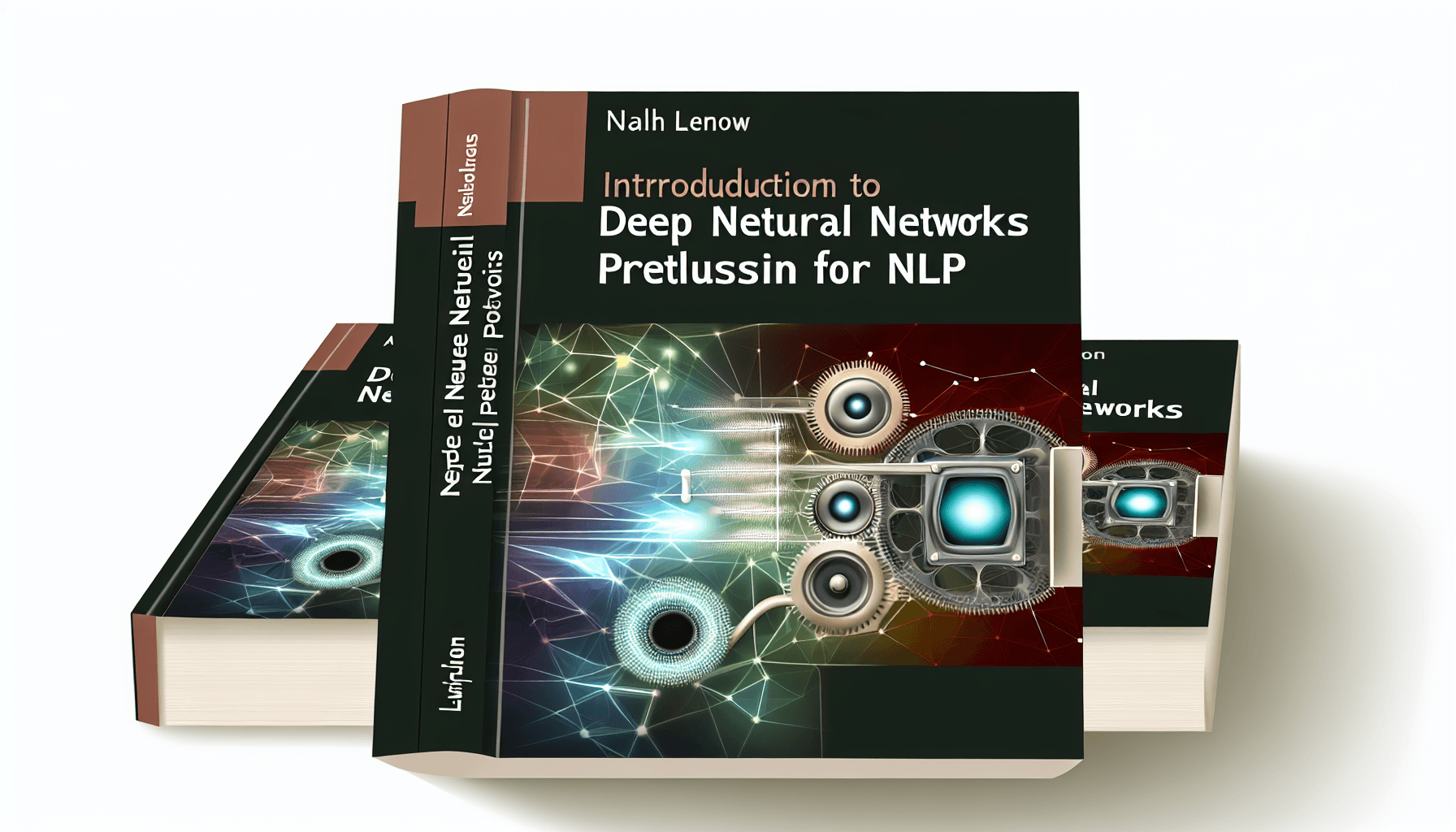
Introduction to Deep Neural Networks for NLP
Understanding Neural Networks in NLP
Neural networks represent a cornerstone of modern artificial intelligence (AI), particularly in the domain of Natural Language Processing (NLP). This technology mimics the human brain’s ability to process natural language data, enabling machines to understand, interpret, and respond to human language in a meaningful way.
Core Concepts of Neural Networks
At the heart of neural networks are layers of neurons, or nodes, connected by pathways that transmit signals. Each neuron processes the input received and passes on its output to the next layer. The complexity of neural networks can vary, with deep neural networks containing multiple hidden layers that allow for the processing of more complex data patterns.
Why Use Neural Networks for NLP?
Traditional computational approaches to NLP often struggle with the nuances of human language, such as idioms, cultural nuances, and evolving vocabulary. Neural networks, however, excel in handling these complexities due to their ability to learn from vast amounts of textual data, making them ideal for applications in NLP.
Key Technologies in NLP Deep Learning
Deep learning models, a subset of neural networks, have revolutionized NLP by enabling advanced language understanding and generation capabilities. Among these models, a few have been particularly influential.
Recurrent Neural Networks (RNN)
RNNs are designed to handle sequential data, such as text or speech. Unlike feedforward neural networks, RNNs have loops in them, allowing information to persist. This capability makes RNNs well-suited for tasks like language modeling and text generation.
Long Short-Term Memory Networks (LSTM)
LSTM networks, a special kind of RNN, are crucial for solving the vanishing gradient problem that RNNs face. LSTMs are adept at remembering information for long periods of time, which is essential in processing and predicting what comes next in a sentence, making them invaluable for NLP applications like machine translation and speech recognition.
Transformers
Transformers have set new standards in NLP tasks due to their unique architecture, which foregoes sequential processing in favor of parallel computation. This enables faster and more efficient training of models. The popular BERT (Bidirectional Encoder Representations from Transformers) and GPT (Generative Pre-trained Transformer) models are based on transformer technology, facilitating breakthroughs in understanding and generating human-like text.
Applications of Deep Neural Networks in NLP
The implementation of deep neural networks in NLP has led to significant advancements across various applications. Here are some areas where deep neural networks have been effectively employed:
Machine Translation
Deep learning models have enhanced the quality and efficiency of machine translation services, enabling more accurate and contextual translations between languages.
Sentiment Analysis
Companies use deep neural networks to analyze customer feedback, social media comments, and reviews to gauge public sentiment, helping in brand monitoring and product analytics.
Chatbots and Virtual Assistants
Deep learning has improved the responsiveness and context understanding of chatbots and virtual assistants, making them more helpful and conversational.
Speech Recognition
The advancements in neural network technologies have significantly improved speech recognition systems, enhancing their accuracy and making them more adaptable to various accents and languages.
Future of Deep Neural Networks in NLP
As NLP continues to evolve, the role of deep neural networks is expected to expand, leading to more innovative applications and tools. The integration of AI in human language processing is set to become more seamless, intuitive, and effective, thereby broadening the scope of what computers can understand and how they interact with humans.
Challenges and Opportunities
While the progress in deep neural networks for NLP is promising, challenges such as data privacy, ethical considerations, and the need for more diverse datasets remain. However, these challenges also present opportunities for innovation and improvements in the field of NLP.
Understanding and leveraging deep neural networks in NLP not only enhances the capabilities of AI but also offers a glimpse into the future of human-computer interaction.
Conclusion
Deep neural networks have significantly changed the landscape of NLP, bringing us closer to understanding the full spectrum of human language in computational terms. Their ability to process complex and subtle language patterns continues to push the boundaries of what machines can achieve in terms of language understanding and generation, heralding a new era of AI applications that are more intuitive and intelligent than ever before.
Thank You for Reading this Blog and See You Soon! 🙏 👋
Let's connect 🚀
Latest Insights
Deep dives into AI, Engineering, and the Future of Tech.
I Tried 5 AI Browsers So You Don’t Have To: Here’s What Actually Works in 2025
I explored 5 AI browsers—Chrome Gemini, Edge Copilot, ChatGPT Atlas, Comet, and Dia—to find out what works. Here are insights, advantages, and safety recommendations.
Read Article


