Inside Google’s AI Power Struggle: Speed, Safety, and the Demis Hassabis Dilemma
Inside Google’s AI Power Struggle: Speed, Safety, and the Demis Hassabis Dilemma
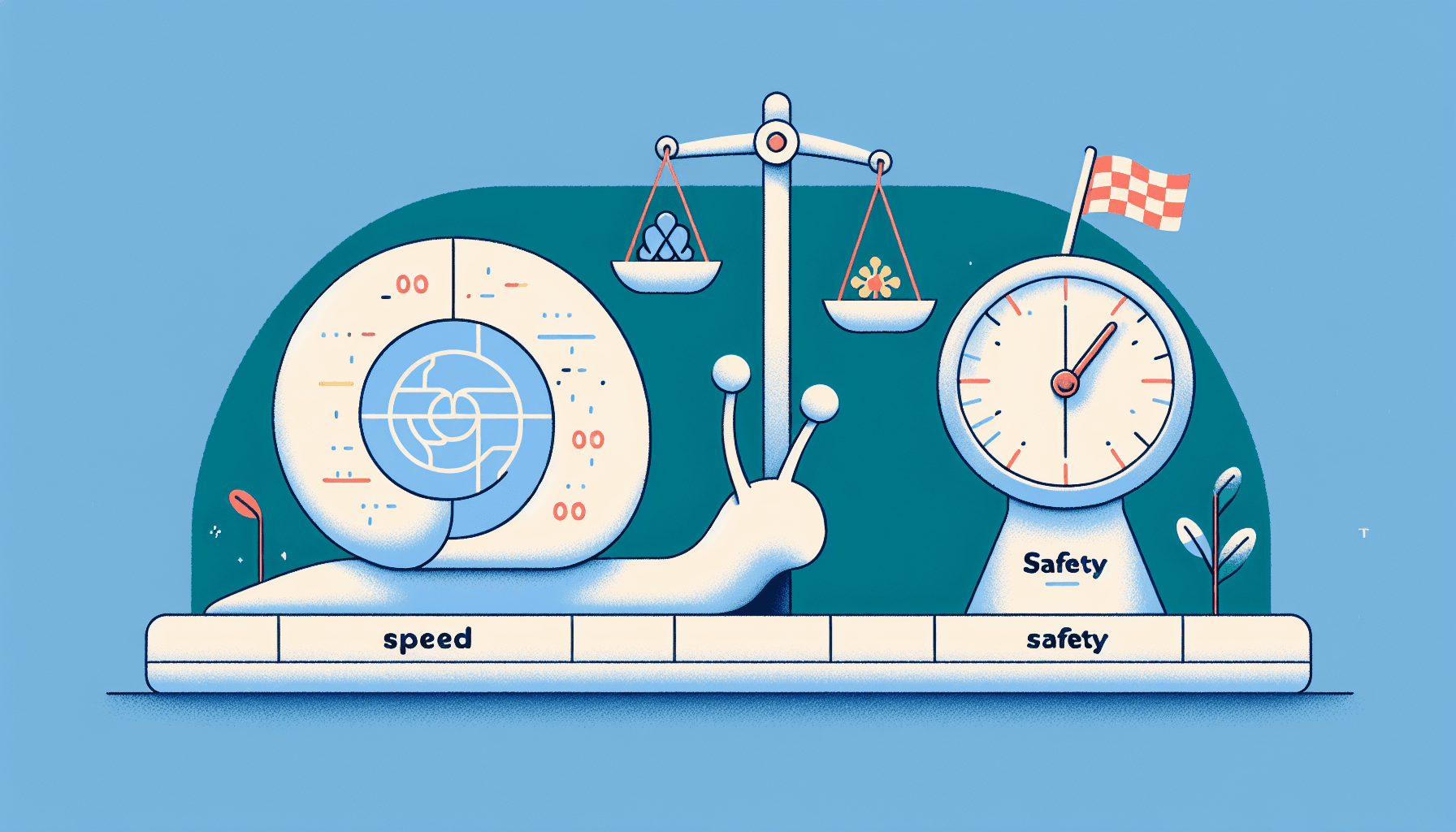
Google is racing to put artificial intelligence everywhere—from Search to Workspace to Android. At the same time, Demis Hassabis, head of Google DeepMind, has become the most prominent internal voice for caution. That tension—ship faster vs. slow down and get it right—matters far beyond Google. It’s the same balancing act facing every entrepreneur and leader building with AI today.
Why this matters right now
In the past year, Google has accelerated its AI rollout to keep pace with OpenAI and Microsoft. The company unveiled “AI Overviews” for Search and pushed its Gemini models across products. But it also hit turbulence: controversial image generation from Gemini and headline-grabbing AI Overviews mistakes. Recent reporting has highlighted internal friction as Google tries to move faster while its AI leadership—especially Demis Hassabis—pushes for restraint and stronger safeguards (seed reporting).
For founders and operators, this isn’t just Big Tech gossip. It’s a strategic playbook question: how do you compete in AI without burning trust, breaking products, or breaking the law?
Who is Demis Hassabis—and what is Google DeepMind?
Demis Hassabis is a neuroscientist, entrepreneur, and cofounder of DeepMind—the AI lab behind AlphaGo and AlphaFold. In 2023, Google merged DeepMind with Google Brain to form Google DeepMind, appointing Hassabis as CEO of the unified unit. The goal: coordinate research and productization more tightly under one leadership umbrella (Google).
Hassabis has long urged the industry to take AI risks seriously. In 2023, he told the BBC that society needed to “start thinking hard about” the risks and governance of advanced systems—even as the technology moves quickly (BBC).
Google’s new AI push: the competitive context
Here’s the backdrop:
- OpenAI momentum: GPT-4 and ChatGPT kicked off a platform shift, with Microsoft integrating AI across Windows, Office, and Bing.
- Google’s response: Launch the Gemini family of models and infuse them into Search, Android, and Workspace.
- Search gets an AI makeover: In May 2024, Google introduced AI Overviews—summaries directly on results pages, aiming to save users a click by synthesizing information (Google).
The stakes couldn’t be higher. AI changes user behavior and, potentially, advertising economics. Moving too slowly risks losing relevance; moving too fast risks losing credibility.
Where things went wrong: two cautionary tales
1) Gemini’s image generation controversy
In February 2024, Google paused Gemini’s ability to generate images of people after historically inaccurate outputs went viral. The company acknowledged problems with the model’s handling of prompts and context, and said fixes were underway (The Verge; The Guardian).
What it means: AI systems can fail in ways that go beyond basic accuracy—they can stumble on representation, historical context, and cultural sensitivity. Fixes require not just better training data and guardrails, but also careful product and policy design.
2) AI Overviews’ “glue on pizza” moment
Soon after launch, examples of AI Overviews producing misleading or bizarre answers spread online. Google said the problematic responses often came from fringe content and adversarial prompts, and announced updates to reduce errors and strengthen content filtering (The Verge; Wired).
What it means: When you summarize the web at scale, long-tail failure modes matter. A handful of viral mistakes can drown out millions of correct answers—and dent trust with users and partners.
Speed vs. safety at Google: reading the tension
Reports suggest Hassabis has pushed internally for a more measured rollout while Google’s product org accelerates releases in response to competitive pressure (seed reporting). Even without inside baseball, the public pattern is clear: Google is doing two hard things at once—expanding AI features quickly while trying to enforce new safety bars.
When your brand promises “reliable AI,” the bar for acceptable failure is low—especially in products as consequential as Search.
That’s not a Google-only lesson. Any company shipping AI into core, high-trust experiences faces the same trade-offs. The difference is that Google’s scale turns every misstep into a headline.
What leaders can learn: a practical AI launch playbook
Whether you’re a startup founder or a product leader at a mid-size company, you can borrow the best of both instincts—Hassabis’s caution and Google’s urgency—by adopting a simple, disciplined playbook:
1) Stage-gate your launches
- Pilot narrowly: Start with internal users, then a small beta. Use whitelists and enable granular feature flags.
- Collect the right signals: Track not just accuracy, but harmful outputs, hallucination rates, and user trust metrics.
- Define “go/no-go” criteria: Pre-commit to quantitative thresholds and qualitative red flags. If you miss the bar, delay.
2) Treat safety as a product surface
- Guardrails and hard constraints: Use policy-tuned models, content filters, and safety classifiers before and after generation.
- UI affordances: Add citations, confidence cues, and easy escalation/reporting controls.
- Human fallback: For high-stakes actions, provide human review or confirmations.
3) Build a pre-mortem culture
- Adversarial testing: Red-team with internal specialists and external experts. Incentivize worst-case prompt discovery.
- Policy rehearsal: Run drills: “What if the model makes a politically sensitive error the week before an election?”
- Incident response: Create a clear, cross-functional plan: how to pause a feature, communicate, and roll back safely.
4) Align incentives and governance
- Tie bonuses to safety KPIs: Reward teams for reducing harm metrics and for measured, successful rollouts—not only speed.
- Independent review: An internal safety board with veto power can prevent “ship-at-all-costs” pressure.
- Transparent communication: Publish model cards, evaluations, and known limitations.
5) Invest in evaluation and data curation
- Domain-specific evals: Don’t rely on generic benchmarks. Create tests that match your use case and risk profile.
- Data hygiene: Curate and de-bias data. Log failures, retrain often, and monitor drift in the wild.
- Feedback loops: Make it easy for users to flag problems—and prove you act on that feedback.
For implementation checklists and templates, see this practical resource hub: AI Developer Code.
Understanding Google’s moves in context
To its credit, Google has acknowledged missteps and pushed fixes quickly. For AI Overviews, the company updated content filtering and tuned triggers to reduce long-tail nonsense answers (The Verge). For Gemini images, Google paused generation of people entirely and committed to relaunching only after deeper changes (The Verge).
Meanwhile, the underlying tech keeps advancing. Google’s Gemini roadmap emphasizes multimodality and very long context windows, which could enable new productivity and creative workflows—if the guardrails keep pace (Google).
The Hassabis factor: a strategist’s lens
Hassabis’s public stance has been consistent: AI is powerful and promises big benefits, but it demands careful handling and governance (BBC). From a leadership perspective, having a high-profile AI scientist at the table can balance commercial urgency with scientific skepticism.
That mix matters. Companies that empower technical leaders to set safety bars—without ceding all speed—tend to build more trustworthy systems. The trick is designing decision rights and KPIs upfront so “caution” isn’t just a sentiment but an operational principle.
For entrepreneurs: how to compete without the chaos
AI is a credibility business. You don’t need perfect models to win, but you do need predictable behavior, clear communication, and fast iteration on real-world feedback.
- Narrow the problem: Pick use cases where ambiguity is limited and failure costs are low (or mitigable).
- Be explicit about limits: Disclose what your AI can’t do, and make escalation easy.
- Instrument everything: Log prompts, outputs, and user corrections (with consent). Use that data to improve.
- Version safety, not just features: Treat safety policies and filters as first-class artifacts with changelogs.
- Ship in public—but responsibly: Beta labels, staged rollouts, and quick fixes build trust while you learn.
What to watch next
- Search: Will AI Overviews become the default for more queries—and can Google maintain quality at scale?
- Gemini’s relaunch moments: How Google reintroduces sensitive features (like people image generation) will be a bellwether for its safety posture.
- Governance signals: Look for more transparency—model cards, external audits, or safety reports—from Google DeepMind.
Bottom line
Google’s AI journey shows what every AI-first company must master: moving fast without breaking trust. Hassabis’s caution and Google’s ambition aren’t opposites—they’re complementary forces when channeled through clear governance, strong evaluation, and staged releases. That’s the balance to aim for if you want AI that delights users and survives the next news cycle.
FAQs
Who is Demis Hassabis?
Demis Hassabis is the CEO of Google DeepMind and cofounder of DeepMind. He’s known for research breakthroughs like AlphaGo and for advocating responsible AI development (Google; BBC).
What is Google DeepMind?
Google DeepMind is Google’s consolidated AI research and product group, formed by merging Google Brain and DeepMind in 2023 to accelerate advanced AI and its application (Google).
What went wrong with AI Overviews?
Shortly after launch, AI Overviews produced some odd or misleading answers, often from edge-case prompts or fringe content. Google deployed fixes to reduce these failures (The Verge; Wired).
How can startups balance speed and safety in AI?
Use stage-gated rollouts, safety KPIs, adversarial testing, and transparent UI cues (citations, feedback buttons). Pre-commit to go/no-go criteria and pause if thresholds aren’t met.
Will tighter AI safety slow innovation?
In the short term, it can add friction. In the long term, it reduces costly incidents, improves user trust, and accelerates sustainable adoption—often a net speedup.
Sources
- Google’s Demis Hassabis Chafes Under New AI Push — The Information (via Google News)
- Google: Announcing Google DeepMind (2023)
- Google: Introducing AI Overviews in Search (2024)
- The Verge: Google pauses Gemini’s image generation of people (2024)
- The Guardian: Google pauses Gemini AI people image generation (2024)
- The Verge: Google rolls out fixes for AI Overviews (2024)
- Wired: Why Google’s AI Overviews made mistakes (2024)
- BBC: Demis Hassabis on AI risk and regulation (2023)
Thank You for Reading this Blog and See You Soon! 🙏 👋
Let's connect 🚀
Latest Insights
Deep dives into AI, Engineering, and the Future of Tech.
I Tried 5 AI Browsers So You Don’t Have To: Here’s What Actually Works in 2025
I explored 5 AI browsers—Chrome Gemini, Edge Copilot, ChatGPT Atlas, Comet, and Dia—to find out what works. Here are insights, advantages, and safety recommendations.
Read Article


