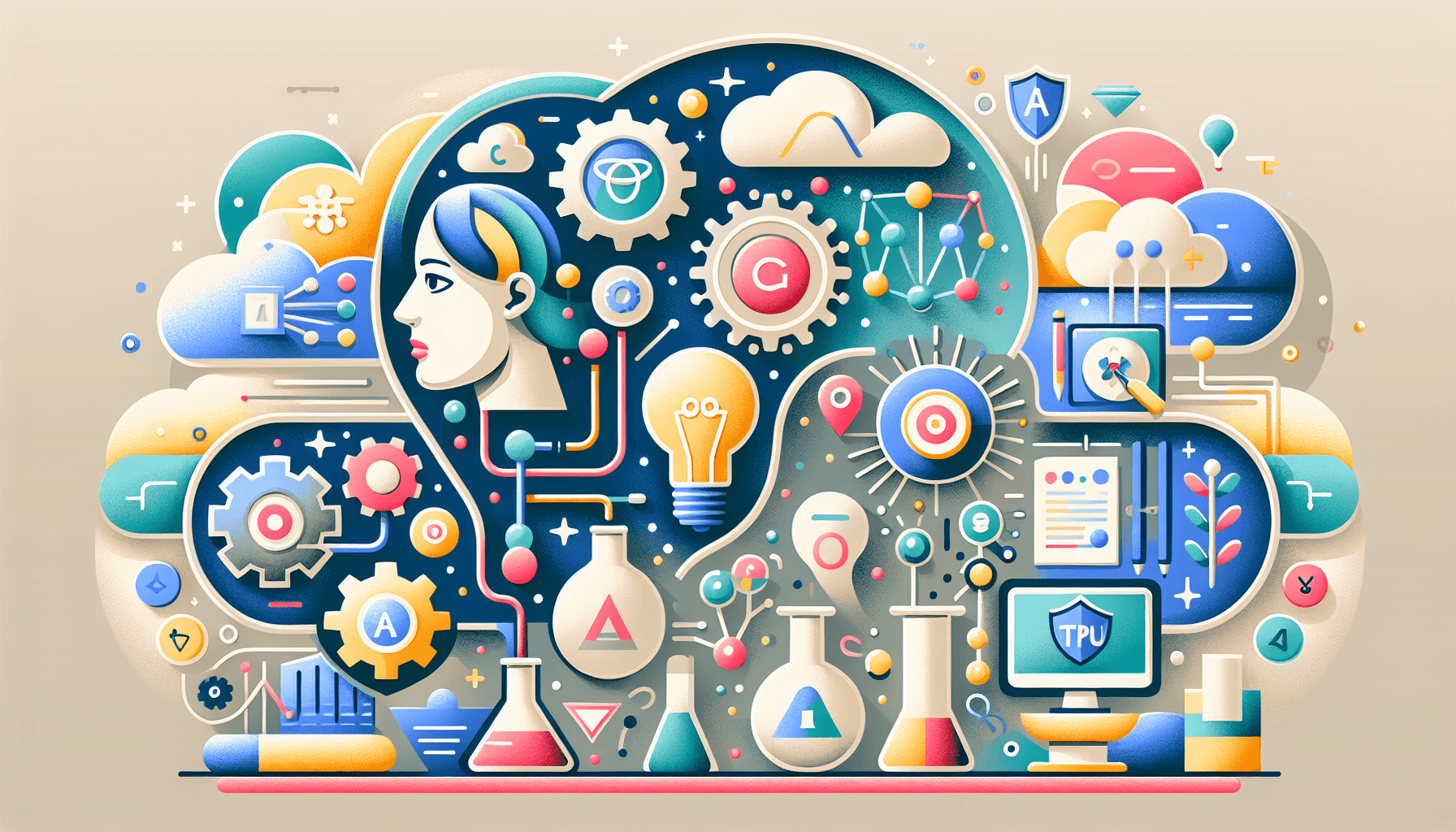
Inside Demis Hassabis’s Quiet Power Play: How Google DeepMind Is Rewriting Google’s AI Future
Inside Demis Hassabis’s Quiet Power Play: How Google DeepMind Is Rewriting Google’s AI Future
TL;DR: Since Google merged DeepMind with Google Brain into Google DeepMind in 2023, CEO Demis Hassabis has become the company’s central AI strategist. His bets span frontier models (Gemini), long-context multimodality, and scientific moonshots like AlphaFold. The upside is a clearer roadmap and faster research-to-product transfer; the risks are consumer trust blips, governance trade-offs, and compute bottlenecks. Here’s what’s actually changing—and what to watch next.
Why Hassabis matters now
Demis Hassabis co-founded DeepMind and helped usher in landmark systems like AlphaGo and AlphaFold. After Google consolidated its two flagship AI orgs into Google DeepMind in 2023, Hassabis was put in charge of the combined unit—effectively making him the steward of Google’s AI agenda across research and products. That reorg aimed to align cutting-edge research with shipping product lines, while keeping a strong safety focus.
Google’s rationale: unify world-class research with scaled products to accelerate progress responsibly—while avoiding duplicated effort across teams.
The new operating model: research to product, faster
Historically, Google’s AI breakthroughs sometimes lagged on productization. Under Hassabis, the emphasis has shifted to tight loops between model research and products:
- Frontier models as a platform: Gemini became the company’s base model family for Search, Android, Workspace, and Cloud. The 2024 upgrade to Gemini 1.5 emphasized ultra-long context and multi-modality—traits that underpin code assistants, agents, and enterprise copilots.
- Agents over chats: Beyond chat, the roadmap tilts toward task-completing agents that see, listen, and act. Long-context and multimodal grounding are the building blocks for this shift.
- Science-to-impact pipeline: DeepMind’s science engines (e.g., AlphaFold) increasingly hand off to downstream Alphabet businesses, notably Isomorphic Labs for drug discovery.
Flagship bets (and what they unlock)
1) Gemini: the unifying model stack
Gemini’s design goal is to be natively multimodal, spanning text, code, audio, and vision—while supporting long context windows that let products reason over meetings, documents, or video streams. This supports both consumer use cases (mobile assistants, productivity) and enterprise ones (document understanding, contact center intelligence).
Why it matters: a single, continuously trained model backbone reduces fragmentation across teams and surfaces improvements everywhere—from Search summaries to developer tools—once alignment and safety guardrails are met.
2) AlphaFold 3: scientific AI as a business driver
AlphaFold 3 extended structure prediction beyond proteins to a broader set of biomolecules and interactions. That expands feasible targets for computational drug design. Alphabet’s Isomorphic Labs, a sibling company to Google DeepMind, is taking these advances into pharma collaborations, signaling a maturing pathway from research paper to revenue-generating pipelines.
3) Compute at scale: TPU strategy
Big models need big compute. Google’s sixth‑generation TPU platform (Trillium) pushes efficiency and performance, critical for training and serving multimodal, long-context models. Owning silicon is both a cost lever and a velocity advantage in a GPU‑constrained market.
Reality checks: safety, trust, and pace
Centralizing AI under Google DeepMind didn’t eliminate growing pains. Two recent lessons loom large:
- Generative pitfalls in the wild: Google paused Gemini’s image generation in early 2024 after historically inaccurate outputs spread online. The episode underscored how fast-moving models can stumble on culturally sensitive tasks—and how trust can be dented overnight.
- Search is different from chat: Applying generative models to the open web (e.g., summaries in search experiences) magnifies edge cases. Google has had to tune safety layers, retrieval systems, and evaluation protocols for reliability at consumer scale.
For Hassabis, the dilemma is classic: maintain a science-forward culture without shipping half-baked features, yet move quickly enough to compete with OpenAI, Anthropic, and others. The solution so far: tighter evals, staged rollouts, product-specific fine-tuning, and a bias toward grounded, tool-augmented systems over raw model output.
How this changes Google’s AI posture
- Clearer ownership: One executive center for frontier models reduces coordination tax across Research, Cloud, Android, and Search.
- Science as a differentiator: AlphaFold’s momentum (and Isomorphic Labs’ deals) brand Google’s AI as more than consumer features—positioning it in high-value enterprise and healthcare adjacencies.
- Silicon hedge: TPUs give Google degrees of freedom on cost, supply, and performance—an edge when GPU supply constrains rivals.
- Agentic future: Long-context, multimodal agents can weave into Google’s ecosystem (Gmail, Docs, Android, Chrome), compounding distribution advantages if trust holds.
Risks and open questions
- Trust at consumer scale: Search and image products face a higher scrutiny bar than standalone chatbots; even rare failures spread fast.
- Alignment drift across products: A single backbone model must meet very different safety requirements in Search, Ads, and Cloud. Governance and evals must adapt per surface.
- Compute economics: Training and serving costs can swamp unit economics if models aren’t efficiently distilled, cached, or tool-augmented. TPU progress helps, but doesn’t eliminate the constraint.
- Regulatory overhang: Safety, copyright, and competition policy remain moving targets—especially for foundation models embedded deeply in search and ads stacks.
What to watch next
- Agent capabilities: How quickly Google moves from chat to autonomous, tool-using agents across Workspace and Android.
- Model cadence: Iterations that extend context, improve multimodal grounding, and lower latency/price points for enterprise adoption.
- Bio-AI translation: Evidence that AlphaFold-era science continues to translate into pipelines, trials, and partnerships via Isomorphic Labs.
- Search integration: Measurable progress on quality and cost of generative features inside core search experiences.
If the current trajectory holds, Hassabis’s tenure could be remembered less for any one demo and more for rewiring how Google turns fundamental research into durable products. That is the kind of change that compounds.
Sources
- Business Insider: DeepMind CEO Demis Hassabis is steering Google’s AI — and maybe its future
- Google Keyword: Bringing Google Research and DeepMind together as Google DeepMind (2023)
- Google Keyword: Gemini 1.5 and long-context multimodality (2024)
- Google DeepMind: AlphaFold 3—modelling more biomolecules and interactions (2024)
- Isomorphic Labs: Strategic collaborations with Lilly and Novartis (2024)
- The Verge: Google pauses Gemini’s image generation after inaccuracies (2024)
- Google Cloud: Introducing Trillium, Google’s sixth‑generation TPU (2024)
Thank You for Reading this Blog and See You Soon! 🙏 👋
Let's connect 🚀
Latest Insights
Deep dives into AI, Engineering, and the Future of Tech.
I Tried 5 AI Browsers So You Don’t Have To: Here’s What Actually Works in 2025
I explored 5 AI browsers—Chrome Gemini, Edge Copilot, ChatGPT Atlas, Comet, and Dia—to find out what works. Here are insights, advantages, and safety recommendations.
Read Article


