Harnessing AI for Dynamic Text Summarization: Revolutionizing Information Processing
The future of AI text summarization is promising. Ongoing advancements in NLP and machine learning are likely to produce even more sophisticated models that can handle increasingly complex summarization tasks with greater accuracy and personalization. Integration with other forms of AI, such as voice recognition and predictive analytics, could expand its applications further, making AI summarization an even more integral part of our digital lives.
As we continue to navigate through vast seas of digital information, AI-driven text summarization tools serve as crucial beacons, guiding us to clearer understanding and more meaningful interactions with data. By harnessing these advanced tools, individuals and organizations can significantly enhance their informational efficiency and decision-making processes, paving the way for a more knowledgeable and efficient future.
Despite its advancements, AI text summarization faces challenges including dealing with complex language nuances, maintaining accuracy in diverse contexts, and ensuring the non-bias of AI models. Ethical concerns also arise, primarily related to data privacy and the potential misuse of AI technologies.
Future Trends and Developments
The future of AI text summarization is promising. Ongoing advancements in NLP and machine learning are likely to produce even more sophisticated models that can handle increasingly complex summarization tasks with greater accuracy and personalization. Integration with other forms of AI, such as voice recognition and predictive analytics, could expand its applications further, making AI summarization an even more integral part of our digital lives.
As we continue to navigate through vast seas of digital information, AI-driven text summarization tools serve as crucial beacons, guiding us to clearer understanding and more meaningful interactions with data. By harnessing these advanced tools, individuals and organizations can significantly enhance their informational efficiency and decision-making processes, paving the way for a more knowledgeable and efficient future.
Challenges in AI Text Summarization
Despite its advancements, AI text summarization faces challenges including dealing with complex language nuances, maintaining accuracy in diverse contexts, and ensuring the non-bias of AI models. Ethical concerns also arise, primarily related to data privacy and the potential misuse of AI technologies.
Future Trends and Developments
The future of AI text summarization is promising. Ongoing advancements in NLP and machine learning are likely to produce even more sophisticated models that can handle increasingly complex summarization tasks with greater accuracy and personalization. Integration with other forms of AI, such as voice recognition and predictive analytics, could expand its applications further, making AI summarization an even more integral part of our digital lives.
As we continue to navigate through vast seas of digital information, AI-driven text summarization tools serve as crucial beacons, guiding us to clearer understanding and more meaningful interactions with data. By harnessing these advanced tools, individuals and organizations can significantly enhance their informational efficiency and decision-making processes, paving the way for a more knowledgeable and efficient future.
AI-driven summarization tools are being utilized across a spectrum of industries. In the healthcare sector, they assist in summarizing patient records and medical research, aiding in swift decision-making. In the field of law, they help in digesting large volumes of legal documents to enhance case preparation speed. The technology also supports educational sectors by summarizing academic texts and literature, making learning more efficient.
Challenges in AI Text Summarization
Despite its advancements, AI text summarization faces challenges including dealing with complex language nuances, maintaining accuracy in diverse contexts, and ensuring the non-bias of AI models. Ethical concerns also arise, primarily related to data privacy and the potential misuse of AI technologies.
Future Trends and Developments
The future of AI text summarization is promising. Ongoing advancements in NLP and machine learning are likely to produce even more sophisticated models that can handle increasingly complex summarization tasks with greater accuracy and personalization. Integration with other forms of AI, such as voice recognition and predictive analytics, could expand its applications further, making AI summarization an even more integral part of our digital lives.
As we continue to navigate through vast seas of digital information, AI-driven text summarization tools serve as crucial beacons, guiding us to clearer understanding and more meaningful interactions with data. By harnessing these advanced tools, individuals and organizations can significantly enhance their informational efficiency and decision-making processes, paving the way for a more knowledgeable and efficient future.
Applications across Industries
AI-driven summarization tools are being utilized across a spectrum of industries. In the healthcare sector, they assist in summarizing patient records and medical research, aiding in swift decision-making. In the field of law, they help in digesting large volumes of legal documents to enhance case preparation speed. The technology also supports educational sectors by summarizing academic texts and literature, making learning more efficient.
Challenges in AI Text Summarization
Despite its advancements, AI text summarization faces challenges including dealing with complex language nuances, maintaining accuracy in diverse contexts, and ensuring the non-bias of AI models. Ethical concerns also arise, primarily related to data privacy and the potential misuse of AI technologies.
Future Trends and Developments
The future of AI text summarization is promising. Ongoing advancements in NLP and machine learning are likely to produce even more sophisticated models that can handle increasingly complex summarization tasks with greater accuracy and personalization. Integration with other forms of AI, such as voice recognition and predictive analytics, could expand its applications further, making AI summarization an even more integral part of our digital lives.
As we continue to navigate through vast seas of digital information, AI-driven text summarization tools serve as crucial beacons, guiding us to clearer understanding and more meaningful interactions with data. By harnessing these advanced tools, individuals and organizations can significantly enhance their informational efficiency and decision-making processes, paving the way for a more knowledgeable and efficient future.
At the heart of AI text summarization are algorithms and models like transformers, which are designed to handle sequential data while understanding context over longer distances within the text. These models are trained on large datasets, learning patterns, and linguistic structures, enabling them to generate accurate and coherent summaries.
Applications across Industries
AI-driven summarization tools are being utilized across a spectrum of industries. In the healthcare sector, they assist in summarizing patient records and medical research, aiding in swift decision-making. In the field of law, they help in digesting large volumes of legal documents to enhance case preparation speed. The technology also supports educational sectors by summarizing academic texts and literature, making learning more efficient.
Challenges in AI Text Summarization
Despite its advancements, AI text summarization faces challenges including dealing with complex language nuances, maintaining accuracy in diverse contexts, and ensuring the non-bias of AI models. Ethical concerns also arise, primarily related to data privacy and the potential misuse of AI technologies.
Future Trends and Developments
The future of AI text summarization is promising. Ongoing advancements in NLP and machine learning are likely to produce even more sophisticated models that can handle increasingly complex summarization tasks with greater accuracy and personalization. Integration with other forms of AI, such as voice recognition and predictive analytics, could expand its applications further, making AI summarization an even more integral part of our digital lives.
As we continue to navigate through vast seas of digital information, AI-driven text summarization tools serve as crucial beacons, guiding us to clearer understanding and more meaningful interactions with data. By harnessing these advanced tools, individuals and organizations can significantly enhance their informational efficiency and decision-making processes, paving the way for a more knowledgeable and efficient future.
Technological Foundations of AI Summarization Tools
At the heart of AI text summarization are algorithms and models like transformers, which are designed to handle sequential data while understanding context over longer distances within the text. These models are trained on large datasets, learning patterns, and linguistic structures, enabling them to generate accurate and coherent summaries.
Applications across Industries
AI-driven summarization tools are being utilized across a spectrum of industries. In the healthcare sector, they assist in summarizing patient records and medical research, aiding in swift decision-making. In the field of law, they help in digesting large volumes of legal documents to enhance case preparation speed. The technology also supports educational sectors by summarizing academic texts and literature, making learning more efficient.
Challenges in AI Text Summarization
Despite its advancements, AI text summarization faces challenges including dealing with complex language nuances, maintaining accuracy in diverse contexts, and ensuring the non-bias of AI models. Ethical concerns also arise, primarily related to data privacy and the potential misuse of AI technologies.
Future Trends and Developments
The future of AI text summarization is promising. Ongoing advancements in NLP and machine learning are likely to produce even more sophisticated models that can handle increasingly complex summarization tasks with greater accuracy and personalization. Integration with other forms of AI, such as voice recognition and predictive analytics, could expand its applications further, making AI summarization an even more integral part of our digital lives.
As we continue to navigate through vast seas of digital information, AI-driven text summarization tools serve as crucial beacons, guiding us to clearer understanding and more meaningful interactions with data. By harnessing these advanced tools, individuals and organizations can significantly enhance their informational efficiency and decision-making processes, paving the way for a more knowledgeable and efficient future.
Dynamic text summarization adapts to the user’s needs, providing custom summaries based on specified criteria such as length, style, or focus. This adaptability makes it invaluable in various fields such as media, research, education, and business, where tailored information can significantly enhance productivity and understanding.
Technological Foundations of AI Summarization Tools
At the heart of AI text summarization are algorithms and models like transformers, which are designed to handle sequential data while understanding context over longer distances within the text. These models are trained on large datasets, learning patterns, and linguistic structures, enabling them to generate accurate and coherent summaries.
Applications across Industries
AI-driven summarization tools are being utilized across a spectrum of industries. In the healthcare sector, they assist in summarizing patient records and medical research, aiding in swift decision-making. In the field of law, they help in digesting large volumes of legal documents to enhance case preparation speed. The technology also supports educational sectors by summarizing academic texts and literature, making learning more efficient.
Challenges in AI Text Summarization
Despite its advancements, AI text summarization faces challenges including dealing with complex language nuances, maintaining accuracy in diverse contexts, and ensuring the non-bias of AI models. Ethical concerns also arise, primarily related to data privacy and the potential misuse of AI technologies.
Future Trends and Developments
The future of AI text summarization is promising. Ongoing advancements in NLP and machine learning are likely to produce even more sophisticated models that can handle increasingly complex summarization tasks with greater accuracy and personalization. Integration with other forms of AI, such as voice recognition and predictive analytics, could expand its applications further, making AI summarization an even more integral part of our digital lives.
As we continue to navigate through vast seas of digital information, AI-driven text summarization tools serve as crucial beacons, guiding us to clearer understanding and more meaningful interactions with data. By harnessing these advanced tools, individuals and organizations can significantly enhance their informational efficiency and decision-making processes, paving the way for a more knowledgeable and efficient future.
The Importance of Dynamic Text Summarization
Dynamic text summarization adapts to the user’s needs, providing custom summaries based on specified criteria such as length, style, or focus. This adaptability makes it invaluable in various fields such as media, research, education, and business, where tailored information can significantly enhance productivity and understanding.
Technological Foundations of AI Summarization Tools
At the heart of AI text summarization are algorithms and models like transformers, which are designed to handle sequential data while understanding context over longer distances within the text. These models are trained on large datasets, learning patterns, and linguistic structures, enabling them to generate accurate and coherent summaries.
Applications across Industries
AI-driven summarization tools are being utilized across a spectrum of industries. In the healthcare sector, they assist in summarizing patient records and medical research, aiding in swift decision-making. In the field of law, they help in digesting large volumes of legal documents to enhance case preparation speed. The technology also supports educational sectors by summarizing academic texts and literature, making learning more efficient.
Challenges in AI Text Summarization
Despite its advancements, AI text summarization faces challenges including dealing with complex language nuances, maintaining accuracy in diverse contexts, and ensuring the non-bias of AI models. Ethical concerns also arise, primarily related to data privacy and the potential misuse of AI technologies.
Future Trends and Developments
The future of AI text summarization is promising. Ongoing advancements in NLP and machine learning are likely to produce even more sophisticated models that can handle increasingly complex summarization tasks with greater accuracy and personalization. Integration with other forms of AI, such as voice recognition and predictive analytics, could expand its applications further, making AI summarization an even more integral part of our digital lives.
As we continue to navigate through vast seas of digital information, AI-driven text summarization tools serve as crucial beacons, guiding us to clearer understanding and more meaningful interactions with data. By harnessing these advanced tools, individuals and organizations can significantly enhance their informational efficiency and decision-making processes, paving the way for a more knowledgeable and efficient future.
Text summarization is a branch of artificial intelligence that involves creating concise summaries from larger texts without losing the core information and context. This technology employs natural language processing (NLP) techniques to understand and mimic human comprehension and summarization abilities. By automating the process of summarizing texts, AI helps users quickly grasp key points, thereby facilitating faster decision-making and learning.
The Importance of Dynamic Text Summarization
Dynamic text summarization adapts to the user’s needs, providing custom summaries based on specified criteria such as length, style, or focus. This adaptability makes it invaluable in various fields such as media, research, education, and business, where tailored information can significantly enhance productivity and understanding.
Technological Foundations of AI Summarization Tools
At the heart of AI text summarization are algorithms and models like transformers, which are designed to handle sequential data while understanding context over longer distances within the text. These models are trained on large datasets, learning patterns, and linguistic structures, enabling them to generate accurate and coherent summaries.
Applications across Industries
AI-driven summarization tools are being utilized across a spectrum of industries. In the healthcare sector, they assist in summarizing patient records and medical research, aiding in swift decision-making. In the field of law, they help in digesting large volumes of legal documents to enhance case preparation speed. The technology also supports educational sectors by summarizing academic texts and literature, making learning more efficient.
Challenges in AI Text Summarization
Despite its advancements, AI text summarization faces challenges including dealing with complex language nuances, maintaining accuracy in diverse contexts, and ensuring the non-bias of AI models. Ethical concerns also arise, primarily related to data privacy and the potential misuse of AI technologies.
Future Trends and Developments
The future of AI text summarization is promising. Ongoing advancements in NLP and machine learning are likely to produce even more sophisticated models that can handle increasingly complex summarization tasks with greater accuracy and personalization. Integration with other forms of AI, such as voice recognition and predictive analytics, could expand its applications further, making AI summarization an even more integral part of our digital lives.
As we continue to navigate through vast seas of digital information, AI-driven text summarization tools serve as crucial beacons, guiding us to clearer understanding and more meaningful interactions with data. By harnessing these advanced tools, individuals and organizations can significantly enhance their informational efficiency and decision-making processes, paving the way for a more knowledgeable and efficient future.
Understanding AI-Driven Text Summarization
Text summarization is a branch of artificial intelligence that involves creating concise summaries from larger texts without losing the core information and context. This technology employs natural language processing (NLP) techniques to understand and mimic human comprehension and summarization abilities. By automating the process of summarizing texts, AI helps users quickly grasp key points, thereby facilitating faster decision-making and learning.
The Importance of Dynamic Text Summarization
Dynamic text summarization adapts to the user’s needs, providing custom summaries based on specified criteria such as length, style, or focus. This adaptability makes it invaluable in various fields such as media, research, education, and business, where tailored information can significantly enhance productivity and understanding.
Technological Foundations of AI Summarization Tools
At the heart of AI text summarization are algorithms and models like transformers, which are designed to handle sequential data while understanding context over longer distances within the text. These models are trained on large datasets, learning patterns, and linguistic structures, enabling them to generate accurate and coherent summaries.
Applications across Industries
AI-driven summarization tools are being utilized across a spectrum of industries. In the healthcare sector, they assist in summarizing patient records and medical research, aiding in swift decision-making. In the field of law, they help in digesting large volumes of legal documents to enhance case preparation speed. The technology also supports educational sectors by summarizing academic texts and literature, making learning more efficient.
Challenges in AI Text Summarization
Despite its advancements, AI text summarization faces challenges including dealing with complex language nuances, maintaining accuracy in diverse contexts, and ensuring the non-bias of AI models. Ethical concerns also arise, primarily related to data privacy and the potential misuse of AI technologies.
Future Trends and Developments
The future of AI text summarization is promising. Ongoing advancements in NLP and machine learning are likely to produce even more sophisticated models that can handle increasingly complex summarization tasks with greater accuracy and personalization. Integration with other forms of AI, such as voice recognition and predictive analytics, could expand its applications further, making AI summarization an even more integral part of our digital lives.
As we continue to navigate through vast seas of digital information, AI-driven text summarization tools serve as crucial beacons, guiding us to clearer understanding and more meaningful interactions with data. By harnessing these advanced tools, individuals and organizations can significantly enhance their informational efficiency and decision-making processes, paving the way for a more knowledgeable and efficient future.
In this detailed exploration, we’ll delve into the workings of AI for dynamic text summarization, examining its technology, applications, benefits, challenges, and the future outlook. This insight will not only illuminate its mechanisms but also highlight its profound impact on business, academia, and daily life.
Understanding AI-Driven Text Summarization
Text summarization is a branch of artificial intelligence that involves creating concise summaries from larger texts without losing the core information and context. This technology employs natural language processing (NLP) techniques to understand and mimic human comprehension and summarization abilities. By automating the process of summarizing texts, AI helps users quickly grasp key points, thereby facilitating faster decision-making and learning.
The Importance of Dynamic Text Summarization
Dynamic text summarization adapts to the user’s needs, providing custom summaries based on specified criteria such as length, style, or focus. This adaptability makes it invaluable in various fields such as media, research, education, and business, where tailored information can significantly enhance productivity and understanding.
Technological Foundations of AI Summarization Tools
At the heart of AI text summarization are algorithms and models like transformers, which are designed to handle sequential data while understanding context over longer distances within the text. These models are trained on large datasets, learning patterns, and linguistic structures, enabling them to generate accurate and coherent summaries.
Applications across Industries
AI-driven summarization tools are being utilized across a spectrum of industries. In the healthcare sector, they assist in summarizing patient records and medical research, aiding in swift decision-making. In the field of law, they help in digesting large volumes of legal documents to enhance case preparation speed. The technology also supports educational sectors by summarizing academic texts and literature, making learning more efficient.
Challenges in AI Text Summarization
Despite its advancements, AI text summarization faces challenges including dealing with complex language nuances, maintaining accuracy in diverse contexts, and ensuring the non-bias of AI models. Ethical concerns also arise, primarily related to data privacy and the potential misuse of AI technologies.
Future Trends and Developments
The future of AI text summarization is promising. Ongoing advancements in NLP and machine learning are likely to produce even more sophisticated models that can handle increasingly complex summarization tasks with greater accuracy and personalization. Integration with other forms of AI, such as voice recognition and predictive analytics, could expand its applications further, making AI summarization an even more integral part of our digital lives.
As we continue to navigate through vast seas of digital information, AI-driven text summarization tools serve as crucial beacons, guiding us to clearer understanding and more meaningful interactions with data. By harnessing these advanced tools, individuals and organizations can significantly enhance their informational efficiency and decision-making processes, paving the way for a more knowledgeable and efficient future.
As the digital age propels us into an era of unprecedented information generation, the need for advanced technologies to manage, distill, and synthesize vast datasets grows exponentially. Among these technologies, AI-driven text summarization stands out as a transformative tool, enabling users to swiftly process and comprehend large volumes of text.
In this detailed exploration, we’ll delve into the workings of AI for dynamic text summarization, examining its technology, applications, benefits, challenges, and the future outlook. This insight will not only illuminate its mechanisms but also highlight its profound impact on business, academia, and daily life.
Understanding AI-Driven Text Summarization
Text summarization is a branch of artificial intelligence that involves creating concise summaries from larger texts without losing the core information and context. This technology employs natural language processing (NLP) techniques to understand and mimic human comprehension and summarization abilities. By automating the process of summarizing texts, AI helps users quickly grasp key points, thereby facilitating faster decision-making and learning.
The Importance of Dynamic Text Summarization
Dynamic text summarization adapts to the user’s needs, providing custom summaries based on specified criteria such as length, style, or focus. This adaptability makes it invaluable in various fields such as media, research, education, and business, where tailored information can significantly enhance productivity and understanding.
Technological Foundations of AI Summarization Tools
At the heart of AI text summarization are algorithms and models like transformers, which are designed to handle sequential data while understanding context over longer distances within the text. These models are trained on large datasets, learning patterns, and linguistic structures, enabling them to generate accurate and coherent summaries.
Applications across Industries
AI-driven summarization tools are being utilized across a spectrum of industries. In the healthcare sector, they assist in summarizing patient records and medical research, aiding in swift decision-making. In the field of law, they help in digesting large volumes of legal documents to enhance case preparation speed. The technology also supports educational sectors by summarizing academic texts and literature, making learning more efficient.
Challenges in AI Text Summarization
Despite its advancements, AI text summarization faces challenges including dealing with complex language nuances, maintaining accuracy in diverse contexts, and ensuring the non-bias of AI models. Ethical concerns also arise, primarily related to data privacy and the potential misuse of AI technologies.
Future Trends and Developments
The future of AI text summarization is promising. Ongoing advancements in NLP and machine learning are likely to produce even more sophisticated models that can handle increasingly complex summarization tasks with greater accuracy and personalization. Integration with other forms of AI, such as voice recognition and predictive analytics, could expand its applications further, making AI summarization an even more integral part of our digital lives.
As we continue to navigate through vast seas of digital information, AI-driven text summarization tools serve as crucial beacons, guiding us to clearer understanding and more meaningful interactions with data. By harnessing these advanced tools, individuals and organizations can significantly enhance their informational efficiency and decision-making processes, paving the way for a more knowledgeable and efficient future.
As the digital age propels us into an era of unprecedented information generation, the need for advanced technologies to manage, distill, and synthesize vast datasets grows exponentially. Among these technologies, AI-driven text summarization stands out as a transformative tool, enabling users to swiftly process and comprehend large volumes of text.
In this detailed exploration, we’ll delve into the workings of AI for dynamic text summarization, examining its technology, applications, benefits, challenges, and the future outlook. This insight will not only illuminate its mechanisms but also highlight its profound impact on business, academia, and daily life.
Understanding AI-Driven Text Summarization
Text summarization is a branch of artificial intelligence that involves creating concise summaries from larger texts without losing the core information and context. This technology employs natural language processing (NLP) techniques to understand and mimic human comprehension and summarization abilities. By automating the process of summarizing texts, AI helps users quickly grasp key points, thereby facilitating faster decision-making and learning.
The Importance of Dynamic Text Summarization
Dynamic text summarization adapts to the user’s needs, providing custom summaries based on specified criteria such as length, style, or focus. This adaptability makes it invaluable in various fields such as media, research, education, and business, where tailored information can significantly enhance productivity and understanding.
Technological Foundations of AI Summarization Tools
At the heart of AI text summarization are algorithms and models like transformers, which are designed to handle sequential data while understanding context over longer distances within the text. These models are trained on large datasets, learning patterns, and linguistic structures, enabling them to generate accurate and coherent summaries.
Applications across Industries
AI-driven summarization tools are being utilized across a spectrum of industries. In the healthcare sector, they assist in summarizing patient records and medical research, aiding in swift decision-making. In the field of law, they help in digesting large volumes of legal documents to enhance case preparation speed. The technology also supports educational sectors by summarizing academic texts and literature, making learning more efficient.
Challenges in AI Text Summarization
Despite its advancements, AI text summarization faces challenges including dealing with complex language nuances, maintaining accuracy in diverse contexts, and ensuring the non-bias of AI models. Ethical concerns also arise, primarily related to data privacy and the potential misuse of AI technologies.
Future Trends and Developments
The future of AI text summarization is promising. Ongoing advancements in NLP and machine learning are likely to produce even more sophisticated models that can handle increasingly complex summarization tasks with greater accuracy and personalization. Integration with other forms of AI, such as voice recognition and predictive analytics, could expand its applications further, making AI summarization an even more integral part of our digital lives.
As we continue to navigate through vast seas of digital information, AI-driven text summarization tools serve as crucial beacons, guiding us to clearer understanding and more meaningful interactions with data. By harnessing these advanced tools, individuals and organizations can significantly enhance their informational efficiency and decision-making processes, paving the way for a more knowledgeable and efficient future.
Thank You for Reading this Blog and See You Soon! 🙏 👋
Let's connect 🚀
Latest Insights
Deep dives into AI, Engineering, and the Future of Tech.
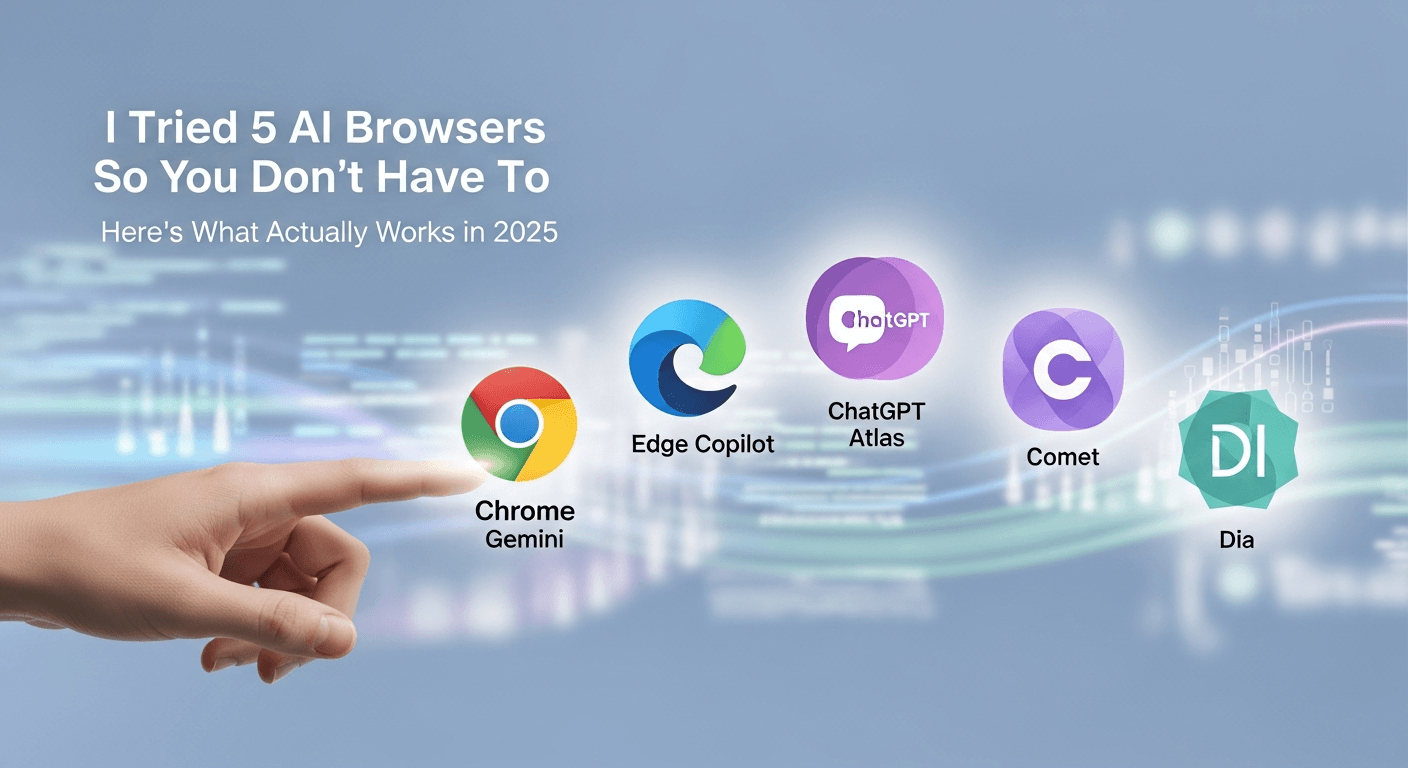
I Tried 5 AI Browsers So You Don’t Have To: Here’s What Actually Works in 2025
I explored 5 AI browsers—Chrome Gemini, Edge Copilot, ChatGPT Atlas, Comet, and Dia—to find out what works. Here are insights, advantages, and safety recommendations.
Read Article


