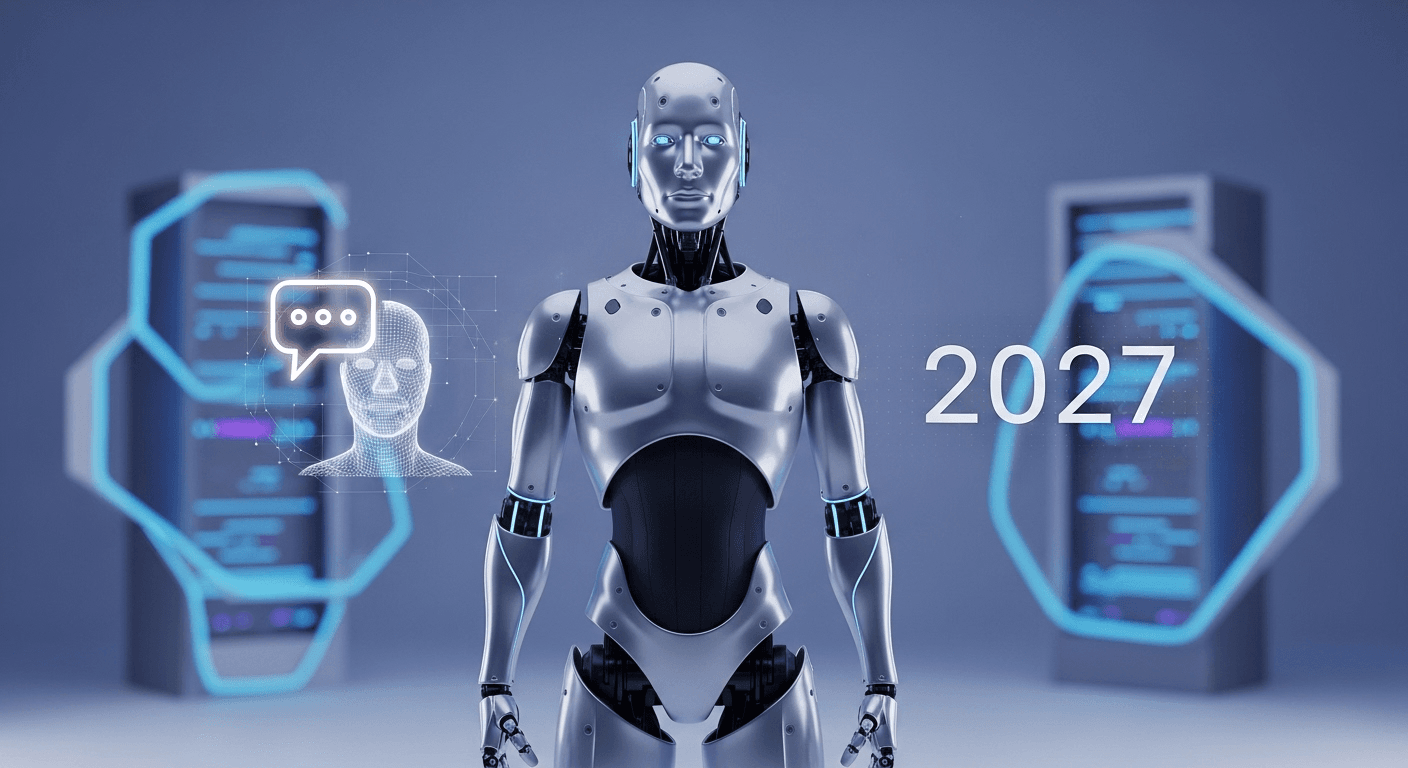
From Chatbots to Humanoids: Why Nvidia and OpenAI Expect Real Robots by 2027
From Chatbots to Humanoids: Why Nvidia and OpenAI Expect Real Robots by 2027
The next wave of AI is gaining a physical presence. After a decade of breakthroughs in software, leaders at Nvidia and OpenAI predict that humanoid robots capable of real work could emerge within the next few years. In this article, we’ll explore the forces driving this prediction, the challenges that lie ahead, and how to differentiate credible advancements from mere hype.
The Shift from Screen to Reality
AI has already revolutionized areas like search, coding, and creative tasks. The next frontier is embodied AI, where models can perceive, plan, and operate in the physical world. This shift is why robots have become focal points in corporate earnings calls and conference presentations. Nvidia is providing the chips and software necessary for these systems, while OpenAI is developing models that can perceive, reason, and follow instructions across various domains, including vision, language, and action.
The significant claim capturing attention is that meaningful humanoid robots could start collaborating with humans as early as 2026-2027. This timeline was emphasized in a recent Barron’s analysis discussing Nvidia’s new robotics stack and OpenAI’s partnerships with humanoid startups (Barron’s).
Why 2027 is Suddenly Realistic
Two key changes since the last robotics boom are transforming the landscape: advancements in AI and infrastructure. In 2024, Nvidia introduced Project GR00T, a multimodal foundation model tailored for humanoid robots, along with Jetson Thor, a high-performance computing module designed for real-time operation on the robots. Nvidia is also expanding its Isaac robotics platform and simulation tools, enabling companies to train and assess robotic behaviors safely before deploying them in real-world applications (Nvidia) (Nvidia).
On the model front, OpenAI has revitalized its robotics goals through collaborations. In 2024, Figure AI announced a partnership with OpenAI, subsequently raising substantial funding from Microsoft, Nvidia, and the OpenAI Startup Fund to expedite humanoid development. Figure has already showcased early demonstrations with its Figure 01 robot, which utilizes a conversational model to interpret scenes and follow verbal commands (Figure AI) (Reuters).
Additionally, OpenAI has invested in 1X, a robotics startup focused on building bipedal and manipulative robots, indicating confidence that general-purpose models will increasingly be trained for action, beyond text and images (TechCrunch).
Meanwhile, the hardware ecosystem is evolving. Agility Robotics’ Digit is already being tested in Amazon facilities for tasks like tote handling and case moving, marking a crucial transition from research labs to operational settings (Amazon) (TechCrunch). Boston Dynamics has also launched a new fully electric Atlas platform designed for effective manipulation, shifting emphasis from hydraulics to real-world reliability and maintenance (Boston Dynamics).
With Tesla’s Optimus project making strides in dexterity and walking, along with Sanctuary AI deploying its Phoenix robots for retail and supply chain pilots, a clear trend is emerging: specialized, valuable tasks are paving the way for general-purpose humanoids (Tesla) (Sanctuary AI).
The Components Are Coming Together
Compute: Training and Operating Robots
Robot intelligence is developed in data centers before being deployed on the robots themselves. Nvidia leads in both areas. Its H100 and successor platforms enable the development of large multimodal models that grasp vision, language, and action. For real-time processing on the robots, Nvidia’s Jetson modules, including the new Jetson Thor, deliver efficient, high-performance computing tailored for movement and manipulation tasks (Nvidia).
Nvidia’s Isaac Sim and Omniverse offer photorealistic environments essential for training robust policies before deployment—this sim-to-real pipeline is vital for ensuring safety and efficiency (Nvidia).
Models: Bridging Language and Action
Cutting-edge models are evolving beyond text processing. Vision-language-action (VLA) models integrate perception with low-level control, often beginning with behavior cloning from human examples and refining through reinforcement learning in simulations. Nvidia’s Project GR00T is designed as a versatile foundation for humanoids, while OpenAI has demonstrated increasingly capable multimodal systems that can maintain context across video, speech, and actions—essential for robots that interpret instructions and interact with their environments (Nvidia) (OpenAI).
This progress is significant: robots require more than just programmed tasks. They must navigate complex environments, reason about objectives and limitations, and adapt to new situations without the need for constant reprogramming. Multimodal foundation models are emerging as a necessary solution to these challenges.
Data: Demonstrations and Simulated Environments
Data serves as the fuel for training robots. Companies are collecting demonstrations from skilled operators, teleoperating robots to create libraries of successful trajectories, and generating extensive synthetic variations in simulations to enhance robustness. The aim is to merge the broad knowledge from foundation models with task-specific fine-tuning and safety measures.
Hardware: Increasing Functionality in Human Environments
While humanoid robots still pose challenges, improvements are evident. Enhanced legged mobility allows better access in human-centric spaces, while advancements in actuators, hands, and tactile sensors are elevating dexterity capabilities. Startups like Figure, Agility Robotics, 1X, Apptronik, and Sanctuary AI, along with industry giants like Tesla and Boston Dynamics, are developing platforms that align with these evolving models (Figure AI) (Agility Robotics) (1X) (Apptronik) (Boston Dynamics).
Where Robots Will First Appear
While the future may not see a household robot in every home by 2027, several commercial sectors are setting realistic expectations for their adoption:
- **Warehouses and Logistics:** Tasks such as case handling, tote movement, depalletizing, sorting, and exception management are all feasible, particularly when human oversight is involved. Amazon’s Digit pilot serves as a key indicator (Amazon).
- **Manufacturing:** Processes like machine tending, material kitting, and light assembly, especially when tasks frequently change, can benefit. Nvidia collaborates with industrial partners through its Isaac ecosystem to target these workflows (Nvidia).
- **Retail Backrooms and Distribution:** Robots can assist with shelf restocking, box breakdown, and backroom logistics. Sanctuary AI has successfully piloted general-purpose humanoids in these settings (Sanctuary AI).
- **Inspection and Maintenance:** Routine inspections, meter readings, and basic upkeep checks in environments designed for human activity but requiring strict safety protocols can leverage robotic assistance.
- **Research and Development, Labs, and Education:** Automating laboratory tasks and assisting research where dexterity is crucial but conditions are controlled can see robots being integrated effectively.
Widespread home use is projected to take longer. Challenges such as household clutter, varied layouts, pets, and safety considerations increase complexity. Expect early use cases in elder care and assisted living, where the demand is high and workflows can be standardized.
Challenges That Still Need Addressing
Reliable Manipulation
Grasping and manipulating diverse objects in cluttered, unstructured environments remains a complex challenge. Progress is steady, but achieving the robustness and speed of human operators across a variety of object types is still an obstacle. Expect hybrid systems that integrate model-based control for precision with learned policies for flexibility.
Generalization and Edge Cases
Robots often struggle with edge cases. Models must be capable of adapting to changes in lighting, recognizing novel objects, and responding to dynamic human behaviors. Utilizing synthetic data and curriculum learning is essential, but learning on the robot and quick personalization will become competitive advantages.
Cost, Power, and Operational Uptime
To be economically viable, humanoid robots must sustain productive output for hours each day with minimal downtime. This necessitates efficient computing, reliable actuators, swappable batteries, and designs that facilitate field service. These are engineering challenges that require more than just AI solutions.
Safety and Alignment
Physical safety must be a priority. Robots will need reliable geofencing, strict speed and force limits, robust safety systems, and accessible override mechanisms. Existing standards such as ISO 10218 for industrial robots and ISO 13482 for personal care robots can provide essential guidelines, while the EU AI Act introduces regulations for high-risk AI systems affecting robotics, especially in workplace settings (ISO 10218) (ISO 13482) (EU Council).
The Economics and Labor Implications
The driving factor isn’t just novelty; it’s productivity. If robots can manage repetitive tasks that are physically demanding with high uptime, they can help reduce injuries, alleviate labor shortages, and allow people to focus on more valuable roles. This is particularly critical in logistics and manufacturing, where workforce demographics are shifting and turnover pressures are mounting.
However, job displacement poses a genuine concern. The IMF estimates that nearly 40% of jobs worldwide are vulnerable to AI developments, particularly in advanced economies where cognitive and routine tasks are prevalent. The net outcome will depend on policy decisions, reskilling efforts, and how quickly adoption occurs. Companies should begin workforce strategizing: identify tasks likely to be automated, create new roles that include human oversight, and invest in upskilling programs (IMF).
How to Differentiate Genuine Advances from Hype
Robotics is often characterized by eye-catching demonstrations. In the coming two years, focus on the following criteria to assess claims:
- **Real Pilots:** Look for implementations involving named customers, completing actual tasks over extended periods, not just flashy demos.
- **Task Breadth and Consistency:** Evaluate the range of distinct tasks performed reliably during a shift, avoiding cherry-picked examples.
- **Utilization and Mean Time Between Failures (MTBF):** Assess productive hours each day and the average time between operational failures.
- **Cost Per Task:** Consider the labor-equivalent costs for each action (e.g., per pick, tote, or assembly), including oversight and maintenance expenses.
- **Safety Record:** Review incident rates, near-miss reports, and confirmations from third-party safety assessments.
Enterprises and investors should establish these metrics before moving past the pilot phase.
Key Developments to Monitor Until 2027
- **Nvidia’s Robotics Roadmap:** Keep an eye on updates regarding Project GR00T, Jetson Thor availability, enhancements to Isaac Sim, and new reference designs (Nvidia).
- **OpenAI’s Embodied AI Progress:** Watch for research outputs, collaborations with Figure and 1X, and demonstrations going beyond staged settings (Figure AI) (TechCrunch).
- **Industrial Pilots Transitioning to Production:** Observe Amazon, automotive manufacturers, retailers, and third-party logistics providers as they move from isolated trials to extensive rollouts.
- **Safety and Regulatory Developments:** Follow the evolution of practical frameworks for deploying general-purpose robots in shared environments, updates to ISO standards, and applications of the EU AI Act in robotics-heavy applications.
- **Technology Advances in Batteries, Actuators, and Hands:** Innovations in these areas will directly expand the capabilities and operational hours of robots.
So, Are Humanoid Robots Feasible by 2027?
The answer is yes, in specific contexts. Anticipate that humanoids and related platforms will increasingly handle a growing array of specialized yet valuable tasks in warehouses, factories, and other facilities by 2026-2027, typically under human supervision. Multi-purpose robots suitable for home use are likely to take longer to develop. The trend is clear: models are improving in perception and planning, on-device computing is advancing, and the engineering behind safety, actuators, and batteries is making significant headway.
The most important takeaway isn’t merely a timeline, but a trajectory. The AI landscape is shifting from screen-based interactions to real-world applications. Companies that start experimenting with pilot programs today will be optimally positioned when technology, costs, and market readiness align.
FAQs
What Exactly is a Humanoid Robot?
Humanoid robots are machines designed to resemble humans, typically featuring two arms, two legs, hands, and a head equipped with sensors. This human-like design facilitates navigation in spaces built for people, such as stairs, doorways, and standard tools.
Why Are Nvidia and OpenAI Central to This Trend?
Nvidia supplies the chips, software, and simulation platforms essential for the training and deployment of robotic intelligence. OpenAI develops multimodal models capable of interpreting scenes, understanding human language, and pursuing objectives, and collaborates with robotics startups to leverage these models in practical applications.
Will Robots Replace Jobs by 2027?
It’s likely that automation will first target specific tasks in logistics and manufacturing. Many jobs will evolve rather than disappear, with humans supervising, maintaining, and coordinating robot fleets. The overall impact will hinge on how swiftly technologies are adopted and reskilling efforts are implemented.
Are Home Robots Part of This Timeline?
Not broadly. The variability and safety-critical nature of home environments mean that widespread humanoid deployments are unlikely by 2027. However, targeted applications in assisted living and controlled settings may emerge first.
What Should Companies Do Now?
Identify repetitive tasks that pose ergonomic risks or face high turnover rates. Launch small pilot programs with clear performance metrics, establish internal safety and reliability protocols, and invest in training for staff to oversee human-in-the-loop operations.
Sources
- Barron’s – Forget the Chatbots. Nvidia and OpenAI Predict Robots by 2027.
- Nvidia – Project GR00T and Jetson Thor announcements
- Nvidia – Isaac robotics platform and simulation updates
- Nvidia – Isaac Sim
- Figure AI – Collaboration with OpenAI
- Reuters – Figure AI raises $675 million
- TechCrunch – OpenAI backs 1X
- Amazon – Piloting Agility Robotics’ Digit
- TechCrunch – Amazon tests Digit in warehouses
- Boston Dynamics – Meet the new electric Atlas
- Tesla – AI Day and Optimus updates
- Sanctuary AI – Commercial deployment announcement
- ISO 10218 – Robots and robotic devices – Safety requirements for industrial robots
- ISO 13482 – Robots and robotic devices – Safety requirements for personal care robots
- Council of the EU – AI Act final approval
- IMF – GenAI and the future of work
Thank You for Reading this Blog and See You Soon! 🙏 👋
Let's connect 🚀
Latest Insights
Deep dives into AI, Engineering, and the Future of Tech.
I Tried 5 AI Browsers So You Don’t Have To: Here’s What Actually Works in 2025
I explored 5 AI browsers—Chrome Gemini, Edge Copilot, ChatGPT Atlas, Comet, and Dia—to find out what works. Here are insights, advantages, and safety recommendations.
Read Article


