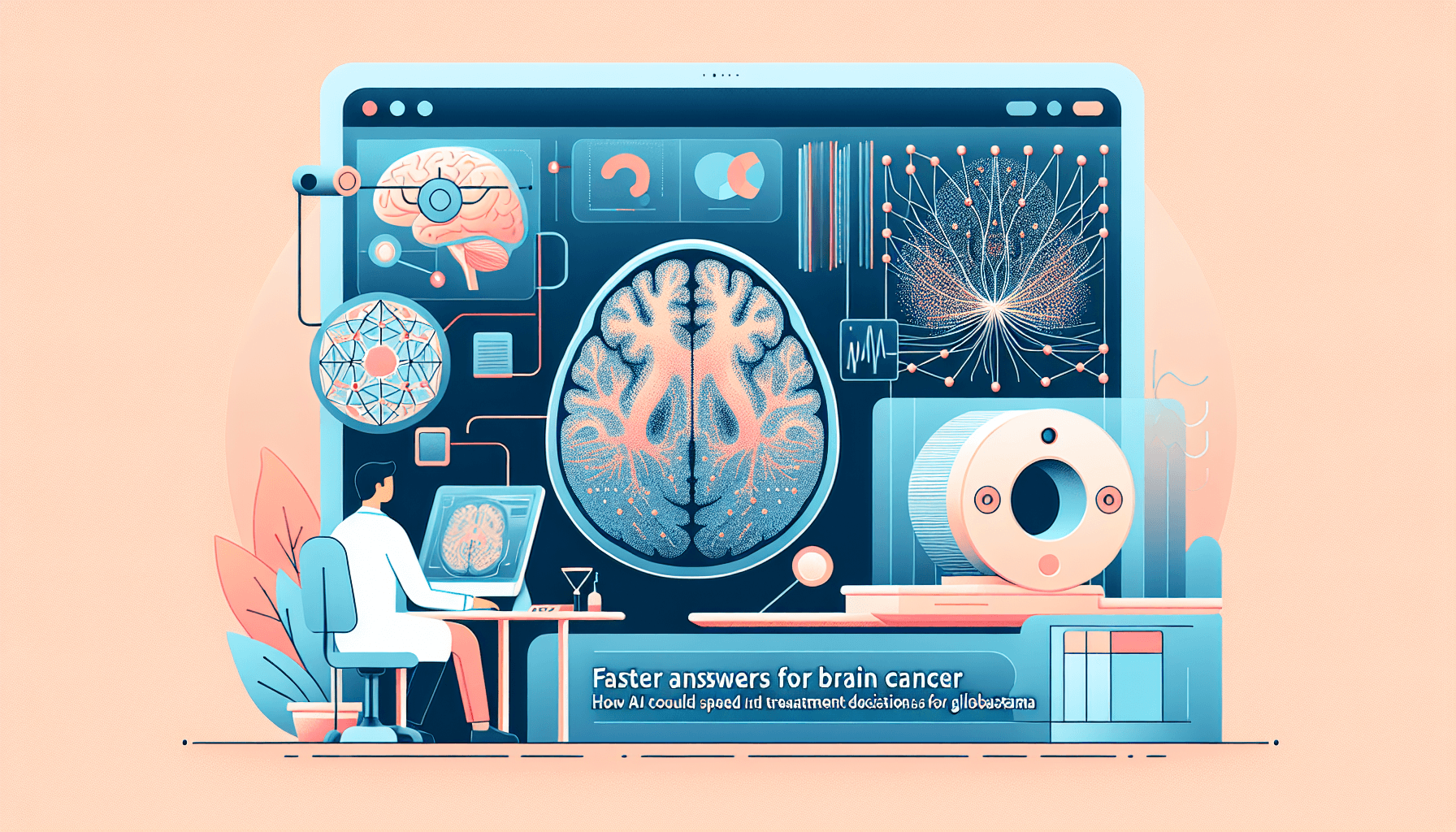
Faster Answers for Brain Cancer: How AI Could Speed Treatment Decisions for Glioblastoma
Why faster decisions matter in glioblastoma care
Glioblastoma is one of the most aggressive brain cancers. Care teams often have days—not weeks—to decide on surgery plans, radiation, chemotherapy, or a clinical trial. Every hour spent waiting for imaging reads, gathering reports, or aligning specialists is time the tumor doesn't give back.
A new wave of artificial intelligence (AI) is promising to help. By rapidly analyzing brain scans and clinical data, AI tools can surface critical insights that may support faster, more confident treatment decisions—without replacing clinicians. Here's what that could mean for patients, providers, and innovators.
Glioblastoma, in brief
Standard care typically combines maximal safe surgical resection, followed by radiotherapy with the chemotherapy drug temozolomide (often called the Stupp protocol). Despite advances, median survival remains roughly 14–18 months, underscoring the need for timely, well-informed choices.
- Why speed matters: Glioblastomas grow and infiltrate quickly. The care pathway involves multiple steps—pre-op imaging and planning, post-op MRI, pathology and molecular testing (e.g., MGMT promoter methylation), radiotherapy planning—and delays can add up.
- Key molecular markers: MGMT promoter methylation is associated with better response to temozolomide; most glioblastomas are IDH-wildtype under the WHO 2021 classification.
What the new AI tools aim to do
While specific products vary, emerging AI systems for glioblastoma generally focus on accelerating insight from MRI and other data sources to support decision-making. Capabilities commonly reported in peer-reviewed research include:
- Automatic tumor segmentation and volumetrics: Rapidly outlines enhancing tumor, non-enhancing tumor, and edema to quantify disease burden and changes over time.
- Differentiation of true progression vs. treatment effects: Helps flag pseudoprogression after chemoradiation, a frequent and challenging diagnosis that can look like recurrence on imaging.
- Radiogenomic predictions: Estimates likelihood of molecular markers such as MGMT promoter methylation from MRI patterns, potentially informing therapy choices while awaiting lab results.
- Workflow summaries for tumor boards: Synthesizes imaging, reports, and key trends to support faster, more consistent multidisciplinary decisions.
The shared goal: get the right information in front of the care team sooner, so plans for surgery, radiotherapy, chemotherapy, or trials can move ahead with fewer delays.
Where AI fits in the glioblastoma care pathway
Pre-surgical planning
- Automated segmentation informs extent-of-resection goals and neuronavigation.
- Early radiogenomic estimates can guide discussions about likely responsiveness to temozolomide and clinical trial options.
Post-surgical and adjuvant therapy
- Day-1 post-op MRI can be processed for residual tumor volume to inform adjuvant radiation plans.
- During chemoradiation, AI can help distinguish pseudoprogression versus true progression to avoid premature treatment changes.
At suspected recurrence
- Consistent volumetrics and pattern recognition support go/no-go decisions for re-operation, re-irradiation, or systemic therapies.
- Structured outputs can speed trial matching for recurrent disease.
What the evidence shows so far
AI for neuro-oncology is an active research area with encouraging—but still maturing—evidence. Highlights from the literature include:
- Radiomics and segmentation are robust research domains: The BraTS benchmark and related datasets have catalyzed accurate automated tumor segmentation and volumetrics across institutions, a foundation for consistent longitudinal assessment.
- Predicting molecular markers from MRI: Multiple studies report that deep learning can noninvasively estimate markers like IDH mutation and MGMT promoter methylation from routine MRI, which may provide early guidance while awaiting pathology and molecular reports.
- Pseudoprogression vs. progression: Machine learning models leveraging multiparametric MRI show potential to distinguish treatment-related changes from true recurrence—an area where radiologists and oncologists often face diagnostic uncertainty.
Important caveat: Most tools still require external validation, prospective testing, and regulatory review before broad clinical deployment. AI should augment, not replace, expert clinical judgment.
Potential benefits for patients and care teams
- Faster decisions: Automated analyses can reduce back-and-forth and help tumor boards converge on a plan sooner.
- Consistency across cases: Standardized segmentation and reporting help reduce reader variability.
- Earlier insights: Radiogenomic predictions can provide preliminary guidance while definitive lab results are pending.
- Clinical trial readiness: Structured outputs and biomarker estimates may accelerate screening for trials.
Limitations and risks to watch
- Generalizability: Models trained on one scanner type or patient population may underperform elsewhere; rigorous external validation is essential.
- Prospective impact: Accuracy metrics don't guarantee real-world time savings or better outcomes; well-designed clinical studies are needed.
- Bias and equity: Underrepresentation in training data can lead to unequal performance across demographics.
- Regulatory and privacy: Handling MRI and clinical data requires robust security; AI used for diagnosis or treatment planning may need regulatory clearance, depending on jurisdiction.
What to ask your care team today
- How are my MRI scans being measured over time? Are volumetrics used to track changes?
- When will key biomarkers like MGMT promoter methylation be available? How might they influence therapy?
- If imaging is unclear after chemoradiation, how do you distinguish pseudoprogression from recurrence?
- Are there clinical trials I should consider now or at recurrence?
For hospitals and innovators: a quick evaluation checklist
- Evidence: Look for multi-center external validation, transparent methods, and peer-reviewed results relevant to your scanners and protocols.
- Workflow fit: DICOM integration, PACS/VNA compatibility, and outputs designed for tumor boards (segmentation overlays, volumetrics, trend charts).
- Governance: Model monitoring, drift detection, performance auditing by patient subgroup, and clear human-in-the-loop safeguards.
- Security and privacy: Strong data protection, on-prem or secure cloud options, and clear data retention policies.
- Regulatory status: Understand whether the tool is research-use-only or cleared for clinical decision support; align deployment accordingly.
Bottom line
AI won't cure glioblastoma on its own, but it can help teams act faster and with more confidence. Automating measurements, surfacing early biomarker clues, and clarifying complex post-treatment imaging can shorten time to a plan—precisely what patients and families need at a critical moment. As validation grows and workflows mature, expect these tools to become a standard part of neuro-oncology decision support.
FAQs
Does AI replace the radiologist or neuro-oncologist?
No. AI is best used as decision support—automating repetitive measurements and highlighting patterns—while clinicians integrate imaging, pathology, symptoms, and patient goals.
Can AI really predict tumor biomarkers from MRI?
Studies show that deep learning can estimate markers like MGMT status from MRI in many cases, but predictions are probabilities and don't replace lab testing. They can, however, provide early guidance.
How soon will these tools be widely available?
Some capabilities (like segmentation) are entering clinical products now. Others, such as robust pseudoprogression classification, are still under active validation and may require regulatory clearance.
Is my data safe?
Health systems should deploy AI with strong security controls and clear data policies. Ask vendors about encryption, access controls, and compliance with healthcare regulations.
Will AI improve survival?
It's too early to say. The immediate promise is faster, more consistent decisions. Demonstrating improved outcomes will require prospective studies.
Sources
- Health Imaging: New AI tool could expedite treatment decisions for glioblastoma patients (via Google News)
- National Cancer Institute PDQ: Adult Brain Tumor Treatment
- Stupp R, et al. Radiotherapy plus concomitant and adjuvant temozolomide for glioblastoma. N Engl J Med. 2005.
- Hegi ME, et al. MGMT gene silencing and benefit from temozolomide in glioblastoma. N Engl J Med. 2005.
- Louis DN, et al. The 2021 WHO classification of central nervous system tumors: a summary. Neuro-Oncology. 2021.
- Hygino da Cruz LC Jr, et al. Pseudoprogression and pseudoresponse in gliomas. AJNR Am J Neuroradiol. 2011.
- The Cancer Imaging Archive: Brain Tumor Segmentation (BraTS) collections
- U.S. FDA: Artificial Intelligence and Machine Learning in Software as a Medical Device
Thank You for Reading this Blog and See You Soon! 🙏 👋
Let's connect 🚀
Latest Insights
Deep dives into AI, Engineering, and the Future of Tech.
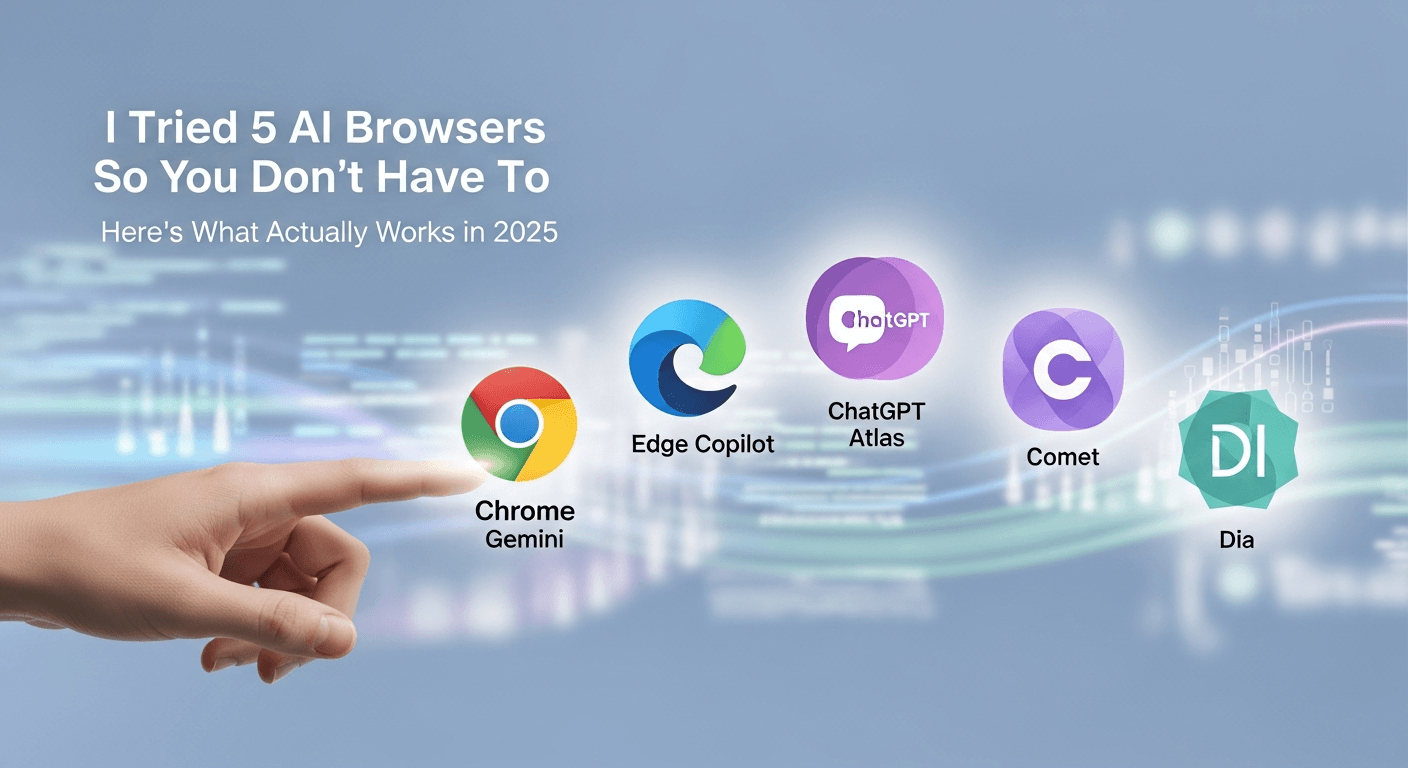
I Tried 5 AI Browsers So You Don’t Have To: Here’s What Actually Works in 2025
I explored 5 AI browsers—Chrome Gemini, Edge Copilot, ChatGPT Atlas, Comet, and Dia—to find out what works. Here are insights, advantages, and safety recommendations.
Read Article


