Exploring PyTorch for Deep Learning Enthusiasts
Introduction to PyTorch
PyTorch has quickly become one of the most transformative frameworks in the field of deep learning. At its core, PyTorch is a scientific computing framework tailored for the development of deep learning models. Developed by Facebook’s AI Research Lab, PyTorch offers dynamic computing capabilities, which facilitate a seamless research-to-production pipeline, attracting both researchers and developers alike.
Why Choose PyTorch?
One of the key features that make PyTorch incredibly effective for deep learning is its intuitive design. Unlike other frameworks, PyTorch’s easy-to-understand syntax and workflow-empowering flexibility make it an ideal tool for both budding and experienced deep learning practitioners. It supports numerous accelerators and GPUs and provides automatic differentiation to execute backpropagation smoothly, making it both powerful and versatile for model building and training.
Dynamic Computation Graphs
PyTorch stands apart in the landscape of deep learning frameworks due to its dynamic computation graph known as autograd. This feature allows for flexibility in the way computational graphs are handled, enabling on-the-fly changes during execution. Such a dynamic nature is particularly suited for scenarios where the input data varies in size and for experimentation with more complex and innovative neural network architectures.
Extensive Libraries and Community
The framework’s extensive suite of libraries and tools, such as TorchText, TorchVision, and TorchAudio, streamlines the process of developing sophisticated models. Moreover, PyTorch is supported by an extensive and ever-growing community of developers and researchers who continuously contribute to its vast range of libraries and tools, making it one of the most versatile and constantly evolving frameworks available today.
Getting Started with PyTorch
For those new to PyTorch or deep learning in general, getting started might initially seem daunting. However, PyTorch’s straightforward design eases the learning curve. It provides extensive resources like tutorials and forums where beginners can gradually build up their understanding and proficiency.
Installing PyTorch
Installing PyTorch is straightforward; it can be done with a simple pip command or through Conda, accommodating various versions to support different operating systems and Python versions.
Creating Your First Neural Network
To create your first neural network in PyTorch, you start by defining the network’s architecture in a class inheriting from torch.nn.Module. Next, you define the layers of your model and specify the forward pass. After setting up your data and DataLoader, you proceed to the training phase where the backpropagation and optimization take place.
Advanced Features in PyTorch
After mastering the basics, you can explore more advanced features of PyTorch such as parallel-processing capabilities, integration with other tools like ONNX for interoperability, and TorchScript for creating serializable and optimizable models. These features ensure that PyTorch not only suits research but also industrial implementation.
Real-World Applications of PyTorch
PyTorch is not limited to academic research; it is also heavily employed in industry. It powers software that requires real-time understanding like speech recognition, language modeling, and autonomous vehicles. PyTorch’s flexibility also makes it an excellent choice for startups and established companies alike to prototype ideas and build commercial-grade products.
Conclusion
PyTorch is a robust, versatile, and comprehensive framework that serves as a key resource for anyone looking to delve into deep learning. Its user-friendly approach appeals to a wide audience, spanning from novices to experts, and paves the way for innovative solutions in numerous domains. Whether you’re starting your journey in AI or looking to refine your deep learning skills, PyTorch offers the tools and community necessary for success in this thrilling field of technology.
Resources and Further Reading
To gain more insight into PyTorch and deep learning, consider exploring the official PyTorch website, comprehensive guides, and community forums. Engage with other enthusiasts and contribute to projects to solidify your understanding and skills in AI and machine learning.
Thank You for Reading this Blog and See You Soon! 🙏 👋
Let's connect 🚀
Latest Insights
Deep dives into AI, Engineering, and the Future of Tech.
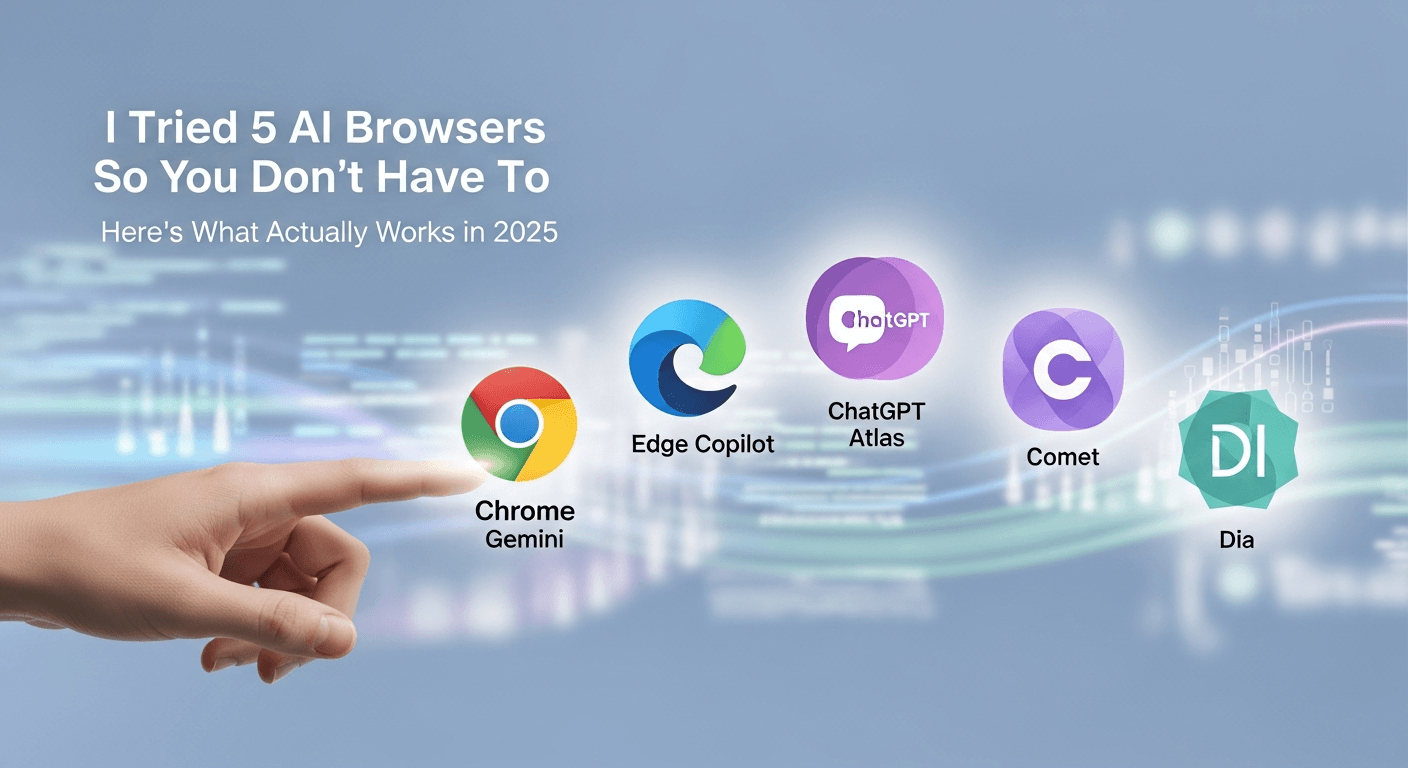
I Tried 5 AI Browsers So You Don’t Have To: Here’s What Actually Works in 2025
I explored 5 AI browsers—Chrome Gemini, Edge Copilot, ChatGPT Atlas, Comet, and Dia—to find out what works. Here are insights, advantages, and safety recommendations.
Read Article


