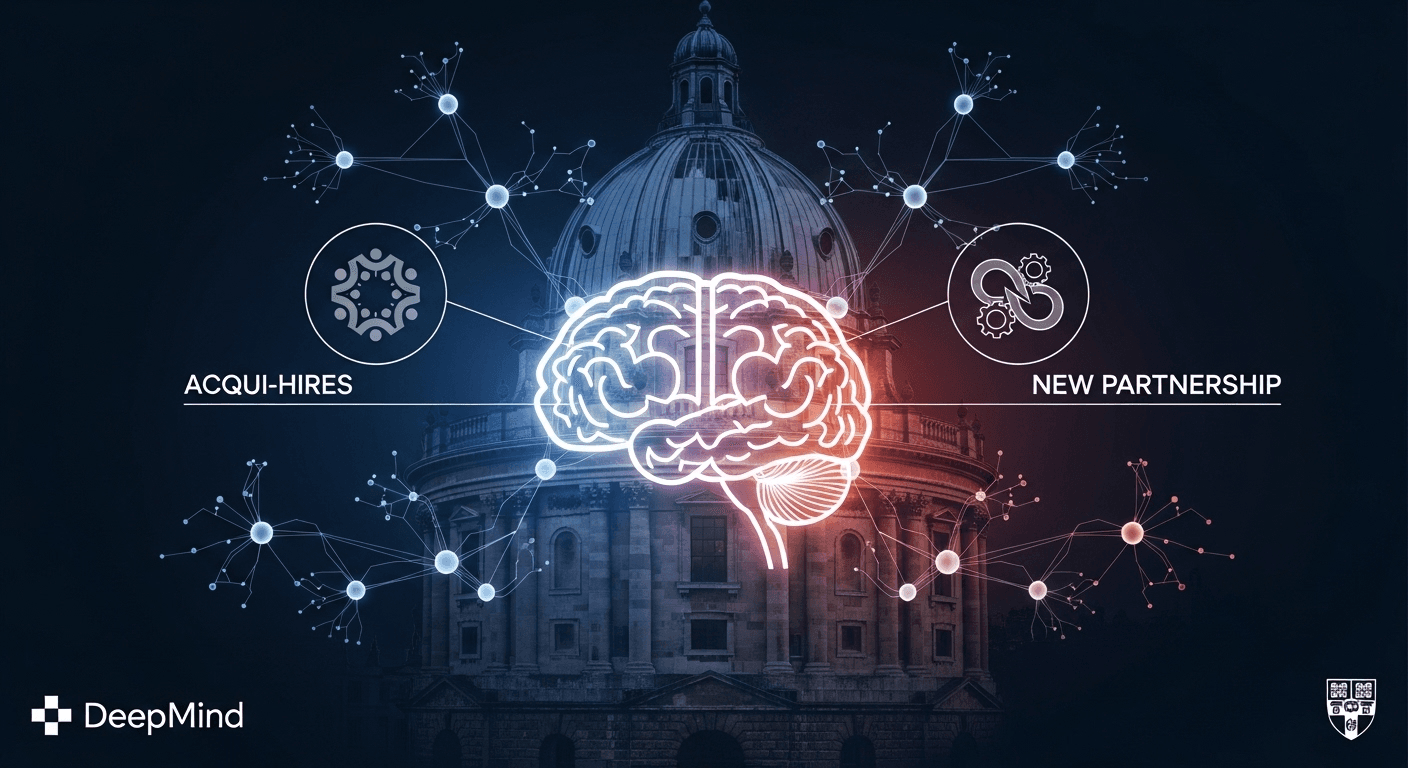
DeepMind Strengthens UK AI Presence: Two Acqui-Hires and a New Partnership with Oxford
DeepMind Strengthens UK AI Presence: Two Acqui-Hires and a New Partnership with Oxford
Google DeepMind is making significant strides in the UK by securing two key acqui-hires and forming a new research partnership with the University of Oxford. Here’s what this development means for startups, researchers, and the overall AI ecosystem.
What Just Happened?
As reported by TechCrunch, Google’s DeepMind has recently acqui-hired two AI teams in the UK and is collaborating with the University of Oxford to enhance research cooperation. Specific details about the companies involved and financial terms have not been disclosed. This initiative marks an important step in DeepMind’s strategy to attract top talent in the UK and strengthen ties between industry and academia.
Source: TechCrunch via Google News.
Why This Matters
Acqui-hires provide a swift pathway to integrate proven teams and specialized expertise into larger organizations. For DeepMind, these hires can expedite the development of advanced models, agentic systems, and safety tools by importing cohesive teams instead of bringing on individual hires. This move reaffirms London and Oxford’s status as a premier AI hub, bolstered by leading universities and a flourishing startup ecosystem.
The UK’s recent push to establish itself as a global center for safe AI development has included initiatives such as the inaugural AI Safety Summit, held at Bletchley Park in 2023, along with plans for enhanced computing access and research funding aimed at retaining cutting-edge research within the UK.
- Overview of the AI Safety Summit: UK Government
- Background on Google DeepMind: DeepMind
What Is an Acqui-Hire?
An acqui-hire is when a company acquires another primarily for its talent rather than its revenue, customers, or standalone products. In the AI field, where specialized expertise can mean the difference between incremental successes and groundbreaking advancements, acqui-hires become particularly enticing. Organizations gain not just personnel, but also established processes and shared knowledge that would be challenging to replicate through typical recruitment methods.
While the nature of these deals can vary, they often include employment packages for the team, retention incentives, and sometimes lead to the cessation of the startup’s previous product. Founders may assume leadership roles in the acquirer to continue advancing related technology on a larger scale.
For further insights on acqui-hire motivations and dynamics in tech and AI, see analyses from industry experts: CB Insights, PitchBook.
DeepMind, Oxford, and the Ongoing UK AI Narrative
DeepMind has strong roots in the UK. Founded in London and acquired by Google in 2014, the lab has consistently engaged with British universities. Google’s collaborations with Oxford began with the acquisition of two Oxford spinouts and a partnership announced that same year, which laid the groundwork for continued interaction between Google, DeepMind, and Oxford researchers.
Revamping its partnership with Oxford aligns strategically, as the university excels in machine learning, computer vision, and AI ethics, maintaining a strong global ranking. Strengthening these connections can streamline the transition from foundational research to practical applications, particularly in safety and evaluation studies that benefit the broader ecosystem.
- Context on Google’s Oxford connections: Wired UK
- Overview of Oxford’s AI research: University of Oxford
Potential Effects on Products, Safety, and the UK Talent Landscape
Accelerated Product Development
DeepMind teams are at the forefront of model and reinforcement learning advancements. Incorporating established startup teams can expedite the journey from innovative research to production-ready features, encompassing reasoning, multimodality, and agentic workflows. With Google’s commitment to enhancing AI capabilities across platforms like Search, Workspace, Android, and Cloud, these teams have extensive opportunities for impactful contributions.
Recent breakthroughs linked to DeepMind, like the Gemini family of models and the groundbreaking AlphaFold, have significantly influenced Google’s product offerings and scientific advancements.
Increased Focus on AI Safety and Evaluations
With models becoming more capable, the focus on evaluations, red teaming, and alignment techniques grows. The UK is actively engaging in this discourse, setting up specialized bodies and fostering international agreements to balance innovation with risk management. A stronger collaboration between Oxford and DeepMind could facilitate independent evaluations, shared datasets, and collaborative approaches for testing model behavior.
- Context on AI safety policy: OECD AI Principles
- International cooperation efforts: US Blueprint for an AI Bill of Rights and EU AI Act
Implications for Founders and Operators
For startup founders, the surge in acqui-hire activity can serve as both a validation and a caution. While it’s a recognition of the value of high-performing teams and may accelerate technology adoption, a trend of acqui-hires could also limit the number of independent startups by depleting the talent pool. This could decrease competition across the landscape.
For operators in established labs, acqui-hires can offer opportunities to work on large-scale systems, benefiting from resources and tools that are less accessible to smaller teams. However, the tradeoff often involves diminished autonomy and a shift in focus towards platform-oriented goals.
Why the UK, and Why Now?
London and the broader UK possess a rich pool of AI talent nurtured by institutions such as Oxford, Cambridge, UCL, and Imperial. The country also hosts major AI labs and research offices for prominent tech firms. Recent policies have aimed to retain talent while drawing in global investment.
The 2023 AI Safety Summit in the UK gathered governments, laboratories, and researchers to establish shared risk frameworks and research collaborations. Ongoing efforts are focused on computing access for researchers and pathways for responsible deployment of cutting-edge models. DeepMind’s latest initiatives align with a broader movement to reinforce the UK’s leadership in advanced and secure AI development.
- Overview of the UK AI ecosystem: Tech Nation
- Documents from the AI Safety Summit: UK Government
What to Keep an Eye On
- Official updates from Google, DeepMind, or Oxford detailing the scope of the partnership and the mandates of the incoming teams.
- Hiring indicators and job postings that may reveal the technical focus of the newly integrated groups.
- Research outputs co-authored with Oxford or other UK institutions, particularly in safety and evaluations.
- Product announcements across Google Search, Workspace, Android, and Cloud that may reflect deeper integration of new team capabilities.
- Further UK policy developments regarding compute accessibility, open research initiatives, and cross-border safety cooperation.
Conclusion
DeepMind’s acquisition of two UK AI teams and renewed collaboration with Oxford highlight an essential truth: talent density and research depth are pivotal to progress in AI. For the UK, this is further affirmation of its significance as a global center for frontier AI research and responsible deployment. For founders and researchers alike, it’s a reminder that impactful work can thrive whether in startups or within leading labs.
FAQs
What details are available about the two AI teams DeepMind acqui-hired?
As per the TechCrunch report, the names of the teams and the specifics surrounding the terms were not disclosed. We will provide updates as official information becomes available. Source: TechCrunch via Google News.
What typically characterizes an Oxford partnership?
Industry-university collaborations often involve joint research projects, co-authored papers, shared datasets, visiting researcher programs, or dedicated funding. Specifics on this reported partnership remain undisclosed. Background: Oxford AI.
Why are major AI labs keen on acqui-hires?
Acqui-hires enable labs to swiftly incorporate cohesive, high-performing teams. In AI, where specialized knowledge is rare and coordination can be complex, bringing in entire teams can be more efficient than traditional hiring methods. See: PitchBook.
What impact might this have on UK AI startups?
This trend can be advantageous by infusing capital, creating leadership opportunities, and raising talent standards. However, frequent acqui-hires might lead to a decrease in independent startups if teams leave early, potentially curtailing competition. The outcomes can vary by sector and stage.
Where might we see the first impacts on Google products?
If the new teams focus on enhancing model capabilities or agentic workflows, we may see early indicators in Google Search, Workspace, Android, or Cloud tools. Timing will depend on how integration unfolds and the product roadmaps.
Sources
- TechCrunch via Google News: Google’s DeepMind acqui-hires two AI teams in the UK, partners with Oxford
- Google DeepMind – About
- Google Blog – Announcing Gemini
- DeepMind – AlphaFold
- Nature – Highly accurate protein structure prediction with AlphaFold
- University of Oxford – Artificial Intelligence Research
- UK Government – AI Safety Summit 2023
- OECD – AI Principles
- European Commission – EU AI Act
- PitchBook – What is an acqui-hire?
- CB Insights – Acqui-hire analysis
- Wired UK – Google and Oxford AI history
- Tech Nation – UK tech ecosystem
Thank You for Reading this Blog and See You Soon! 🙏 👋
Let's connect 🚀
Latest Insights
Deep dives into AI, Engineering, and the Future of Tech.
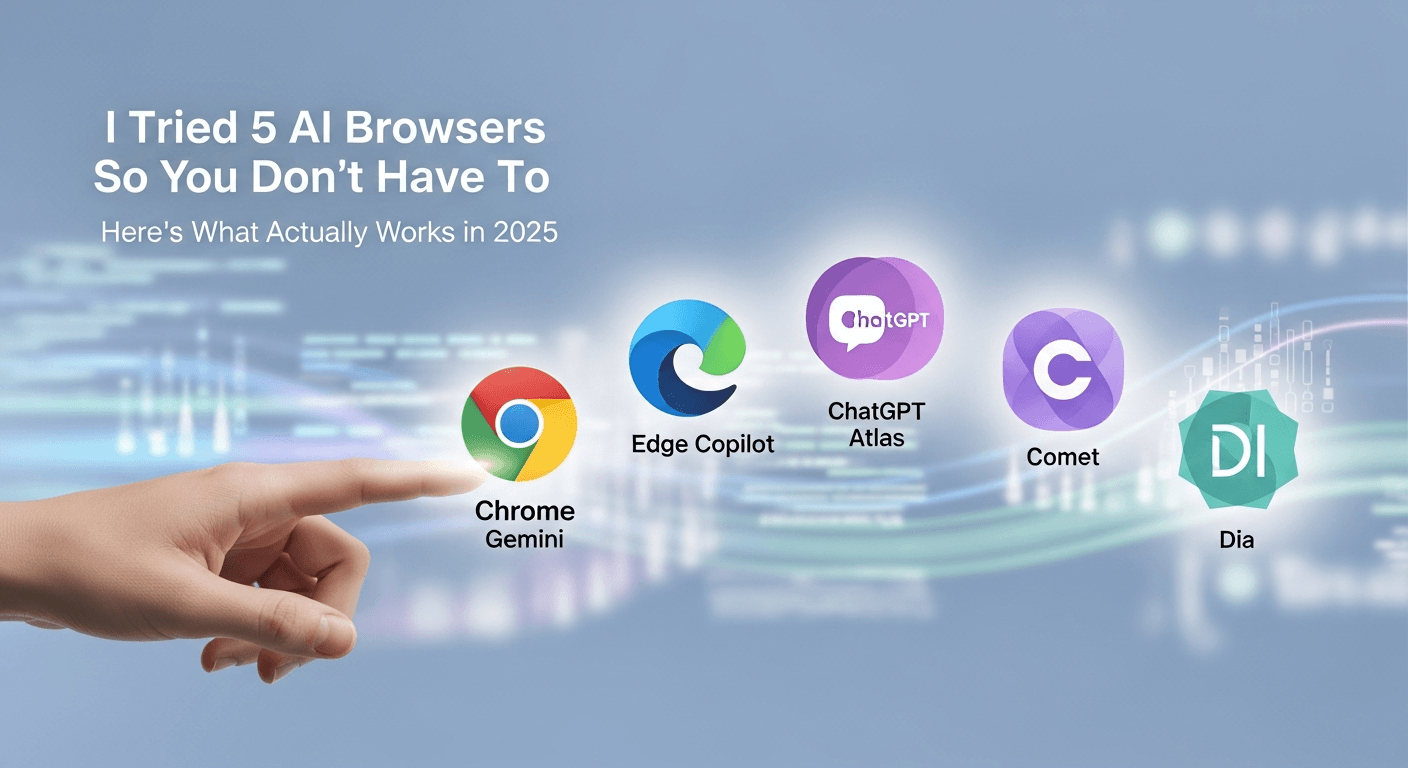
I Tried 5 AI Browsers So You Don’t Have To: Here’s What Actually Works in 2025
I explored 5 AI browsers—Chrome Gemini, Edge Copilot, ChatGPT Atlas, Comet, and Dia—to find out what works. Here are insights, advantages, and safety recommendations.
Read Article


