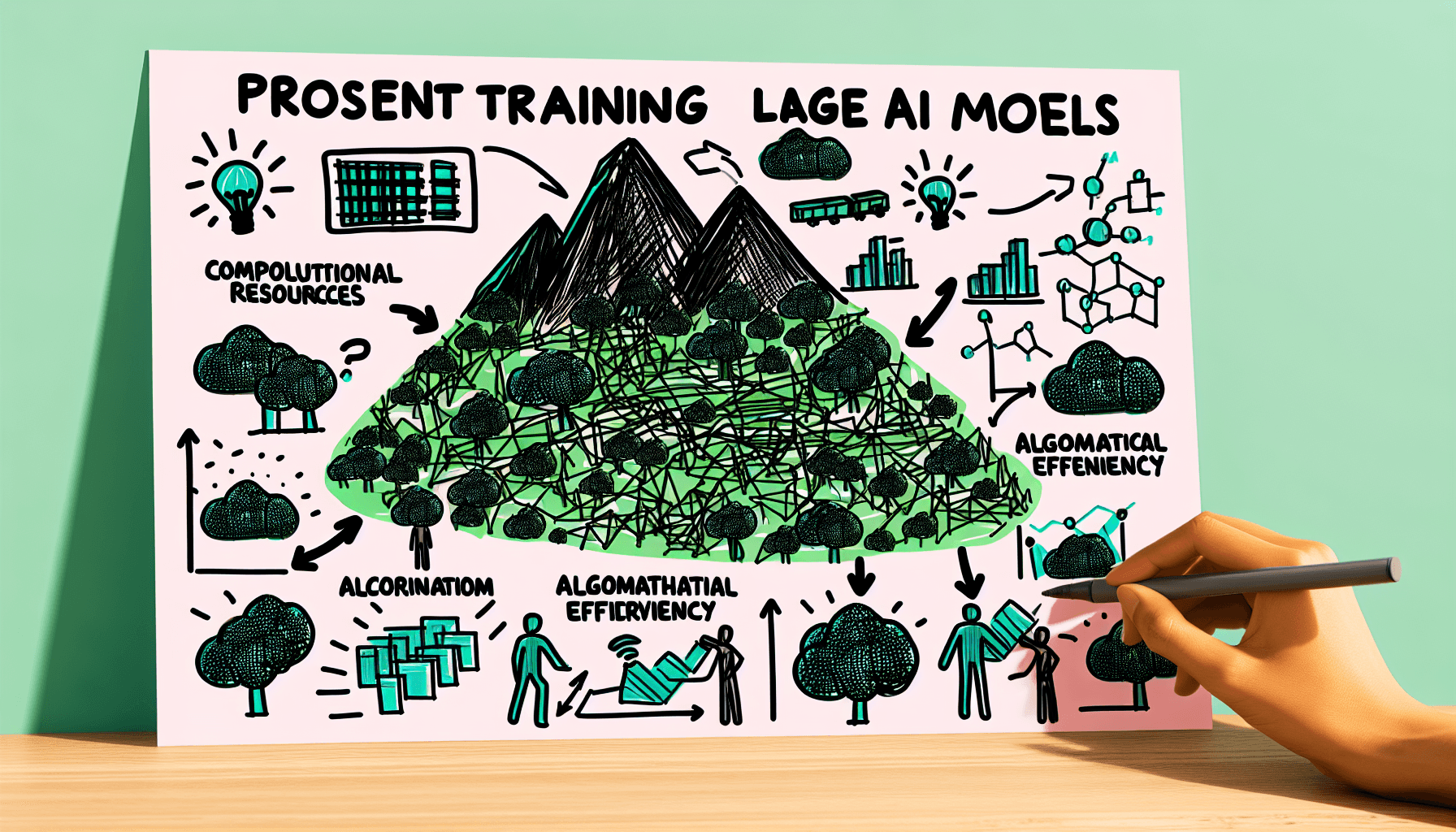
Navigating the Complexities of Large Model Training: Common Challenges and Strategies
Introduction
Training large models is at the heart of advancements in artificial intelligence and machine learning. As these models grow in complexity and size, they promise groundbreaking insights and technological enhancements. However, the path to realizing their full potential is fraught with significant challenges. This blog post delves into the common hurdles encountered during the training of large models and explores effective strategies to overcome these obstacles.
Understanding Large Model Training
Before diving into the challenges, it’s crucial to understand what constitutes a ‘large model’. In the realm of AI and machine learning, a large model typically refers to those that have billions of parameters and are trained on vast datasets. These models require substantial computational power and sophisticated algorithms to function efficiently.
Challenge 1: Computational Resources
One of the foremost challenges in training large models is the requirement for extensive computational resources. Training these behemoths demands high-performance GPUs or TPUs that can handle immense loads and execute operations quickly. The cost of acquiring and maintaining such hardware can be prohibitive for many organizations, especially startups and academic institutions.
- Strategies for Mitigation:
- Cloud-based solutions: Leveraging cloud platforms offers scalable computational resources which can be adjusted according to project needs.
- Distributed training: Implementing distributed training across multiple machines can help in managing the computational load more efficiently.
Challenge 2: Data Management
Another significant hurdle is managing the massive datasets required for training large models. The quality, variety, and velocity of data can drastically affect the model’s performance. Additionally, issues such as data privacy, security, and ethical considerations of data use pose further complications.
- Strategies for Overcoming Data Management Challenges:
- Data anonymization: Applying techniques like anonymization can help protect user privacy while making the data usable for training.
- Data synthesis: Synthetic data generation can reduce reliance on vast real-world datasets and help in addressing privacy concerns.
Challenge 3: Algorithm Efficiency
The efficiency of algorithms plays a crucial role in the training of large models. As the model size increases, the complexity of the algorithms and the likelihood of running into issues such as overfitting, underfitting, and slow convergence rates also increase.
- Strategies to Enhance Algorithm Efficiency:
- Regularization techniques: Techniques like dropout, L2 regularization, and early stopping can prevent overfitting and help in generalizing the model better.
- Optimization algorithms: Employing advanced optimization algorithms such as Adam or RMSprop which are more suited for large-scale models.
Challenge 4: Scalability
As models scale, maintaining performance without exponentially increasing the resources becomes a complex balancing act. Scalability issues not only affect computational requirements but also model accuracy and efficiency over time.
- Strategies to Achieve Scalability:
- Model pruning: Reducing the size of the model without significantly affecting its performance can lead to better scalability.
- Knowledge distillation: Transferring knowledge from a large model to a smaller, more manageable model can also address scalability issues.
Conclusion
The journey to effectively training large models is complex and filled with challenges. However, with the right strategies and innovations, these challenges can be overcome. The evolving landscape of AI and machine learning continues to provide newer solutions that make the processing of large-scale models more efficient and less resource-intensive.
Thank You for Reading this Blog and See You Soon! 🙏 👋
Let's connect 🚀
Latest Insights
Deep dives into AI, Engineering, and the Future of Tech.

I Tried 5 AI Browsers So You Don’t Have To: Here’s What Actually Works in 2025
I explored 5 AI browsers—Chrome Gemini, Edge Copilot, ChatGPT Atlas, Comet, and Dia—to find out what works. Here are insights, advantages, and safety recommendations.
Read Article


