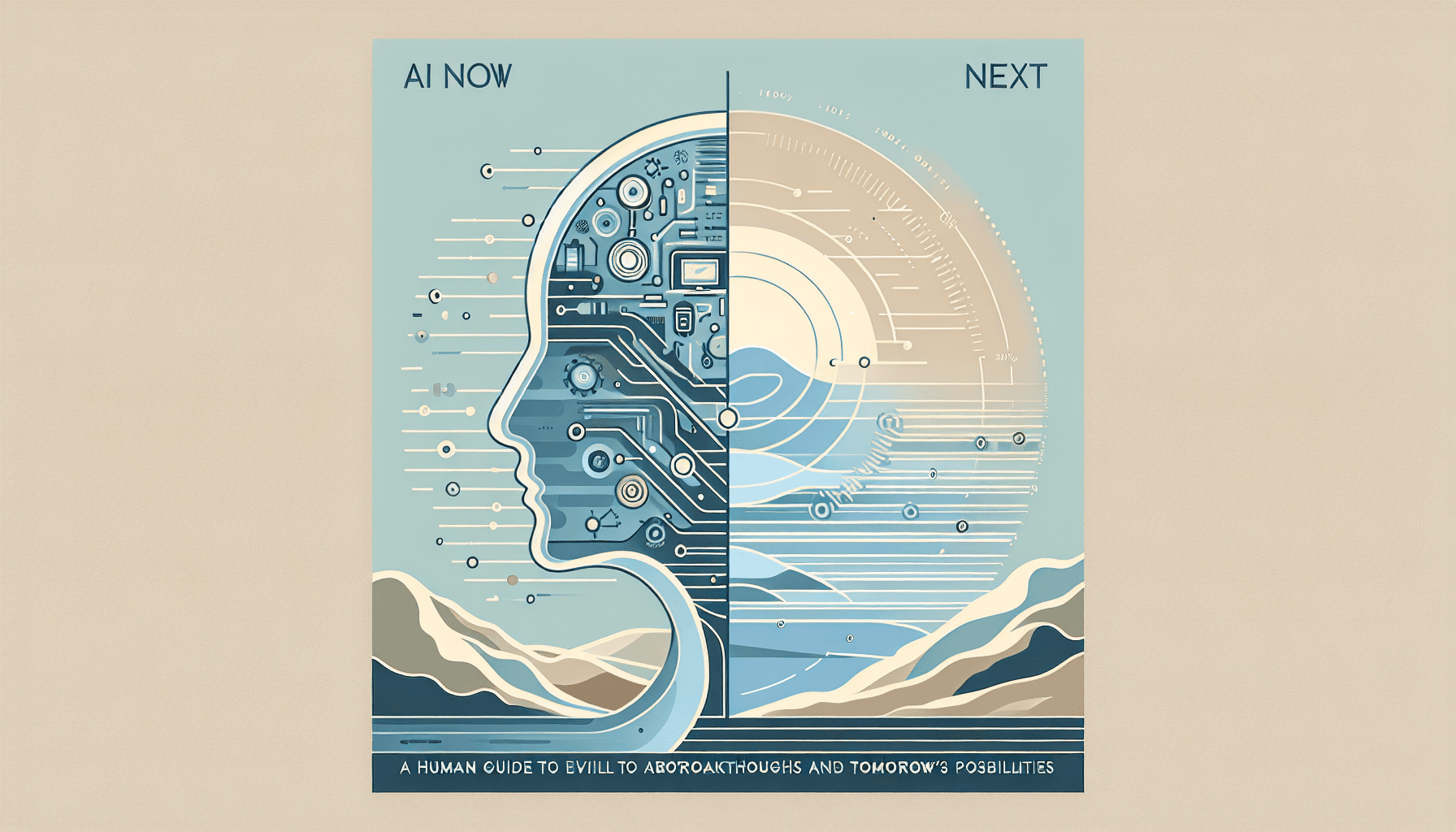
AI Now and Next: A Human Guide to Today’s Breakthroughs and Tomorrow’s Possibilities
AI Now and Next: A Human Guide to Today’s Breakthroughs and Tomorrow’s Possibilities
Artificial intelligence has transitioned from experimental demonstrations to integral parts of our everyday lives. This introduction outlines the capabilities of AI today, its projected path, and how we can employ it responsibly to enhance human potential.
Introduction: A New Chapter in Human-Machine Collaboration
We are entering an era where AI is not merely a tool, but a collaborative partner. In just a few years, systems that used to autocomplete messages have evolved into AI assistants capable of drafting documents, writing code, analyzing data, creating images, and tackling complex problems. This moment is pivotal, as the divide between AI’s theoretical possibilities and its practical applications has significantly narrowed.
So, what changed? Three key factors converged: advanced algorithms, abundant data, and powerful computing resources. The breakthrough that unlocked modern language and multimodal models is the Transformer architecture, introduced in 2017, which enhanced how models manage context and scale with data and computing capabilities Vaswani et al., 2017. Since then, continuous progress in training methods, reinforcement learning from human feedback, and safety protocols have transformed research into reliable, everyday tools OpenAI, Instruction-Following, Anthropic, Constitutional AI.
AI Today: Strengths and Limitations
Modern AI excels in language processing, pattern recognition, synthesis, and rapid iterations. It can draft text, summarize and translate, generate images and videos, write and explain code, and even operate tools like web browsers or spreadsheets. However, it still makes errors, particularly when faced with nuanced facts or lack of context. Understanding both its strengths and weaknesses will help you maximize its potential.
Strengths You Can Leverage Immediately
- Writing and Summarization: From emails to literature reviews, AI can assist in drafting and distilling lengthy documents into concise summaries Stanford AI Index 2024.
- Coding and Debugging: Developers report increased efficiency with AI pair programmers like GitHub Copilot, with one study showing an average task completion rate that is 55% faster in controlled environments GitHub Research, 2022.
- Data Analysis: AI can transform extensive data into actionable insights and generate code for charts, forecasts, and SQL queries Stanford AI Index 2024.
- Images, Audio, and Video: Generative systems are capable of producing high-quality images and music, and increasingly realistic videos, enhancing creative workflows OpenAI Sora, 2024, Stable Diffusion, 2022.
- Multimodal Reasoning: New models accept text, images, audio, and lengthy documents, maintaining context throughout extended interactions Google Gemini 1.5, 2024, OpenAI GPT-4 Technical Report, 2023, Meta Llama 3, 2024.
Respecting AI Limitations
- Hallucinations: AI can generate inaccurate but convincing statements. Treat it as a talented intern: always verify details and provide source citations Bender et al., 2021, Zhang et al., 2023.
- Bias and Fairness: AI models may reflect or amplify biases from their training data. Use them mindfully and apply safeguards when making decisions that affect people NIST AI RMF 1.0, UNESCO, 2021.
- Privacy and Security: Don’t input sensitive information into tools that might log data. Implement strong data governance and utilize enterprise controls FTC Guidance.
- Energy and Computation Costs: Training and running large models require substantial amounts of electricity; mindful efficiency is essential as scale expands IEA, 2024.
How We Got Here: The Underpinnings of Modern AI
Today’s AI advancements are built upon breakthroughs in representation learning and scalability. The introduction of the Transformer architecture enabled the parallel processing of sequences and improved long-range context management, fostering progress in language, vision, and multimodal capabilities Vaswani et al., 2017. Reinforcement learning from human feedback has aligned models more closely with human preferences, enhancing their utility and safety OpenAI, 2022.
On the multimodal front, diffusion models have revolutionized image creation by converting noise into vivid scenes, while advancements in video generation allow for nearly realistic footage derived from textual prompts Stable Diffusion, Sora. Meanwhile, scientific AI projects like AlphaFold have successfully mapped the 3D structures of proteins at scale, demonstrating AI’s potential to expedite discoveries beyond language and imagery Nature, 2021, AlphaFold DB.
Where AI is Heading: Trends to Monitor
The future of AI progress is not only about developing larger models; new capabilities and user experiences are transforming how we will interact with AI over the next few years.
- Longer Context and Memory: Models can now process extended documents and richer contexts, enabling research assistants that remember constraints across sessions Gemini 1.5.
- Multimodal by Default: Text, images, audio, video, and code are converging. Expect AI that can read a PDF, watch a product demo, and draft specifications all in one seamless workflow GPT-4, Claude 3.
- Agentic Behavior: AI can handle tools and execute multi-step actions, such as searching the web, filling out forms, and updating spreadsheets—always with human oversight DeepMind, Agents Overview, OpenAI o1, 2024.
- Personalization with Privacy: Emerging techniques aim to customize models based on user preferences without transmitting all data to the cloud, utilizing on-device inference and federated learning Google, Federated Learning.
- Open and Specialized Models: A growing open-source ecosystem (like Llama 3 and Mistral) enables private deployments and domain-specific assistants Meta Llama 3, Mistral AI.
What This Means for Work and Creativity
AI will not replace human judgment; rather, it will transform how we create, make decisions, and deliver value. Envision it as a dynamic co-pilot: you remain the author and editor-in-chief while AI expedites the more tedious parts of work.
Boosting Productivity and Quality
- Draft Faster, Revise Better: Use AI to produce initial drafts and outlines, allowing you more time to refine structure, nuance, and tone.
- Explore More Options: Request alternative strategies, counterarguments, and examples to expand your thought process.
- Automate Routine Tasks: Delegate formatting, boilerplate, summaries, and status updates to AI.
- Support Data-Driven Decisions: Generate scenarios, conduct risk analyses, and run lightweight experiments before making commitments.
Research in software development and writing indicates that when used thoughtfully, AI can accelerate routine work and allow individuals to focus on more valuable tasks, although results may vary depending on experience and task complexity GitHub Research, McKinsey, 2023.
Enhancing Creativity and Expression
- From Ideas to Artifacts: Quickly prototype visuals, scripts, and audio to test concepts and iterate with stakeholders Stable Diffusion, Sora.
- New Aesthetics and Formats: Combine text, images, code, and data to develop interactive documents and immersive learning materials.
- Improved Collaboration: Brainstorm alongside an AI partner that can suggest prompts, references, and variations you might overlook.
Sector Snapshots: Opportunities and Challenges
Healthcare
AI aids in reading images, summarizing medical records, and prioritizing cases. Innovations like AlphaFold illustrate how AI can expedite scientific research by modeling proteins and assisting in drug discovery Nature, 2021. However, safety, privacy, and equity remain critical concerns. Its use demands thorough validations, clinical oversight, and adherence to guidelines from organizations like WHO WHO, 2021.
Education
AI tutoring shows potential for personalized feedback and Socratic guidance. Initial pilot programs, like Khan Academy’s Khanmigo, indicate new ways to enhance understanding while involving teachers Khan Academy, 2023. However, rigorous safeguards are essential to address issues of accuracy, bias, and privacy while ensuring that human-led educational goals remain the priority.
Knowledge Work and Customer Service
Anticipate AI copilots integrated into email, document, spreadsheet, and CRM platforms. They will generate responses, categorize tickets, summarize meetings, and suggest next steps. Early implementations show gains in efficiency, though they necessitate change management and thorough quality assessments—not just speed McKinsey, 2023, AI Index 2024.
Design, Media, and Marketing
Generative tools expedite the creation of storyboards, concept art, ad variations, and SEO content. As concerns over content authenticity rise, anticipate greater implementation of provenance standards like C2PA and watermarks to trace AI-generated materials C2PA, Content Credentials.
Risks, Realities, and Responsible Use
Responsible AI practices are essential. Whether you are an individual creator or part of a large organization, establishing clear guidelines from the outset is crucial.
- Factuality and Citations: Always ask AI to provide sources. Verify claims and use authoritative references for critical matters.
- Bias, Fairness, and Inclusion: Assess for disparate impacts. Employ guidelines like the NIST AI Risk Management Framework for structured evaluations NIST AI RMF 1.0.
- Privacy and Data Governance: Classify data based on sensitivity and define what can be shared with AI systems. Utilize enterprise solutions with retention controls and audit trails FTC.
- Security and Misuse: Implement content moderation and abuse detection. Conduct red-team assessments to test for risks like prompt injection and data exfiltration Microsoft, AI Red Teaming.
- Energy and Sustainability: Opt for efficient models wherever possible. Monitor compute budgets and consider low-carbon cloud solutions IEA, 2024.
The Policy Landscape: Evolving Regulations
Policymakers around the globe are revising regulations to stay in sync with AI developments. The goal is to foster innovation while ensuring the protection of individuals and markets.
- European Union: The EU AI Act introduces a risk-based framework, establishing requirements for high-risk systems and obligations for general-purpose models EU AI Act, 2024.
- United States: An executive order outlines safety, security, transparency, and competition considerations, including guidance on watermarking and critical infrastructure Executive Order 14110, 2023.
- Standards and Governance: Emerging frameworks and industry commitments focus on risk management, model evaluations, and responsible scaling NIST AI RMF, Anthropic, Responsible Scaling Policy.
Organizations should develop a comprehensive internal AI policy outlining permissible use cases, privacy controls, human oversight, and incident response mechanisms. Clear governance can facilitate faster and safer adoption.
How to Extract Value from AI Today
You don’t need to be a machine learning specialist to start leveraging AI. Begin small, monitor outcomes, and scale thoughtfully.
Practical Steps
- Identify High-Impact Use Cases: Find 3 to 5 repetitive or high-volume tasks where quicker drafts or summaries would be beneficial.
- Select Appropriate Tools: Investigate assistants such as ChatGPT, Claude, Gemini, and Perplexity for language; GitHub Copilot for coding; and image tools like Midjourney or Stable Diffusion. Use enterprise features for sensitive data Claude, ChatGPT, Gemini, Perplexity, GitHub Copilot, Midjourney, Stability AI.
- Craft Informative Prompts: Clearly articulate your goals, target audience, constraints, and examples. Encourage reasoning and request multiple options. Iterate with feedback.
- Maintain Human Oversight: Review outputs for accuracy, tone, and ethical considerations. In regulated environments, ensure proper documentation of checks and approvals.
- Measure Impact: Track time savings, quality enhancements, and error rates. Share successes and lessons learned internally.
Best Practices for Reliable Results
- Source Grounding: Include relevant excerpts or link to documents. Always request citations with URLs.
- Be Specific: Set clear constraints regarding length, style, and target audience.
- Divide Complex Tasks: Use step-by-step approaches and intermediate checks for accuracy.
- Safeguard Sensitive Data: Employ redaction or synthetic data for demonstrations. Prefer enterprise modes that include data controls.
- Document Workflows: Create templates for prompts and review checklists to facilitate reproducibility.
Looking Ahead: 12 to 36 Months
If current trends continue, here is what the next couple of years may entail.
- Ubiquitous Copilots: AI will likely be embedded in productivity suites, enhancing writing, analysis, and meeting processes AI Index 2024.
- Cross-Modal Collaboration: Teams will seamlessly navigate between text, spreadsheets, presentations, code, and media within a unified AI-enhanced workspace.
- Provenance Awareness: More content will feature verified metadata, allowing audiences to identify creators and determine if AI was utilized C2PA.
- Enhanced Privacy AI: On-device models and vector databases will enable organizations to maintain sensitive data internally while utilizing robust AI capabilities Llama 3, Mistral.
- Improved Evaluations: Standard benchmarks and external audits will enhance claims surrounding capability, safety, and reliability NIST AI RMF, AI Index.
The Human Edge
AI amplifies distinctly human qualities: judgment, ethics, creativity, and compassion. As we automate routine tasks, the value of these attributes increases. Teams that approach AI thoughtfully—setting clear objectives, ensuring rigorous reviews, and fostering continuous learning—will lead the way in this exciting new chapter.
Conclusion
AI today is already impressive; the AI of tomorrow promises even greater capabilities, accessibility, and integration into our tools. The objective is not to replace humans but to expand what we can achieve together. By merging curiosity with caution, creativity with ethics, and speed with accountability, we can successfully navigate this next chapter.
FAQs
What can AI reliably do today?
AI excels at drafting text, summarizing documents, brainstorming, writing code, creating images, and analyzing data. It speeds up routine tasks and facilitates exploration of options. Always review outputs for accuracy.
How should I handle confidentiality when utilizing AI?
Avoid sharing sensitive data with consumer tools. Opt for enterprise versions equipped with data retention controls, access policies, and audit logs. De-identify or mask data whenever feasible. Consult your organization’s AI policy for guidelines.
Will AI replace my job?
AI will transform job tasks rather than eliminate entire roles. Individuals who adapt by utilizing AI—emphasizing judgment, domain expertise, and communication—will possess a competitive advantage. Research indicates substantial productivity enhancements and the emergence of new job categories McKinsey, 2023, WEF, 2023.
How accurate are AI responses?
Accuracy can vary depending upon the task and model. For widely known topics, quality tends to be high. However, for niche or recent information, errors and outdated details are more prevalent. Always request citations and verify critical claims.
What are the most significant AI regulations to be aware of?
The EU AI Act outlines regulations for high-risk systems and general-purpose models. In the United States, Executive Order 14110 directs safe and secure AI development. Industry standards such as NIST’s AI Risk Management Framework serve as valuable references.
Sources
- Vaswani et al., 2017 – Attention Is All You Need
- OpenAI – Instruction-following and RLHF
- Anthropic – Constitutional AI
- OpenAI – GPT-4 Technical Report
- Google – Gemini 1.5 and Long Context
- Meta – Llama 3
- Anthropic – Claude 3
- Stability AI – Stable Diffusion
- OpenAI – Sora
- Nature – Highly Accurate Protein Structure Prediction with AlphaFold
- European Bioinformatics Institute – AlphaFold DB
- Stanford – AI Index Report 2024
- GitHub – Research on Copilot Productivity
- McKinsey – The Economic Potential of Generative AI (2023)
- International Energy Agency – Data Centres and AI
- NIST – AI Risk Management Framework 1.0
- UNESCO – Recommendation on the Ethics of AI (2021)
- FTC – Keep Your AI Claims in Check
- WHO – Ethics and Governance of AI for Health (2021)
- C2PA – Coalition for Content Provenance and Authenticity
- Content Authenticity Initiative – Content Credentials
- EU AI Act – Official Journal (2024)
- United States – Executive Order 14110 on AI (2023)
- World Economic Forum – Future of Jobs Report 2023
- Microsoft – AI Red Teaming Framework
- Google AI Blog – Federated Learning
- Khan Academy – AI Principles and Khanmigo
- OpenAI – Introducing o1 (Reasoning-Focused Models)
- Anthropic – Responsible Scaling Policy
Thank You for Reading this Blog and See You Soon! 🙏 👋
Let's connect 🚀
Latest Insights
Deep dives into AI, Engineering, and the Future of Tech.
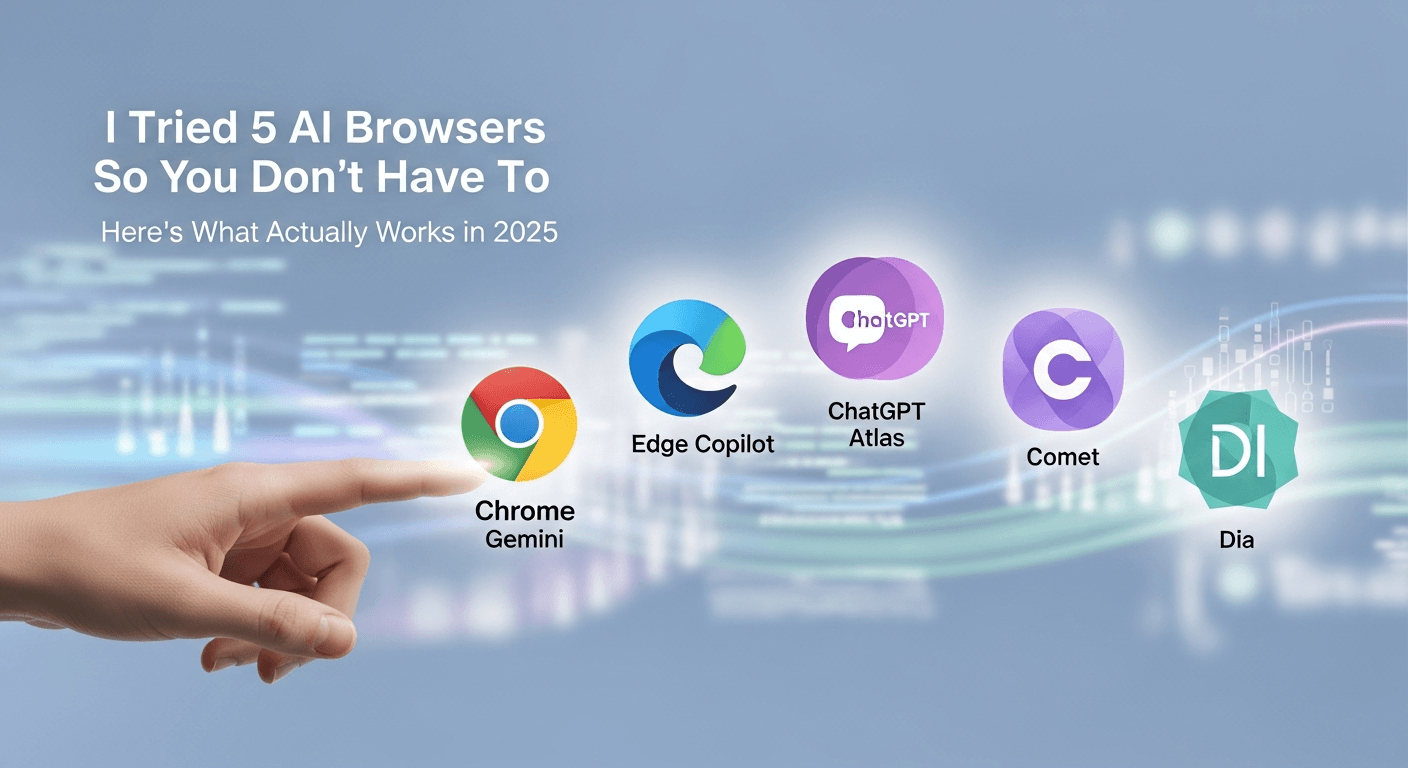
I Tried 5 AI Browsers So You Don’t Have To: Here’s What Actually Works in 2025
I explored 5 AI browsers—Chrome Gemini, Edge Copilot, ChatGPT Atlas, Comet, and Dia—to find out what works. Here are insights, advantages, and safety recommendations.
Read Article


