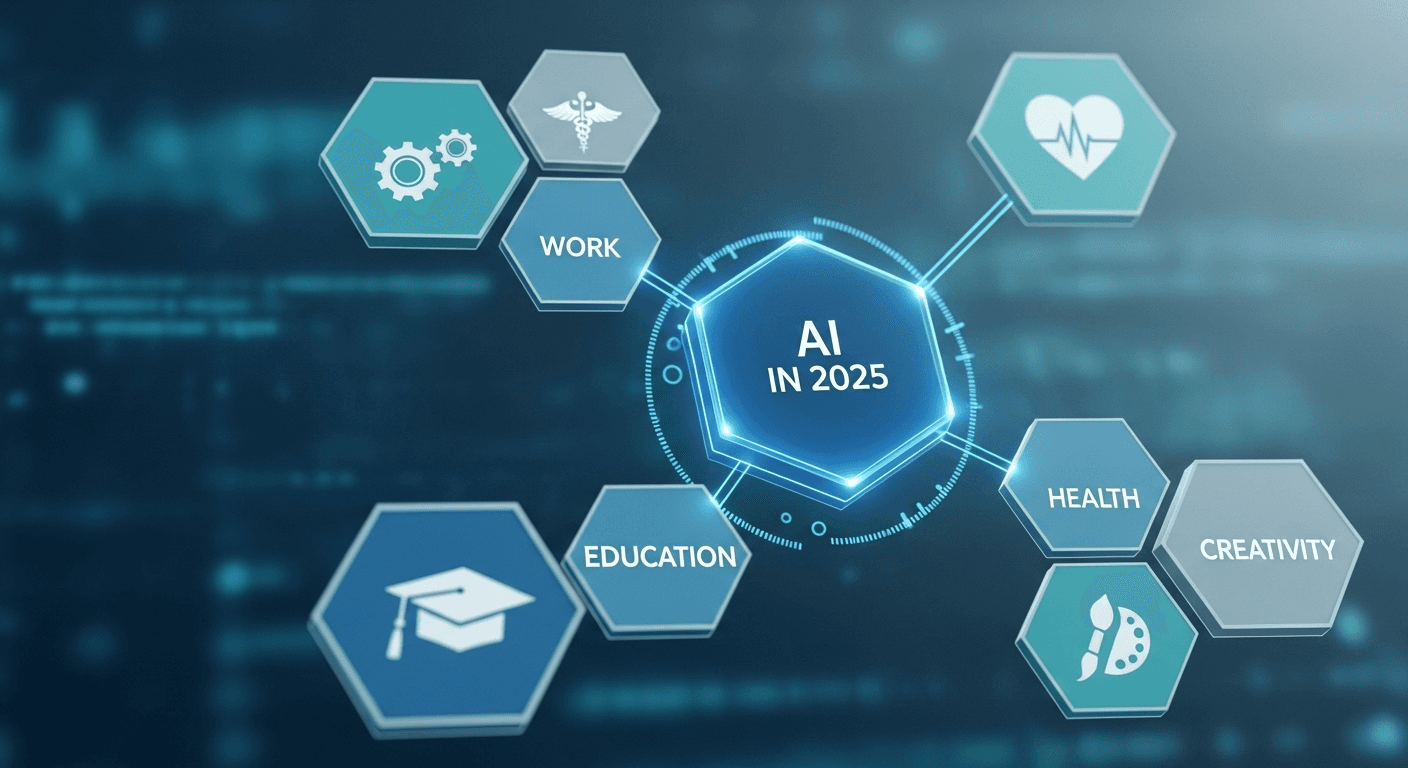
AI in 2025: How Artificial Intelligence Is Reshaping Work, Health, and Everyday Life
AI in 2025: How Artificial Intelligence Is Reshaping Work, Health, and Everyday Life
Artificial intelligence has transitioned from a futuristic idea to a practical tool. By 2025, AI is intricately integrated into our work, learning, construction, and decision-making processes. This guide details the ongoing transformations, the value AI brings, the risks involved, and how to adopt this technology with confidence. We provide links to credible, up-to-date sources when applicable.
Why 2025 Feels Different
The years 2023 and 2024 witnessed significant advancements in AI technology. Generative AI tools became mainstream, with models capable of processing text, images, audio, and video. Businesses incorporated AI into daily workflows, investment in the sector soared, and there was an increase in policy efforts around safety and governance. While 2023 was a catalyst, 2025 marks the era of responsibly scaling AI usage.
- Generative AI is projected to contribute trillions to the global economy as its capabilities expand (McKinsey estimates between $2.6 and $4.4 trillion annually) (source).
- Global focus has shifted towards safety, regulation, and risk management, highlighted by frameworks like the EU AI Act and the US Executive Order on AI (EU AI Act; US Executive Order).
- Research indicates significant productivity gains in specific tasks, particularly writing, drafting, and data analysis, given proper oversight (MIT study).
In essence, AI has shifted from being a novelty to a necessity. The potential benefits are immense, as are the responsibilities that come with it.
What AI Is (and Isn’t)
AI encompasses techniques enabling computers to perform tasks typically requiring human intelligence, such as identifying patterns, generating language, or making predictions.
- Narrow AI: Systems designed for specific tasks, like fraud detection or image recognition.
- Generative AI: Models that create new content (text, images, or code) based on patterns in training data.
- Agents and Automation: Systems capable of planning and executing multi-step tasks within defined parameters.
While today’s AI is impressive, it does not equate to general intelligence. It identifies patterns rather than truly understanding in a human context and can make confident mistakes. Therefore, human oversight, quality data, and safeguards are crucial.
Where AI Is Creating Value Now
The impact of AI is widespread and ever-expanding. Below are key areas experiencing the most growth, along with tangible examples and actionable insights.
Healthcare: Faster Insights, Better Decisions
AI aids clinicians in quickly recognizing patterns, helping tailor decisions for individual patients. Numerous AI-enabled medical devices have received clearance from the US FDA, particularly in radiology (FDA). The World Health Organization has also released guidelines on AI ethics and governance for multi-modal models (WHO).
- AI-driven medical imaging triage accelerates the identification of critical cases.
- Clinical documentation assistants alleviate administrative burdens.
- AI-powered drug discovery platforms hasten candidate screening processes.
Key concerns: rigorous evaluations, bias reduction, clinician oversight, and compatibility with existing systems.
Work and Productivity: Your Knowledge Task Co-Pilot
Generative AI serves as an effective assistant for drafting, summarizing, researching, exploring data, and coding. Controlled studies reveal notable productivity increases for specific tasks, especially among less-experienced individuals (MIT). When paired with process redesign and change management, the potential benefits at the organizational level are substantial (McKinsey).
- Draft emails, proposals, and briefs, refining them through human assessment.
- Transform documents and transcripts into concise summaries and action plans.
- Utilize code assistants for boilerplate tasks, testing, and refactoring.
Key considerations: quality checks, secure handling of sensitive information, and training to avoid overreliance on AI.
Education and Skills: Personalization at Scale
AI is enabling educators to differentiate instruction and minimize administrative workloads. UNESCO has provided guidance on responsibly utilizing generative AI in education and research (UNESCO). Initial trials demonstrate that AI tutors can enhance teaching rather than replace it, particularly valuable for practice and feedback.
- Create customized practice sets and explanations for students.
- Generate lesson plans and formative assessments that align with standards.
- Provide writing and coding feedback through clearly defined rubrics and guidelines.
Key issues: data privacy, learner transparency, and equitable access.
Finance: Real-Time Risk Detection
Financial institutions leverage AI for fraud detection, credit risk assessment, and customer service. Supervisory bodies stress the importance of model risk governance and clarity for critical decisions (BIS).
- Anomaly detection allows for rapid flagging of suspicious transactions.
- AI chat support expedites routine customer inquiries.
- Scenario analysis enables dynamic stress-testing of investment portfolios.
Key considerations: fairness, compliance, and ensuring human accountability for final decisions.
Transportation and Urban Development: Gradual Autonomy
AI enhances driver assistance, logistics management, and smart infrastructure. Full autonomy remains limited to specific controlled environments, but advancements continue. Regulators monitor safety outcomes and reporting practices.
- AI-optimized routing can reduce fuel consumption and emissions.
- Predictive maintenance leads to less downtime for fleets and public transit.
- Traffic management systems dynamically adjust signals in real time.
Key focus areas: transparent safety assessments, clear handoffs between automated systems and human operators, and robust incident reporting protocols.
Customer Experience and Marketing: Fast Content Generation
Organizations utilize AI to analyze customer behaviors, generate tailored content, and expedite campaign testing. The aim is to combine AI’s speed with human judgment, compliance checks, and creative insight.
- Segment audiences based on behaviors, customizing messaging accordingly.
- Repurpose extensive content into blogs, social media copy, and visual assets.
- Implement conversational agents for 24/7 support, ensuring human oversight during transitions.
Cybersecurity: Evolving Defense Mechanisms
AI aids in alert triage, anomaly detection, and incident response. However, cyber adversaries also exploit generative AI for phishing, malware production, and influence operations. In response, governments have produced secure-by-design guidance frameworks for AI development (UK NCSC and NSA; CISA; Microsoft Digital Defense Report).
Risks and How to Manage Them
AI’s advantages and challenges are intertwined. As AI adoption increases, so must our commitment to responsible practices.
Bias and Fairness
AI systems can perpetuate existing biases found in their data sources. Research has highlighted significant error rate differences across various vision and language systems, highlighting the need for diverse data and thorough evaluations (Gender Shades).
- Set explicit fairness goals and continuously measure them.
- Employ diverse datasets and perform bias assessments across different groups.
- Document model limitations and establish appeal processes for affected users.
Consider helpful frameworks: The NIST AI Risk Management Framework offers actionable recommendations for identifying and mitigating AI-related risks throughout the development lifecycle (NIST AI RMF).
Privacy and Data Protection
As AI heavily relies on data, organizations must implement strong governance, consent practices, and technical safeguards like data minimization, anonymization, and access controls. Privacy-enhancing technologies such as differential privacy and federated learning can assist in specific situations.
Safety and Misinformation
Generative AI reduces the costs of producing persuasive material, including deepfakes and scams. Content provenance and authenticity protocols, like C2PA, aim to facilitate media origin tracing (C2PA). Global risk reports indicate that AI-generated misinformation poses an immediate threat that necessitates collaborative action across sectors (WEF Global Risks 2024).
Jobs and Inequality
AI is set to alter numerous jobs, either automating aspects or creating new positions altogether. The IMF estimates that around 40 percent of worldwide employment could be affected by AI, with higher risks in advanced economies. The net effect will depend on the adoption rate, reskilling initiatives, and policy choices made (IMF).
- Prepare for tasks to shift towards oversight, problem conceptualization, and human interaction.
- Invest in digital literacy and AI knowledge throughout the workforce.
- Support transitions with training programs, portable benefits, and policies that encourage wage growth.
Environmental Impact and Computational Demands
AI workloads are heavily reliant on computing power. The IEA forecasts that electricity demand from data centers, including those supporting AI, could double by 2026 under current trends, indicating a pressing need for efficient and renewable energy sources (IEA).
- Adopt efficient architectures and optimize model sizes.
- Prefer cloud providers that prioritize renewable energy and waste heat repurposing.
- Monitor and report on the energy consumption and carbon footprint of significant AI projects.
Emerging Regulations: What to Know
Governments and standard organizations are rapidly creating clarity around AI usage. If you’re involved in AI development or deployment, it’s crucial to stay informed on the essentials.
European Union: The AI Act
Adopted in 2024, the EU AI Act is the first comprehensive legislative framework for AI, employing a risk-based approach. It outlines obligations for providers and users based on their associated risks, with stricter regulations for high-risk systems and restrictions on specific practices. It also emphasizes transparency and safety for general-purpose AI models (EU AI Act).
- Classify your use cases according to their risk categories.
- Implement robust data governance, quality management, and post-market monitoring for high-risk systems.
- Ensure transparency and clear usage guidelines for general-purpose models and systems.
United States: Executive Actions and Guidance
The 2023 Executive Order on AI instructs agencies to establish safety testing, oversight, and standards for critical sectors, with NIST in a central role (Executive Order). In 2024, the OMB introduced guidance for federal agencies focusing on responsible governance, risk management, and effective AI use (OMB). The NIST AI Risk Management Framework serves as a voluntary and widely recognized resource (NIST AI RMF).
Global Coordination
International organizations are converging on principles and practices. The OECD AI Principles remain foundational for ensuring trustworthy AI (OECD). The G7 Hiroshima Process emphasizes governance for advanced AI systems (G7). In 2024, the Council of Europe adopted a framework convention addressing AI, human rights, democracy, and the rule of law (Council of Europe).
How to Get Started with AI in 2025
You don’t need to be a machine learning expert to leverage AI. What you do need are clear objectives, practical safeguards, and a penchant for learning.
For Individuals
- Identify one or two everyday tasks that AI can streamline, such as summarizing meetings or drafting emails.
- Familiarize yourself with prompt patterns: provide context, define the role, specify the task, outline constraints, and include examples.
- Before sharing any outputs, use a checklist to verify accuracy, sources, potential bias, tone, and confidentiality.
- Document effective prompts and workflows to build a personal resource library.
For Teams and Organizations
- Begin with a collection of small, measurable use cases linked to business objectives.
- Develop an AI policy addressing data usage, privacy, security, human oversight, and incident response.
- Establish an internal AI council or working group to manage tools, guidelines, and training initiatives.
- Commit resources to enhance data quality, access controls, and monitoring; trustworthy AI cannot stem from untrustworthy data.
- Prepare for change management: communicate effectively, provide training, and redesign processes to maximize value.
Responsible AI Checklist
- Purpose: Is this use case necessary and beneficial?
- Data: Do we have lawful, diverse, and responsibly governed data?
- Model: Have we tested for performance, bias, and reliability?
- People: Is there accountable human oversight and a feedback mechanism?
- Security: Are we safeguarding inputs, outputs, and prompts from misuse?
- Compliance: Do we adhere to relevant regulatory and policy standards?
- Monitoring: Can we detect drift, incidents, and misuse, and respond swiftly?
What to Watch Next
Several emerging trends will shape the future of AI in 2025 and beyond:
- Multimodal Integration: Models capable of handling text, images, audio, and video seamlessly.
- On-Device AI: Enhanced privacy and low-latency experiences as chip technology advances.
- AI Agents: Systems that can plan and execute tasks across various tools, with robust safeguards in place.
- Open Source Diversity: A fertile ecosystem beyond a one-size-fits-all model approach.
- Content Authenticity: Wider adoption of standards for content provenance, like C2PA, and watermarking for verification.
- Standardized Safety Benchmarks: A move toward uniform evaluations and transparent reporting.
The path ahead is distinct: AI is growing in capability, becoming more accessible, and is also being guided thoughtfully. Success will stem from intentional design and ongoing education.
Conclusion
AI in 2025 promises tangible advancements with responsible oversight. It has the potential to enhance creativity in the workplace, precision in healthcare, personalization in education, and responsiveness in services. However, this progress comes with essential considerations regarding fairness, privacy, safety, and sustainability. By establishing clear goals, ensuring careful monitoring, and fostering a culture of continuous learning, both organizations and individuals can derive genuine value and build trust as they navigate this transformative landscape.
Implement AI where it supports people in achieving their best work, maintain human involvement, measure outcomes, and continuously improve. That is how true transformation occurs.
FAQs
What is the difference between narrow AI, generative AI, and AGI?
Narrow AI is designed for specific tasks like image recognition or fraud detection. Generative AI creates new content, including text, images, or code, derived from learned patterns. AGI, or artificial general intelligence, aims to replicate or surpass human abilities across the majority of tasks; it currently does not exist.
Will AI take my job?
AI will shift roles by automating some tasks and enhancing others. Many job functions will evolve. Workers who adapt AI as a tool can often improve productivity and seize new opportunities. To achieve positive outcomes, policies must focus on retraining, safety nets, and supporting transitions (IMF overview: source).
How can small businesses start with AI?
Begin with a handful of clear use cases such as marketing content, customer service, scheduling, or bookkeeping. Utilize reputable tools, establish basic data and privacy protocols, and evaluate return on investment. Starting small allows for expansion.
Is AI reliable?
While AI can be incredibly useful, it is not infallible. It may produce errors or ‘hallucinations.’ For critical decisions, ensure human review is in place, provide clear instructions and examples, and verify results with trusted sources.
What are the biggest risks?
Key risks encompass bias and unfair outcomes, privacy breaches, misinformation, job displacement, security threats, and environmental concerns. The NIST AI RMF provides a practical guideline for managing these risks effectively (NIST).
Sources
- McKinsey – The Economic Potential of Generative AI
- Science – Experimental Evidence on Productivity Effects of Generative AI (MIT Study)
- European Union – AI Act
- White House – Executive Order on AI
- OMB – Governmentwide Policy for Agency Use of AI (2024)
- NIST – AI Risk Management Framework
- FDA – AI/ML-Enabled Medical Devices
- WHO – Guidance on Large Multi-Modal Models in Health (2023)
- UNESCO – Guidance for Generative AI in Education and Research (2023)
- BIS – AI and Machine Learning in Financial Services
- UK NCSC and NSA – Guidelines for Secure AI System Development
- CISA – Secure by Design
- Microsoft – Digital Defense Report
- C2PA – Content Provenance and Authenticity Standard
- World Economic Forum – Global Risks Report 2024
- IMF – AI and the Future of Work (2024)
- IEA – Data Centers and Data Transmission Networks
- OECD – AI Principles
- G7 – Hiroshima Process on AI
- Council of Europe – Framework Convention on AI
- Stanford – AI Index Report 2024
- Gender Shades – Intersectional Accuracy Disparities in Commercial Gender Classification
Thank You for Reading this Blog and See You Soon! 🙏 👋
Let's connect 🚀
Latest Insights
Deep dives into AI, Engineering, and the Future of Tech.
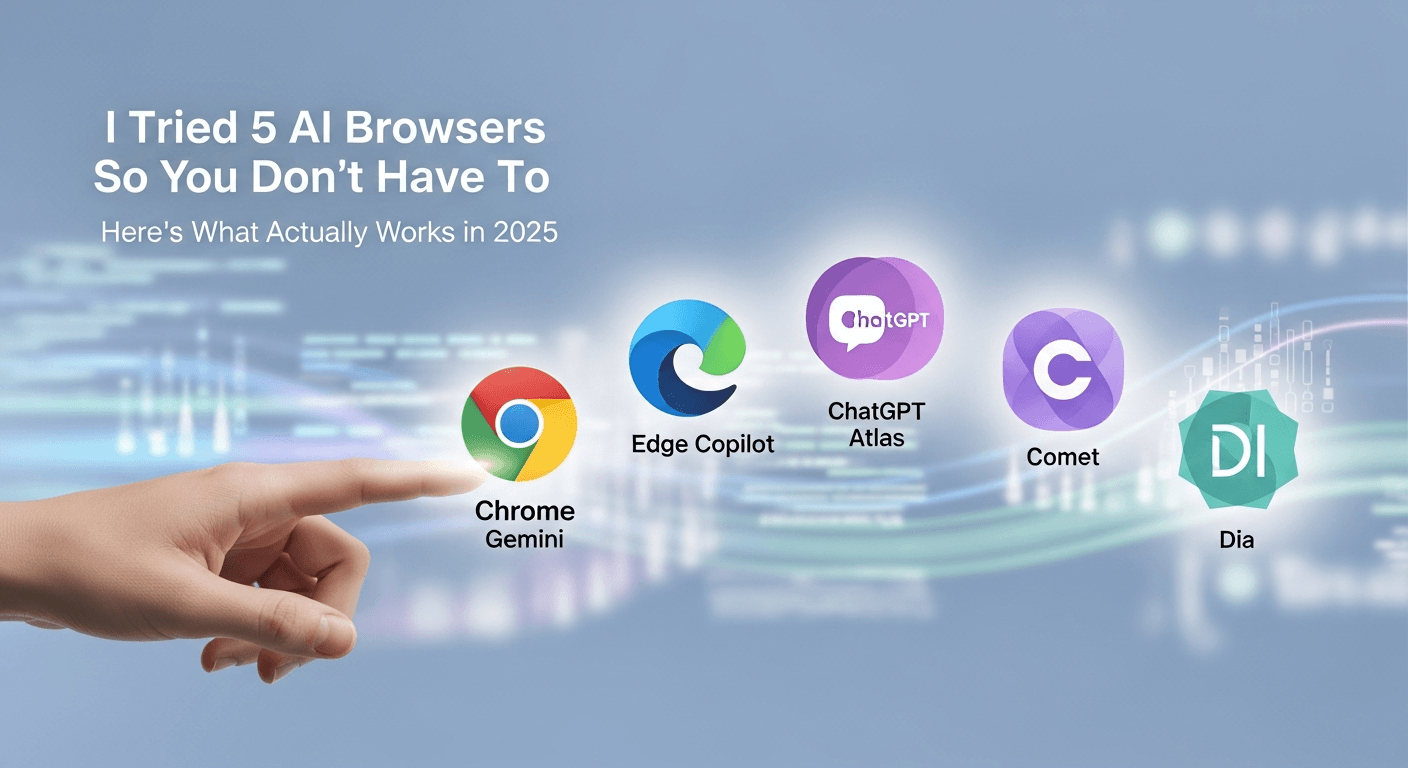
I Tried 5 AI Browsers So You Don’t Have To: Here’s What Actually Works in 2025
I explored 5 AI browsers—Chrome Gemini, Edge Copilot, ChatGPT Atlas, Comet, and Dia—to find out what works. Here are insights, advantages, and safety recommendations.
Read Article


