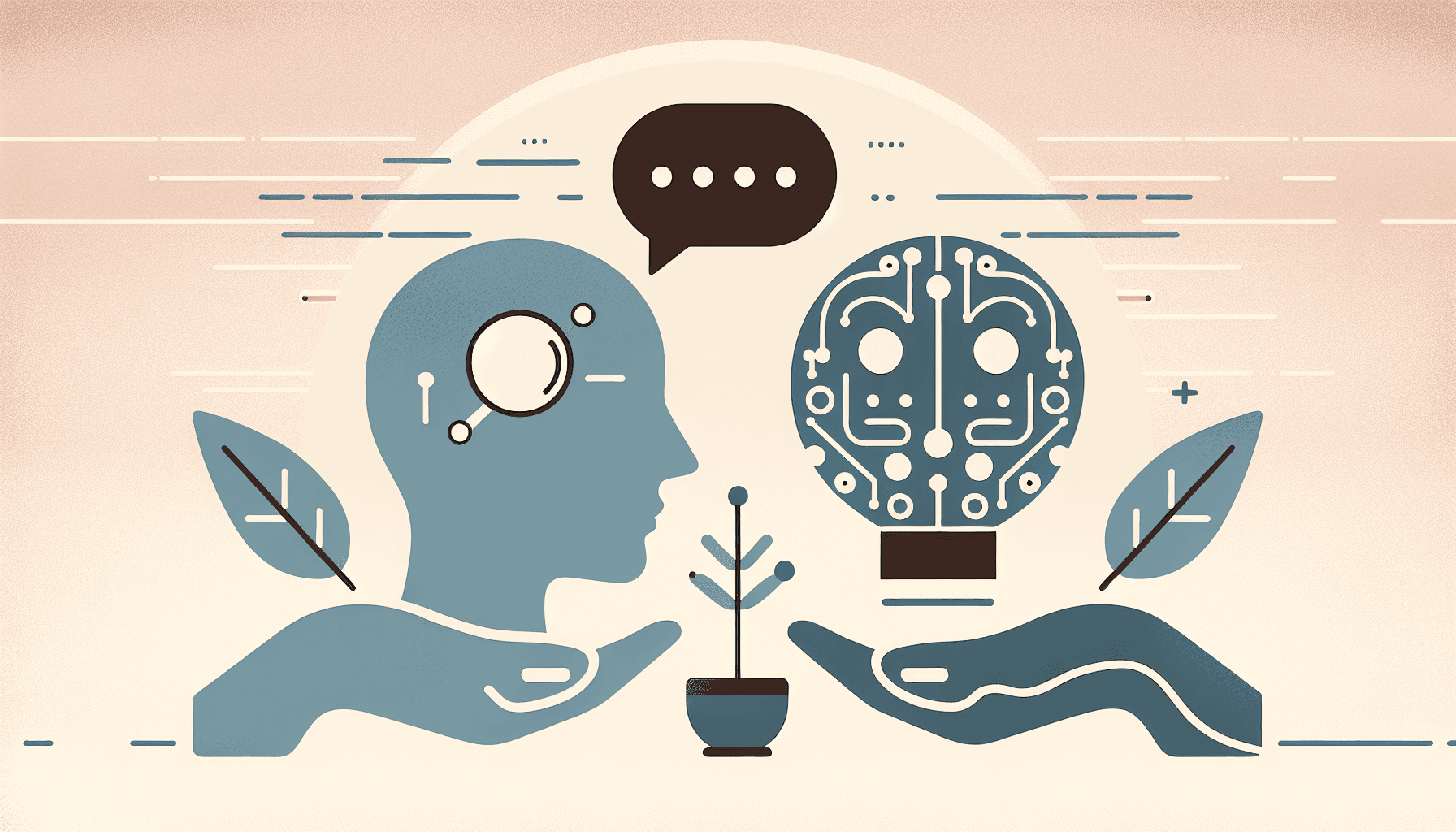
AI And Talk Therapy: What Machines Can Help With – And What Only Humans Do Best
AI chatbots and digital tools now provide mood check-ins, coping tips, and on-demand support anytime you need it. With the increasing demand for mental health care and long waitlists, it’s natural to wonder: can artificial intelligence take the place of traditional talk therapy? The short answer is: no. However, AI can significantly complement human care if used thoughtfully and safely.
Why this question matters right now
Globally, mental health needs vastly outweigh the available care. The World Health Organization estimates that 1 in 8 people live with a mental health condition, while many countries struggle with severe workforce shortages and access issues (WHO, 2022).
At the same time, AI systems are becoming better at generating text, guiding exercises, and personalizing content. Early studies on chatbots show promising yet modest benefits for mild depression and anxiety, especially in short, structured programs. For example, a randomized trial of the Woebot chatbot revealed reduced depressive symptoms over two weeks compared to an information-only control group (JMIR Mental Health, 2017). Broader reviews of conversational agents in healthcare identify potential value but stress the variability in quality and the need for rigorous evaluation (npj Digital Medicine, 2019).
What AI tools can do well today
- Deliver structured skills training: Many apps use evidence-based techniques like cognitive behavioral therapy (CBT) and behavioral activation to teach coping strategies and reinforce healthy habits between sessions. Therapist-supported internet CBT has shown effectiveness for depression and anxiety, highlighting that digital formats work well when the intervention is robust and support is suitable (Cochrane Review).
- Provide just-in-time, 24/7 support: AI tools never rest. They can offer check-ins, exercises, and journaling prompts whenever inspiration strikes or distress arises after hours.
- Encourage self-monitoring: Mood tracking, thought records, and behavioral goals help individuals notice patterns and practice skills between human therapy sessions.
- Lower barriers to entry: AI-guided tools can be low-cost, private, and accessible anywhere with a smartphone, aiding people to take that first step toward care.
- Support clinicians: In blended-care models, AI can assist with psychoeducation, homework adherence, symptom screening, and session summaries, allowing clinicians to focus on the therapeutic alliance, formulation, and change strategies.
What AI cannot replace in therapy
The therapeutic alliance: A consistent finding in psychotherapy research is that a strong working relationship between client and therapist leads to better outcomes. A large meta-analysis linked this alliance to enhanced results across various modalities and diagnoses (Fluckiger et al., 2018). AI cannot form human relationships, interpret subtle nonverbal cues, or provide genuine empathy rooted in lived experience.
Complex formulation and judgment: When histories are complex, risks are high, or comorbidities coexist, human clinical reasoning and ethical responsibility are crucial. Current large language models may produce fluent but incorrect or misleading content, a risk underscored by the World Health Organization (WHO, 2023).
Crisis response and duty of care: In situations involving self-harm, violence risk, or abuse, responsive and accountable human intervention is essential. If you are in crisis, call 988 in the U.S. for the Suicide and Crisis Lifeline, or your local emergency number (988 Lifeline). Consumer AI tools are not crisis services and should not be relied on for emergencies.
Clear accountability: A licensed therapist operates within standards of care and is accountable to regulatory bodies and ethics boards. An app might include disclaimers and operate under different legal frameworks, which changes the protections available to you.
Safety, privacy, and regulation: what to know
- Evidence varies: Some mental health apps have clinical studies; many do not. Wellness apps can be marketed without the level of evidence required for regulated medical devices. A few digital therapeutics for mental health have received FDA authorization (such as prescription digital therapeutics for substance use disorders), but most AI chatbots are not FDA-cleared treatments (FDA, 2017).
- HIPAA often does not apply: Many direct-to-consumer mental health apps are not covered under HIPAA, meaning your data could be governed by app privacy policies and general consumer protection laws. The FTC has issued warnings and pursued actions against mental health companies for disclosing sensitive data to advertisers (FTC, 2023).
- AI-specific risks: Large language models can generate hallucinated content, reflect biases from training data, and vary in handling safety-sensitive information. The WHO emphasizes the need for strong oversight, transparency, and evaluation prior to deploying LLMs in healthcare (WHO, 2023).
- Regulatory landscape is evolving: In the U.S., FDA guidance for AI-enabled software as medical devices is continuously developing (FDA SaMD AI/ML). The European Union has adopted the AI Act, categorizing many health applications as high-risk and necessitating robust safeguards (EU AI Act, 2024).
How AI can complement human therapy
Rather than replacing therapists, the most promising application for AI is to widen access and improve care:
- Blended care: Combine regular sessions with an app. Use AI to reinforce skills, remind you to practice, and track progress while your therapist manages formulation, alliance, and customization.
- Triage and monitoring: Brief AI-guided assessments can identify symptoms and assist in directing individuals to suitable care levels. Clinicians can track trends using tools that summarize patient-reported data.
- Between-session support: When you need coaching or a quick grounding exercise, an app can provide options on demand.
- Psychoeducation at scale: High-quality, culturally sensitive educational content can be disseminated widely to reduce stigma and encourage help-seeking.
Questions to ask before trying an AI mental health app
- What is the app for: wellness support, coaching, or a regulated treatment? Is there published research, and is it independent?
- How is my data used, stored, and shared? Can I opt out of data sharing and delete my account?
- How does the app handle crises or safety concerns? Does it clearly direct users to emergency resources like 988?
- Is there a human involved for review, escalation, or clinical oversight?
- Can I export summaries to share with my therapist, and does the tool fit my care plan?
Bottom line
AI can enhance mental health support by making it more accessible, especially for skill-building, self-monitoring, and practice between therapy sessions. However, it does not replace the expertise, empathy, and ethical accountability of a licensed therapist. For many individuals, the best approach is a combination: use trustworthy AI tools alongside human care, not as substitutes. If you are in crisis or concerned about your safety, reach out to 988 in the U.S. or your local emergency services immediately.
FAQs
Can AI therapy apps treat severe depression or trauma?
No. Individuals with severe, complex, or safety-sensitive conditions should engage with licensed clinicians who can deliver comprehensive assessments, personalized treatment, and crisis planning. AI apps may aid in skill practice but should not replace professional care.
Are any AI mental health tools FDA-approved?
Most consumer chatbots have not been FDA-cleared. A small number of prescription digital therapeutics for mental health conditions have received FDA authorization, but these are specific products guided by evidence and clinician oversight. Always check the product label and published studies for specifics.
Is my data safe in mental health apps?
That can vary. Many apps do not fall under HIPAA. Review the privacy policy, look for data minimization and encryption practices, and verify whether the company shares data with third parties. The FTC actively addresses misleading practices.
What does research say about chatbot effectiveness?
Initial studies suggest small to moderate short-term symptom improvements for mild anxiety and depression, particularly with structured, CBT-style content. The quality of evidence varies, and more research is needed on long-term outcomes and safety.
Could AI make therapy more empathetic?
Some studies indicate that AI-generated responses can seem empathetic in text-only scenarios (JAMA Internal Medicine, 2023). However, sounding empathetic is not equivalent to providing safe, accountable, personalized therapy grounded in a real relationship.
Sources
- World Mental Health Report 2022 – WHO
- Fitzpatrick et al., 2017. Delivering CBT via a conversational agent (Woebot). JMIR Mental Health.
- Laranjo et al., 2019. Conversational agents in health care: systematic review. npj Digital Medicine.
- Fluckiger et al., 2018. Alliance-outcome association in psychotherapy: meta-analysis. J Consult Clin Psychol.
- Cochrane Review: Therapist-supported internet CBT for depression and anxiety.
- WHO 2023: Guidance on safe and ethical use of LLMs in health
- FDA: AI/ML-enabled Software as a Medical Device (SaMD)
- European Parliament: EU AI Act adopted 2024
- FTC 2023: BetterHelp settlement on sharing health data
- FDA 2017: First mobile medical app for substance use disorder (reSET)
- JAMA Internal Medicine 2023: Comparing physician vs AI responses to patient questions
- 988 Suicide and Crisis Lifeline
Thank You for Reading this Blog and See You Soon! 🙏 👋
Let's connect 🚀
Latest Insights
Deep dives into AI, Engineering, and the Future of Tech.
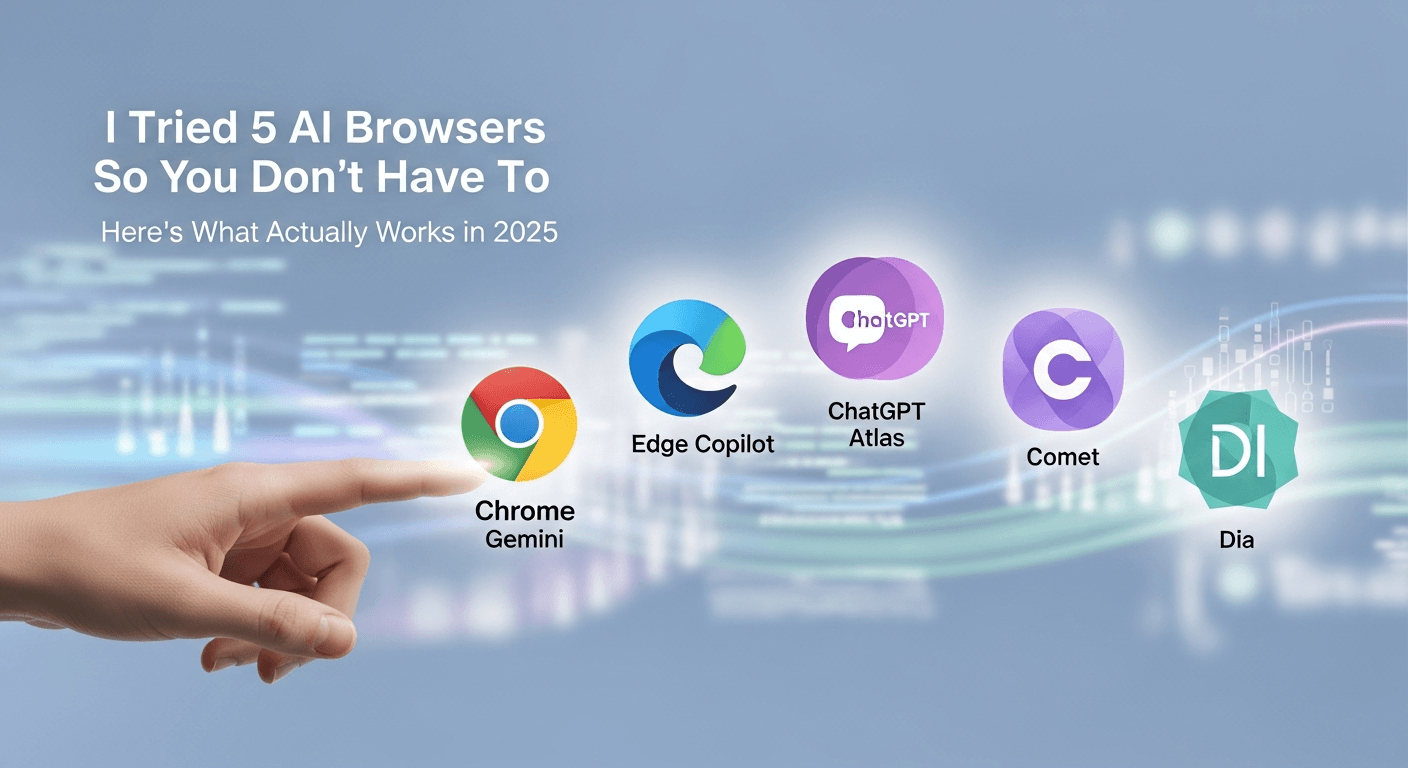
I Tried 5 AI Browsers So You Don’t Have To: Here’s What Actually Works in 2025
I explored 5 AI browsers—Chrome Gemini, Edge Copilot, ChatGPT Atlas, Comet, and Dia—to find out what works. Here are insights, advantages, and safety recommendations.
Read Article


