AI Agents in 2025: What Works, What Fails, and What Lies Ahead
AI Agents in 2025: What Works, What Fails, and What Lies Ahead
As we transition from chatbots to AI agents, the landscape is changing swiftly. By 2025, the focus has shifted from mere conversational AI to dynamic agentic systems that can plan, utilize tools, read and write data, and interact with humans. This guide sheds light on the current value delivery of AI agents, the risks involved, and how to responsibly build these systems amidst the hype. It’s crafted for both inquisitive readers and busy professionals seeking clear insights, away from the buzzwords.
The Shift from Chatbots to Agentic Systems
While early chatbots excelled in conversation, they fell short in actionable tasks. AI agents enhance this by bringing three key components to the table: tools, memory, and planning. With tool integration, these models can access knowledge bases, query databases, execute code, submit tickets, or compose emails. Memory allows them to recall the necessary context, and effective planning enables breaking down a goal into manageable tasks, deciding when to engage human assistance.
These capabilities are becoming standard across prominent AI model ecosystems. For instance, OpenAI has introduced function calling and the Assistants API to facilitate the orchestration of tools and data files (OpenAI, OpenAI). Anthropic has rolled out the Claude 3 family, which emphasizes reliability and tool integration (Anthropic). Google DeepMind’s Gemini 1.5 expands context windows to millions of tokens, facilitating long-document and multimodal workflows (Google). Meta’s Llama 3 pushes open model capabilities, suitable for on-prem or hybrid agent deployments (Meta).
In summary, the foundational elements for effective agents are now available. However, the real challenge lies in ensuring their reliability, security, and cost-efficiency during production.
Defining an AI Agent
An AI agent can be imagined as a sophisticated coordinator. It sets objectives, devises plans, utilizes tools, verifies outcomes, and keeps you updated on progress. A basic AI agent typically includes:
- Reasoning and Planning: The model assesses next steps based on specified goals and constraints.
- Tool Utilization: Integrates with search engines, databases, ticketing systems, spreadsheets, email, or code execution.
- Memory and Retrieval: Maintains a knowledge base to provide relevant context or reference past interactions.
- Observation and Feedback: Analyzes outputs to determine whether to retry, revise, or defer to human input.
- Guardrails: Policies, checks, and permissions that ensure actions remain safe and auditable.
Agent frameworks can vary significantly. Some may be single-model systems with basic function calling, while others involve multiple collaborating agents—one for planning, another for coding, and another for validation. Libraries and platforms such as LangChain, LlamaIndex, Autogen, and native vendor runtimes simplify orchestration, but thoughtful design and evaluation remain crucial.
Why 2025 is Pivotal: Capability Meets Infrastructure
By late 2024, three key trends converged, setting the stage for practical AI agents in 2025:
- Multimodal Models: Systems capable of interpreting text, images, audio, and, in some instances, video, reducing the need for additional coding in workflows (OpenAI GPT-4o, Google Gemini 1.5).
- Extended Context Windows: With millions of token capabilities, agents can efficiently process lengthy documents or code in fewer steps (Google).
- Enterprise Guardrails: Enhanced policies, audit trails, red-teaming, and thorough model evaluations have matured, often influenced by regulations and standards (NIST AI RMF, EU AI Act, US Executive Order on AI).
The outcome? More organizations are piloting agentic automations across sectors like customer service, revenue operations, software engineering, research, and back-office finance and HR. These early wins tend to be narrow and measurable, distancing themselves from the realm of science fiction autonomy.
Current Value of AI Agents
AI agents excel where workflows are well-defined, repetitive, and trackable. Key use cases include:
- Customer Support: Triage tickets, summarize contexts, suggest responses, draft resolutions, and automate routine tasks while involving humans for complex issues.
- Sales and Marketing: Research prospects, enrich CRM records, craft personalized outreach messages, and monitor campaign activities.
- Software Engineering: Generate tests, refactor code snippets, update documentation, and propose pull requests, all under strict guardrails and continuous integration checks. Emerging prototypes like SWE-agent show promise for specific coding tasks (SWE-agent).
- Knowledge Operations: Summarize lengthy documents, extract structured data, generate briefs, and keep wikis updated with citations using retrieval-augmented generation.
- Back-office Processes: Manage invoice processing, expense reviews, data reconciliation, and vendor management via least-privilege access to financial systems.
- Security Operations: Handle log triage, alert summarization, evidence collection, and ticket drafting, ensuring a human remains in the loop for containment actions.
Across these domains, consistency emerges: a combination of one or more agent personas, well-defined scopes, strong observability, and escalating autonomy contingent on meeting evaluation standards.
Reality Check: Persistent Challenges
Despite significant advancements, practical limitations on agent capabilities remain. Recognizing these risks can help safeguard both budget and reputation:
- Reliability and Hallucinations: Models can confidently present inaccuracies, especially outside their training domain or under pressure. Evaluation and retrieval processes help, but don’t entirely eliminate this risk (Stanford AI Index 2024).
- Integration Challenges: Successfully connecting secure internal tools, managing permissions, and scaling across departments demands substantial engineering efforts that vendors may downplay.
- Cost and Latency: Enhanced quality from longer contexts, multi-step plans, and multi-agent coordination often leads to increased time and API costs. Strategies such as caching and smaller models are critical to managing these aspects.
- Complex Evaluation: There is no universal metric for assessment. Different benchmarks are needed for tasks, including offline test sets, online A/B evaluations, and human review cycles (LLM evaluation surveys).
- Managing Change: Success hinges on reimagining processes and implementing training—not merely relying on high-performing prompts. The quickest returns on investment emerge when teams already have well-defined standard operating procedures (SOPs).
Navigating the Risk Landscape in 2025
AI agents enhance not only opportunities but also risks, as they operate on data and systems. Here are the key risks to be aware of:
Data Privacy and Leakage
To be effective, agents often require access to sensitive records. Without rigorous data minimization practices, PII redaction, and role-based access, there is a risk of over-collection or data exposure. Employ least-privilege tooling and encrypt data both during transit and at rest. Regularly review vendor data retention and training policies (FTC guidance).
Security and Prompt Injection
Agents that gather information or read from documents are susceptible to manipulation by malicious content, known as prompt injection attacks. When an agent is authorized to utilize tools, this can lead to unintended system actions. Implement rigorous input-output filtering, maintain origin checks, utilize allowlists, and execute tools in a sandbox environment. Log every tool interaction with detailed provenance (OWASP Top 10 for LLMs).
Hallucinations and Overconfidence
While high-quality citations, augmented retrieval, and validation of structured outputs can lower errors, some inaccuracies persist. Critical actions should necessitate human verification or a secondary model check, particularly in sensitive contexts like legal, medical, or financial scenarios (NIST AI RMF).
Bias, Fairness, and Discrimination
Training data can carry societal biases that manifest in outputs. Misalignment with goals may also arise from subtle instructions. Employ diverse evaluation sets, monitor outcomes across various demographics where suitable, and ensure recourse and appeal mechanisms for affected individuals (OECD AI Principles).
Copyright and Intellectual Property
Legal ambiguities surrounding training data and the reuse of generated outputs persist, with notable cases like the New York Times lawsuit against OpenAI and Microsoft (filed in 2023) highlighting these issues. Stay updated with US Copyright Office guidance on human authorship requirements for AI-assisted content (NYT on lawsuit, US Copyright Office).
Operational and Model Risk
Agents have the potential to create cascading errors; for example, misreading a document could lead to an incorrect decision and subsequent flawed actions. Establish observability, replay, and compensation logic to detect and remedy such issues. Incorporate fail-safe mechanisms.
Environmental and Compute Costs
The energy and water demands of training and serving large models are significant. The IEA projects that AI and data center electricity requirements could nearly double by 2026 compared to 2022 trends (IEA 2024). Implementing efficient architectures, batching, on-device inference, and utilizing smaller models can help mitigate the environmental impact.
Governance and Compliance Developments
Policymakers and standard-setting organizations have begun establishing initial frameworks, with more on the horizon:
- EU AI Act: Approved in 2024, this act introduces risk-based obligations and special duties for general-purpose and high-risk AI, accompanied by phased implementation timelines (European Commission).
- US Executive Order on AI: Directs federal agencies to create standards around safety, security, and civil rights while evaluating risks in areas like biosecurity and critical infrastructure (White House).
- NIST AI Risk Management Framework: Provides practical guidelines for identifying, quantifying, and managing AI risks across their lifecycle (NIST).
- UK AI Safety Summit and Bletchley Declaration: Focuses on international collaboration regarding frontier model risks and commitments to safety testing (UK Government).
- Industry Commitments: Ongoing voluntary policies emphasize safety testing, content provenance, and watermarking (OpenAI Safety, Meta Safety, Google Safety).
For both builders and buyers, the emphasis should be on integrating governance into the engineering process rather than treating it as an aftermath policy.
Design Principles for Responsible Agent Systems
This checklist can help you develop useful and safe agentic workflows:
Scope and Autonomy
- Clearly define narrow objectives and actions that fall outside the agent’s scope.
- Implement tiered autonomy: draft only, draft and propose, execute with prior approval, and finally execute within defined spend or risk parameters.
- Ensure human involvement in critical decisions or irrevocable actions.
Data Controls
- Implement least privilege and role-based access for every tool available to the agent.
- Mask or hash personally identifiable information (PII) whenever feasible; ensure raw data access remains restricted to secure environments.
- Maintain comprehensive logs of tool calls including parameters, inputs, outputs, and user identities for auditing purposes.
Safety and Security
- Protect against prompt injection with thorough input validation, link allowlisting, and content sanitization.
- Execute code in a sandbox environment; restrict network egress and use API keys that are limited to specific tasks.
- Add output filters to enforce safety policies and address sensitive discussions.
Truthfulness and Quality
- Utilize retrieval-augmented generation complemented by source citations.
- Validate structured outputs against defined schemas, adding self-check prompts or a verification model for accuracy.
- Assess accuracy through offline test sets and online A/B tests; maintain error budgets to track performance.
Observability and Control
- Implement trace instruments for each step and tool interaction while capturing latency and cost data.
- Provide a visible kill switch along with simple rollback options, and include compensation logic to reverse actions if needed.
- Safely rotate models and prompts through canary rollouts and feature flags.
People and Process
- Establish clear guidelines for when staff should accept, modify, or reject agent outputs.
- Train teams on topics like privacy, security, and bias, and establish escalation paths for addressing concerns.
- Revise SOPs to incorporate agent capabilities and handoffs, rather than focusing solely on human tasks.
Build vs. Buy: The Open vs. Closed Debate
Most organizations will find themselves implementing a hybrid strategy:
- Purchase solutions for widespread, low-differentiation tasks, such as document summarization, meeting notes, standard CRM updates, and help desk automation.
- Develop bespoke solutions for proprietary workflows that depend on unique data or compliance requirements.
- Leverage open-source models when feasible and closed models where necessary—open models can drive cost savings and improve privacy when used on-prem, while closed models may yield higher reliability and better ecosystems. Always evaluate options using your own data.
- Design for model portability by creating abstractions around providers, enabling switches or combinations of models as capabilities and pricing evolve.
Independent assessments and empirical testing are more valuable than standardized metrics on public datasets. The Stanford AI Index indicates widening disparities between lab performance claims and real-world outcomes, underscoring the necessity to conduct tests with your specific workloads (Stanford AI Index 2024).
Economics and ROI: Understanding Value Generation
The potential of generative AI is significant yet varies. McKinsey calculated in 2023 that generative AI could yield trillions of dollars in annual productivity, primarily in customer operations, marketing, software engineering, and research and development (McKinsey). In practice, value manifests in three primary forms:
- Time Savings: Reducing the time spent on tasks across the board leads to substantial cumulative benefits.
- Quality Enhancements: More consistent outputs, improved handling of edge cases, and reduced error rates as a result of thorough review processes.
- New Capabilities: Enabling previously infeasible tasks, like quickly querying extensive sets of PDFs.
Track both tangible ROI (in terms of hours saved, reduced ticket volume, and improved conversion rates) and intangible ROI (such as increased employee satisfaction and faster onboarding). Ensure you have baselines, control groups, and shared dashboards for visibility with stakeholders.
Proven Technical Patterns for Effective Systems
Over the past year, certain patterns have emerged as viable foundations for agentic systems:
- Retrieval-Augmented Generation: Store domain-related documents in a vector index, grounding responses with citations and ensuring recency through connections to live systems.
- Function Calling with Schemas: Define tool interfaces with clear input and output schemas while validating responses and retrying when discrepancies occur.
- Planner-Executor Loops: Incorporate a lightweight planning step to break down tasks into manageable subgoals, granting executors specific tool permissions.
- Verifier or Judge Model: Deploy a less expensive or specialized model to verify facts, formatting, and adherence to policies before output delivery.
- Cost-Aware Routing: Start with a quick, smaller model and transition to larger models as circumstances demand, leveraging cached prompts where possible.
- Evaluation Harnesses: Develop high-quality test sets and synthetic tasks; run evaluations nightly or upon deployment with quality checkpoints.
These methodologies are model-agnostic and compatible with both open and closed models, as well as local or cloud-based inference.
Looking Forward: Five Likely Trends Through 2025
While specific outcomes can be hard to predict, several trajectories are becoming apparent based on 2024’s developments:
- Increased Multimodality: Agents are expected to integrate text, images, and audio within the same workflows, minimizing manual conversions between formats (OpenAI, Google).
- On-Device and Edge Inference: Smaller, optimized models will facilitate private and low-latency agent tasks on laptops and mobile devices.
- Specialized Small Models: Teams will utilize general-purpose LLMs alongside small models tailored for classification, extraction, and routing tasks.
- Enhanced Provenance: The implementation of content credentials, watermarking, and authenticity signatures will become increasingly common for compliance and validation purposes (C2PA).
- Expanded Governance: Audits, incident reporting, and standardized evaluations will become more widespread under frameworks like the EU AI Act and NIST AI RMF (EU AI Act, NIST).
A Practical Roadmap for Implementation
- Select a single workflow with defined measurable objectives and a willing business owner.
- Identify data and tools; establish the minimum permissions necessary for an agent’s operations.
- Prototype using a basic planner-executor structure along with a quick model; integrate retrieval capabilities as needed.
- Deploy a draft-only version for a small pilot; collect both qualitative feedback and quantitative metrics.
- Incorporate guardrails, verifiers, and logging; expand autonomy only after passing established quality gates.
- Document SOPs and training materials; create an escalation process; conduct regular reviews of incidents.
- Scale to adjacent workflows and invest in a comprehensive evaluation harness and cost management controls.
Conclusion: Aim High, Guardrails in Place
In 2025, AI agents will serve as powerful assistants rather than autonomous employees. Organizations achieving success will view agents as supportive partners with clearly defined scopes, robust oversight, and effective tools. By maintaining high aspirations while implementing strict guardrails, you can harness the advantages while steering clear of common pitfalls. The strategy is practical: initiate with narrow projects, conduct thorough evaluations, and gradually broaden your scope.
Frequently Asked Questions
Are AI agents ready for full autonomy?
No. For most businesses, agents should commence in draft or propose modes, requiring human approval for critical actions. Autonomy can only increase after comprehensive evaluations and reviews.
Which model is recommended for my initial agent?
Begin with a reliable mainstream model, focusing on data, tools, and evaluation. Incorporate a smaller model for routing or verification, and consider open-source options for on-premise or sensitive tasks. Always benchmark against your own data.
How can I reduce hallucinations?
Implement retrieval systems with citations, constrain outputs using schemas, employ a verification model, and mandate human review for high-stakes tasks. Monitor error types and refine prompts and data coverage.
What regulations should I be aware of?
Monitor regulations in various jurisdictions, such as the EU AI Act, US Executive Order on AI, NIST AI RMF guidelines, and specific sector rules. Engage with legal and compliance teams early in the process.
Will agents replace human jobs?
Expect incremental automation at the task level before any significant job displacement occurs. Roles will likely transition toward oversight, exception handling, and more strategic work. Productivity improvements typically manifest as enhanced quality and speed before changes in headcount.
Sources
- OpenAI – Function Calling and API Updates
- OpenAI – Introducing the Assistants API
- OpenAI – GPT-4o Family Overview
- Anthropic – Claude 3 Family
- Google – Gemini 1.5 Updates and Long Context
- Meta – Llama 3 Announcement
- Stanford HAI – AI Index Report 2024
- McKinsey – What is Generative AI and Its Potential
- NIST – AI Risk Management Framework 1.0
- European Commission – EU AI Act
- White House – Executive Order on AI
- UK Government – Bletchley Declaration
- OWASP – Top 10 for LLM Applications
- IEA – Data Centres and AI Electricity Demand
- New York Times – Lawsuit Against OpenAI
- US Copyright Office – AI Initiative
- SWE-agent – Agentic Coding Research
- C2PA – Content Provenance and Authentication
- FTC – Guidance on AI Marketing Claims
- Survey – LLM Evaluation Methods
Thank You for Reading this Blog and See You Soon! 🙏 👋
Let's connect 🚀
Latest Insights
Deep dives into AI, Engineering, and the Future of Tech.
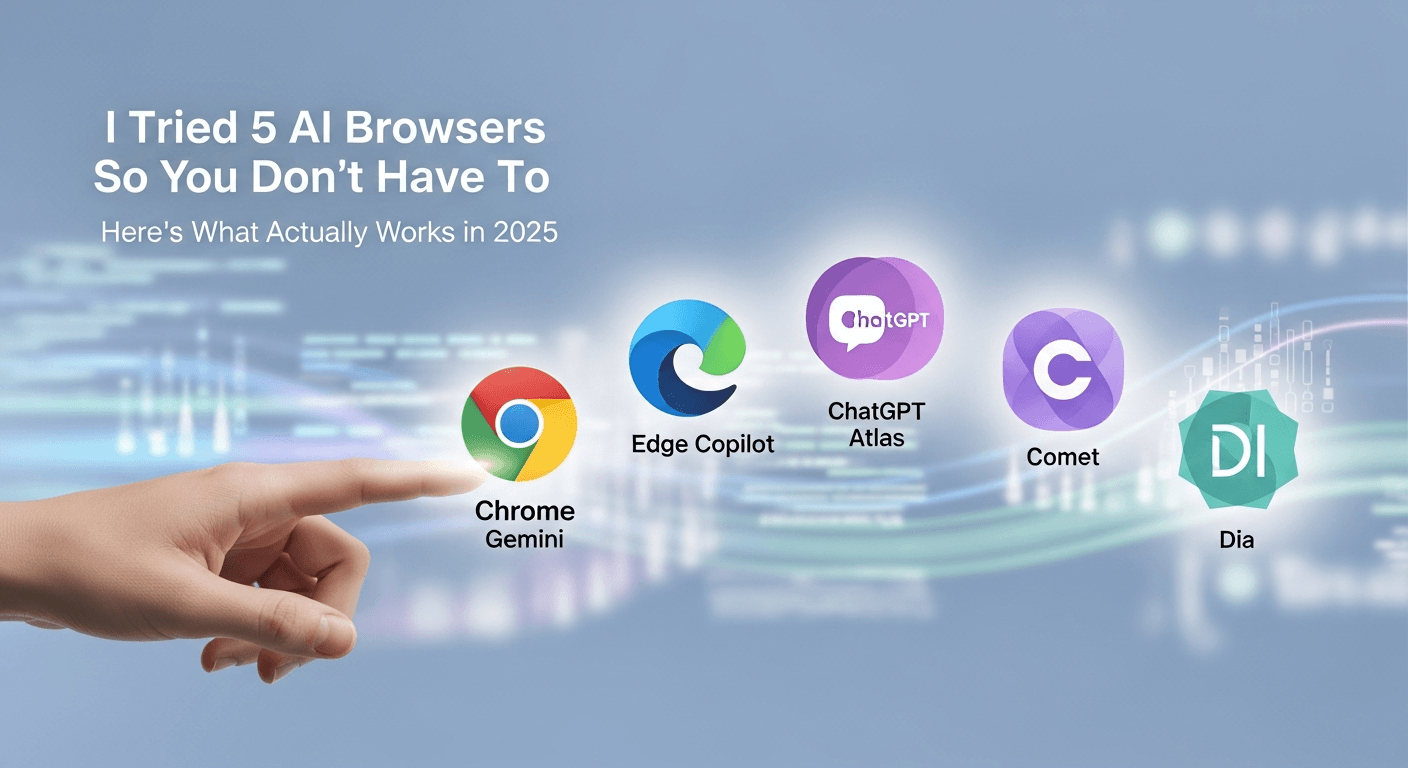
I Tried 5 AI Browsers So You Don’t Have To: Here’s What Actually Works in 2025
I explored 5 AI browsers—Chrome Gemini, Edge Copilot, ChatGPT Atlas, Comet, and Dia—to find out what works. Here are insights, advantages, and safety recommendations.
Read Article


