A Comprehensive Guide to Fine-Tuning AI for Instruction Tasks
Introduction
As artificial intelligence (AI) continues to evolve, its application in educational contexts becomes increasingly vital. Educators and technologists alike are recognizing the immense potential of AI to personalize and enhance the learning experience. This guide explores the essential strategies for fine-tuning AI to handle various instructional tasks efficiently and effectively.
Understanding AI in the Context of Education
AI in education typically refers to the deployment of machine learning algorithms and natural language processing tools to create more engaging and adaptive learning environments. These technologies can automate administrative tasks, provide personalized learning pathways, and even assist in complex decision-making processes.
Before diving into fine-tuning techniques, it’s crucial to understand the types of AI most beneficial for educational purposes. These include:
- Adaptive Learning Systems: These systems adjust the content difficulty level based on the learner’s performance.
- Intelligent Tutoring Systems: AI-driven tutors provide real-time feedback and personalized instruction.
- Automated Essay Scoring: Uses natural language processing to grade written responses and provide feedback.
Setting Clear Objectives
Clear, measurable objectives are essential for effective AI implementation. Before fine-tuning, establish what you aim to achieve with AI in your educational programs. Whether it’s improving engagement, increasing understanding, or automating assessments, having a clear goal will guide your efforts and help you measure success.
Collecting and Preparing Data
Data is the cornerstone of any AI system. For educational AI, relevant data might include student interaction logs, performance metrics, and learning materials. Ensuring data quality—accuracy, completeness, and bias minimization—is crucial before moving forward with AI training models.
Choosing the Right AI Model
Not all AI models suit all tasks; choosing the right one is key. For tasks like adaptive learning and predictive analytics, decision tree models or neural networks might be most effective. For natural language tasks, consider models that specialize in understanding and generating human language, such as GPT (Generative Pre-trained Transformer) or BERT (Bidirectional Encoder Representations from Transformers).
Fine-Tuning AI Models
Fine-tuning involves adjusting the AI model’s parameters to better suit specific tasks. This might include training the model on specific educational data, tweaking model settings to balance accuracy with processing time, or employing techniques like transfer learning.
Key strategies include:
- Hyperparameter Tuning: Adjust settings such as learning rate and model size to optimize performance.
- Feedback Loops: Incorporate user feedback to continually improve AI responses and interactions.
- Data Augmentation: Enhance the training dataset with synthesized examples to improve model robustness.
Integrating AI into Learning Environments
Integration is more than just a technical challenge; it requires thoughtful consideration of the educational context. This includes:
- Teacher Engagement: Train educators to use and trust AI tools as part of their teaching repertoire.
- Student Interaction: Design user interfaces that are intuitive and engaging for students.
- Policy Considerations: Navigate ethical, legal, and privacy concerns related to AI in education.
Evaluating AI Effectiveness
Regularly assess the AI’s impact on learning outcomes through controlled studies and real-world observations. Adjust implementations based on these findings to maximize benefits and minimize any potential negative effects.
Conclusion
Fine-tuning AI for instructional tasks is a dynamic and ongoing process that requires attention to technological and pedagogical details. By adopting a thoughtful approach to implementation and staying informed about the latest developments in AI technology, you can significantly enhance the educational experience.
Further Resources
For those interested in deeper exploration of fine-tuning AI, numerous resources are available. Academic papers, online courses, and professional groups can provide additional insights and community support.
Thank You for Reading this Blog and See You Soon! 🙏 👋
Let's connect 🚀
Latest Insights
Deep dives into AI, Engineering, and the Future of Tech.
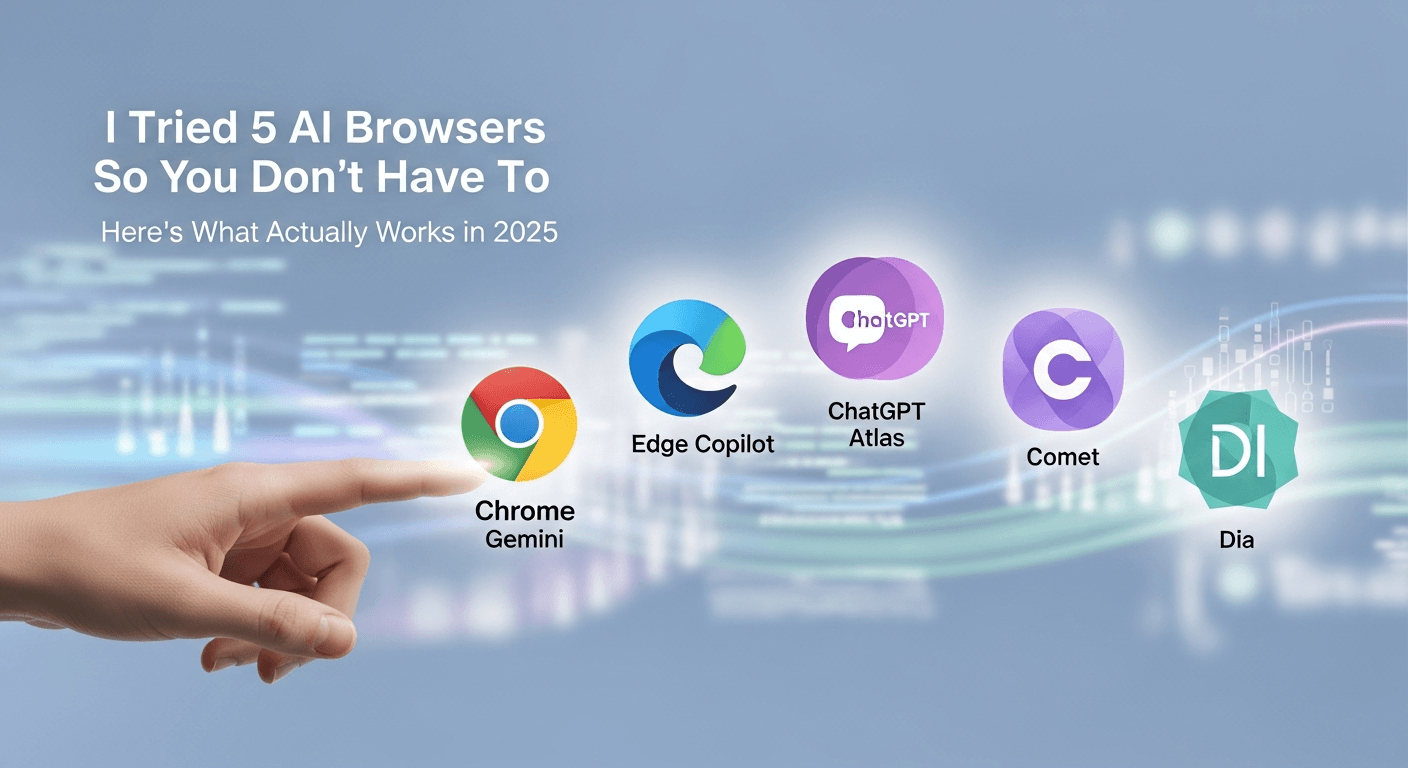
I Tried 5 AI Browsers So You Don’t Have To: Here’s What Actually Works in 2025
I explored 5 AI browsers—Chrome Gemini, Edge Copilot, ChatGPT Atlas, Comet, and Dia—to find out what works. Here are insights, advantages, and safety recommendations.
Read Article


